Rapid CNC machining turns a digital drawing into a physical part, often within days. That speed matters when engineers need to test fit, revise a feature, or keep a production line moving. But fast delivery alone is not enough. Material choice, tolerance control, inspection, and communication can decide whether a prototype is useful or simply arrives quickly.
The market context is substantial, though it needs careful interpretation. Grand View Research’s CNC Machine Market report estimated the broader global CNC machine market at USD 101.22 billion in 2023 and projected a 5.5% compound annual growth rate from 2024 to 2030. This figure covers CNC machines broadly; it is not a market-size estimate for rapid CNC machining services alone. That distinction matters. A large market does not automatically prove that any one supplier is capable.
As production engineer Shigeo Shingo observed, “The most dangerous kind of waste is the waste we do not recognize.” His point applies to rushed machining: unclear drawings, avoidable setup changes, and late inspection can quietly consume a delivery schedule. Small details matter.
This guide compares ten China-based rapid CNC machining companies through practical buyer considerations: process range, material options, stated lead times, quality documentation, and support for design changes. Public company information can be incomplete, and advertised turnaround times may depend on part geometry and order volume. So this list is a starting point, not a substitute for checking a supplier’s current capabilities. The fastest quote is not always the best choice.
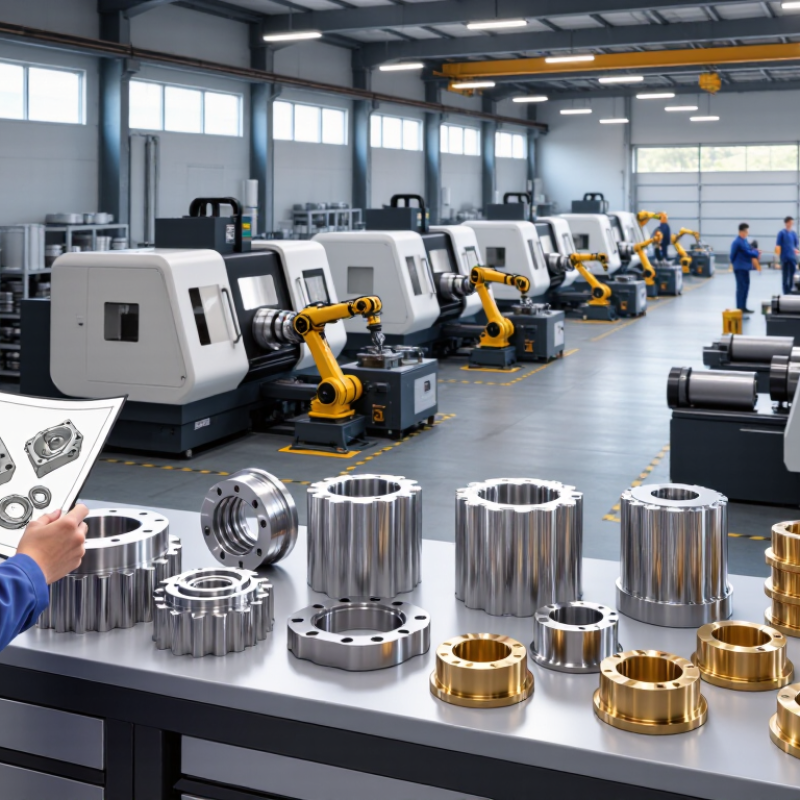
Rapid CNC machining in China turns a digital design into a finished part through a connected sequence of engineering, cutting, and inspection. The National Bureau of Statistics of China reported that manufacturing value added reached RMB 33.6 trillion in 2023, equal to 26.2% of GDP. This broad industrial base supports access to machining capacity, materials, and secondary processes, but it does not guarantee every supplier’s quality or lead time.
The workflow usually starts with a 3D CAD file and a drawing that defines tolerances, surface finish, and critical dimensions. Engineers review the design for tool access, thin walls, and setups that may increase cost. CAM software then converts the approved geometry into toolpaths. Milling or turning removes material from aluminum, steel, plastics, or other stock. Operators check key dimensions with calipers, micrometers, or coordinate-measuring equipment before parts are packed for delivery. Small details matter.
Tips: Send a fully dimensioned drawing with the CAD model. Identify only the dimensions that truly need tight tolerances; unnecessarily strict requirements can add machining and inspection time. Ask how inspection results are recorded, and confirm material grade and finish in writing. A rushed design review can miss a weak wall or awkward tool angle. That happens. Recheck the first article before approving a larger run.
When assessing rapid CNC machining companies in China, look beyond quoted delivery dates. Speed matters. But a fast estimate means little if the shop cannot explain how it will hold a critical bore or flatness requirement. Ask for sample inspection reports, equipment details, and a clear account of how parts move from programming to final checks. For tight tolerances, confirm the measurement method and instrument range match the drawing. Details matter. A polished website is not evidence of process control.
Review how each supplier handles materials, design changes, and small production runs. Reliable material records and clear revision control help prevent costly mix-ups. Ask whether the quoted lead time includes inspection, finishing, and shipping preparation. Compare quotes line by line; a low price may exclude important checks or surface treatments. Communication is another practical test. Can engineers flag a thin wall, sharp internal corner, or unrealistic tolerance before machining begins? Request a first-article report when appropriate, and check that the report addresses your actual requirements. No single metric tells the whole story. Even capable shops can miss a detail, so make expectations explicit and see how carefully they respond.
These ten anonymized profiles highlight different strengths found among rapid CNC machining providers in China. They are capability snapshots, not a verified ranking. One shop specializes in quick-turn aluminum prototypes, with clear tool marks and short setup cycles. Another focuses on CNC turning, producing shafts and bushings with measured concentricity. A multi-axis provider handles curved housings and reduces repositioning. Its programming may take longer.
A fourth provider machines stainless steel brackets and documents inspection results. A fifth works mainly with engineering plastics, where sharp edges and heat control matter. One low-volume specialist supports pilot runs, adjusting fixtures between small batches. Another offers design-for-manufacturing feedback, such as suggesting a wider internal corner radius. Advice helps, but it should be checked against the part’s actual function. A production-oriented shop manages repeat orders and tracks revision changes. A small inspection-focused provider uses dimensional reports to flag deviations before shipment.
The ninth profile is a general-purpose shop serving varied part sizes, from compact mounts to larger plates. Its broad scope can mean less depth in a particular process. The tenth emphasizes responsive communication, sharing machining questions and progress photos during a job. Buyers should still confirm tolerances, material certificates, finish requirements, and shipping dates in writing. A fast quote is useful. A clear process matters more. These distinctions give engineers practical questions to ask before sending drawings or approving a sample.
Note: The profiles below are illustrative capability categories, not verified profiles or rankings of specific companies. Capabilities, tolerances, lead times, certifications, and material availability vary by supplier and part requirements; confirm them directly with each provider.
| No. | Illustrative Provider Profile | Typical CNC Services | Common Materials | Common Applications | What to Verify |
|---|---|---|---|---|---|
| 1 | Rapid aluminum prototyping | 3-axis and 5-axis milling; turning for compatible geometries | Aluminum alloys, including 6061 and 7075 where available | Enclosures, brackets, housings, and functional prototypes | Alloy and temper, achievable tolerance, finish, and delivery schedule |
| 2 | Precision stainless-steel machining | CNC milling, turning, drilling, and thread machining | Stainless steels such as 303, 304, and 316, subject to stock availability | Fluid-handling components, fixtures, and equipment parts | Material traceability, corrosion requirements, deburring, and inspection |
| 3 | CNC turning and shaft specialist | Turning, facing, grooving, threading, and optional milling operations | Aluminum, stainless steel, carbon steel, brass, and engineering plastics | Pins, bushings, shafts, spacers, and turned fittings | Part diameter and length limits, concentricity, thread standards, and batch size |
| 4 | Multi-axis complex-part machining | 4-axis or 5-axis milling for parts with multiple faces or complex features | Aluminum, stainless steel, titanium, and selected plastics | Complex housings, manifolds, and contoured components | Machine envelope, workholding approach, datum strategy, and inspection plan |
| 5 | Engineering-plastics machining | Milling and turning with attention to heat and workholding control | Materials may include POM, nylon, PEEK, and polycarbonate, depending on supply | Insulators, wear parts, fluid-contact components, and prototypes | Exact polymer grade, dimensional stability, operating environment, and certification needs |
| 6 | Prototype-to-low-volume production shop | CNC milling and turning, with repeat-order production planning | Common metals and plastics, subject to supplier stock and process capability | Engineering validation, pilot builds, and small production runs | Minimum order quantities, repeatability, revision control, and capacity planning |
| 7 | Machining with finishing coordination | CNC machining with finishing arranged in-house or through external processors | Common aluminum and steel grades; other materials by request | Visible housings, panels, and parts requiring surface treatment | Finishing method, color or coating specification, masking, and dimensional impact |
| 8 | Inspection-focused precision shop | CNC milling and turning supported by documented measurement processes | Metals and plastics defined by the drawing and purchase specification | Parts with critical dimensions, fit requirements, or documentation needs | Measurement equipment, calibration records, inspection reports, and sampling plan |
| 9 | Electronics and equipment-component supplier | CNC machining of brackets, panels, heat-sink forms, and equipment housings | Aluminum, copper alloys, stainless steel, and selected plastics | Electronic equipment, instrumentation, and industrial control assemblies | Conductivity or thermal requirements, surface finish, sharp-edge control, and fit |
| 10 | Export-oriented custom machining supplier | Custom CNC milling and turning, with quotation and shipping coordination | Material selection based on drawing, specification, and confirmed availability | International prototype and custom-component orders | Export documentation, packaging, communication process, and delivery terms |
Supplier evaluation tip: Request a drawing-based quotation, material documentation where required, a sample inspection report, and written confirmation of lead time and acceptance criteria.
When comparing China’s rapid CNC machining suppliers, inspect service scope before comparing prices. Some offer milling, turning, drilling, and finishing under one roof; others outsource surface treatments, adding handoffs. Ask whether the quote covers material certification, deburring, inspection, and export packaging. Material choice matters: aluminum suits lightweight housings, while stainless steel may require slower cutting and more careful tool management. Small details matter.
Lead times should specify both machining and finishing, plus the sample-approval stage. A three-day machining estimate can still become a longer delivery window when anodizing or dimensional checks are outsourced.
For quality, request an inspection plan and sample reports showing actual measurements against drawing tolerances. ISO’s 2023 survey recorded 1,265,216 ISO 9001 certificates across 189 countries and economies; certification shows a documented management system, not proof that every part meets tolerance.
Not guaranteed. Compare evidence, not badges.
This comparison has limits: supplier-reported lead times may assume simple geometry and stable material stock. A real drawing review is more revealing. Ask how the supplier handles a rejected first article, and whether inspection records travel with the shipment.
Who Are the Top 10 Rapid CNC Machining Companies in China?
Key Factors When Choosing a CNC Machining Supplier
Choosing a rapid CNC machining supplier takes more than comparing prices. Grand View Research valued the global CNC machine market at USD 101.22 billion in 2023, reflecting strong demand for machining capacity. But a busy workshop is not automatically a reliable one. Ask how the supplier handles drawing revisions, material traceability, and urgent order changes.
Quality evidence matters. Request a first-article inspection report, material certificates, and measurement results linked to your drawing revision. For a tight-tolerance aluminum housing, check whether critical bores and hole positions are measured with calibrated equipment, such as a coordinate-measuring machine. A general promise of “high precision” is not enough. I would also ask what happens when a part fails inspection; that answer can reveal more than a polished capability list.
People and communication affect delivery, too. A 2024 Deloitte and Manufacturing Institute study reported that 65% of manufacturers saw attracting and retaining employees as a major challenge. That makes it sensible to check who reviews your CAD files and whether experienced machinists support production. Ask for realistic lead times, sample parts, and a clear contact for technical questions. Small warning: an attractive quote may exclude finishing, inspection, or packaging. Compare the full scope, not just the unit price.