Why Are Water Ripple Panels Popular?
Water Ripple Panels have become a familiar feature in contemporary interiors, from hotel lobbies to kitchen backsplashes. Their softly ridged surfaces catch light and create shifting reflections as people pass or daylight changes. The effect feels lively. Yet it is not magic. Panel shape, finish, lighting angle, and viewing distance all influence the result. A sample that looks dramatic under a showroom spotlight may appear quieter at home.
Why are these panels popular? They add texture without relying on printed patterns or strong colors. Glass versions can preserve a sense of openness, while metal or acrylic options may suit different budgets and installation needs. Designers often use them on feature walls, cabinet fronts, or decorative partitions. Their visual impact can be substantial, even across a modest area. Still, popularity alone does not make a material right for every room.
A thoughtful choice begins with practical questions. Will the surface be touched often? Is it easy to clean? How will seams, edges, and nearby lighting look after installation? Product specifications vary, so buyers should confirm dimensions, finish, care guidance, and suitability for the intended setting. Water Ripple Panels can bring depth and gentle movement to a space, but their appeal depends on careful selection. Reflections may also feel busy in a small or brightly lit room. That deserves consideration. This guide explores their design appeal, common applications, material choices, and trade-offs.
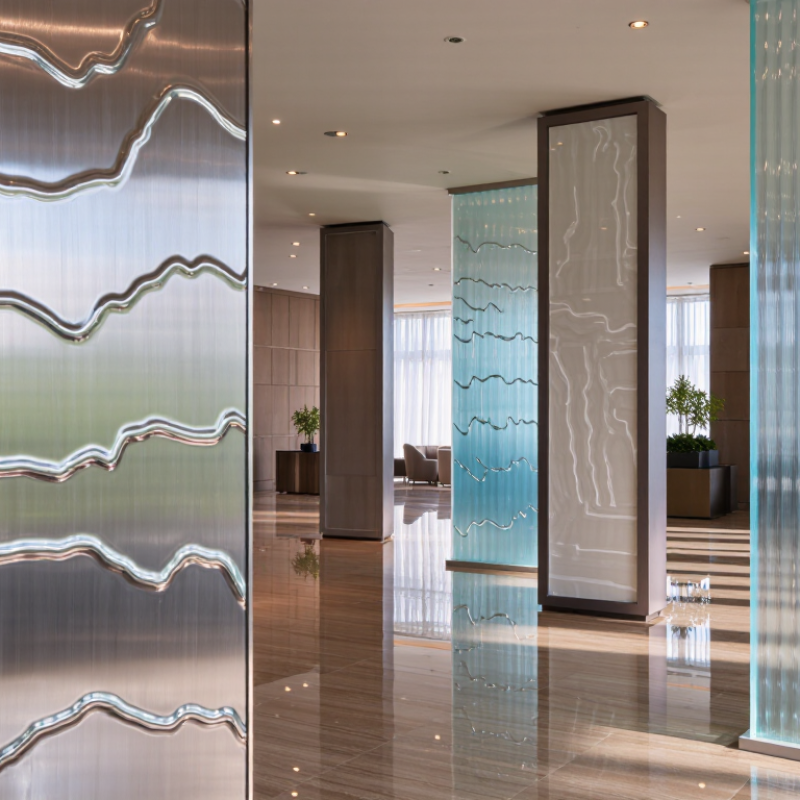
What Water Ripple Panels Are and How They Create Their Effect
Water ripple panels are translucent sheets, usually glass or acrylic, with molded or embossed waves across their surface. Unlike flat glazing, each ridge redirects light at a slightly different angle. A window or small spotlight can send bright, shifting bands across a wall, floor, or ceiling. Not actual water. The movement comes from changing light, not a moving panel. Its appearance depends on the texture, panel thickness, light direction, and distance from nearby surfaces. A low lamp may create broad, soft ripples; a compact beam can produce sharper, more dramatic patterns.
This effect helps explain their appeal: they add visual movement without taking up floor space or introducing sound. In a 2015 Human Spaces report surveying 7,600 workers across 16 countries, respondents in workplaces with natural elements reported 15% higher wellbeing. That survey examined biophilic workplaces, not ripple panels, so it cannot prove that textured panels cause the same result. Still, it offers useful context for why nature-like visual details attract designers. The effect is not always soothing; strong glare or dense patterns can feel busy, especially in a small room. Sample panels under the actual lighting before installation. Minor detail, big difference.
How Light and Surface Texture Shape Their Appearance
Water ripple panels are popular because their surfaces make light feel active. Shallow grooves catch highlights, while recessed lines hold soft shadows. As daylight moves across a wall, the pattern appears to shift, even though the panel stays still. A lamp placed nearby can create brighter streaks and darker channels. The result depends on viewing angle, surface depth, and light direction. Small changes matter.
Tips: Test a sample beside the intended light source. Check it in daylight and after dark. A low-angle lamp can emphasize texture, but harsh light may make the pattern look busy.
Matte finishes often soften reflections and reveal the panel’s contours gradually. Glossier surfaces can produce sharper highlights, though fingerprints and uneven lighting may become more noticeable. Room color also affects the effect: pale walls tend to bounce light, while darker surroundings can make the ripples feel more dramatic. In practice, the same panel may look calm in one corner and restless in another. That contrast is useful, but not always predictable. A small test area can prevent an expensive surprise.
Materials and Design Features of Water Ripple Panels
Water ripple panels get their character from both their base material and the surface pattern. Glass versions may be cast or pressed to create raised, flowing lines. Acrylic is lighter and easier to cut, though it can scratch more readily. Some panels use coated or textured metal, which gives the ripples a sharper, more architectural look. The material affects more than appearance. It also changes weight, durability, cleaning needs, and how light passes through the panel.
Design details matter. Shallow ripples tend to create a softer, more even distortion, while deeper ridges produce stronger highlights and shadows. Place a panel near a window or a concealed light source, and those lines can shift across nearby walls. Subtle, but noticeable. Pattern direction also changes the effect: vertical ridges can make a space feel taller, while horizontal ones draw the eye across it. Samples are useful because finishes can look different under warm indoor lighting than in daylight. A small section may not reveal the full effect, though; scale can change how the texture reads. Before choosing a panel, check its thickness, edge finish, fixing method, and cleaning instructions. A beautiful ripple is less appealing if fingerprints or awkward seams dominate the surface.
Where Water Ripple Panels Are Commonly Used
Water ripple panels are most effective where people notice light and movement: hotel lobbies, restaurant walls, retail displays, reception desks, and elevator interiors. Their shallow, irregular surface breaks reflections into shifting bands, adding depth without projecting far into a room. In a lobby, a panel behind the check-in counter can catch warm pendant light; in a shop, it can frame a display without competing with the products. Small areas often work better than whole walls.
Hospitality is a particularly active setting. Lodging Econometrics reported 6,378 projects in the U.S. hotel construction pipeline at the end of 2024, representing 746,986 rooms. That does not mean every project needs decorative metal, but it signals steady demand for distinctive public interiors. The U.S. Census Bureau reported 2024 construction spending of about $2.15 trillion, including residential and nonresidential work. Water ripple panels can also suit residential kitchens or feature walls, provided the finish and installation match the location. They are not ideal everywhere. Fingerprints show quickly on some reflective finishes, and bright reflections can feel harsh in a narrow corridor. Samples viewed under the actual lighting are worth checking before specifying a large area.
Why Their Visual Appeal and Versatility Drive Their Popularity
Water ripple panels attract attention through movement rather than color alone. Their shallow, flowing contours catch light differently across the day. Under a narrow beam, raised ridges create crisp highlights, while recessed lines hold soft shadows. Even a small shift in viewing angle changes the pattern. The surface can make a plain wall feel deeper without adding shelves or artwork. Subtle, but noticeable. In a quiet room, that changing texture often feels calmer than a busy printed design. It is not automatically soothing, though; strong lighting can make the ripples look sharp or restless.
Their versatility also helps explain their popularity. In a reception area, a panel behind a desk can add depth without crowding the space. At home, one feature wall may be enough beside a sofa or dining table. Panels come in varied colors, finishes, and ripple scales, so they can suit restrained or more expressive interiors. A matte finish softens reflections; a glossy one makes highlights more pronounced. The final effect depends on both placement and lighting. A sample viewed under store lights may look different beside a window at home. That detail is easy to overlook, and worth checking before choosing a full wall.
Why Are Water Ripple Panels Popular? — Visual Appeal and Versatility
The repeating wave illustrates how a rippled surface can catch and redirect light, creating changing reflections as the viewing angle shifts. Water ripple panels are used in varied interior applications, including partitions, cabinet fronts, and decorative features. This normalized sinusoidal curve is a mathematical illustration, not a measurement of a specific panel.
