Why Choose a Tabletop Letterpress for Your Business?
A small business does not always need a full-scale press to make a memorable impression. A Tabletop Letterpress can bring visible depth and texture to business cards, invitations, packaging, and short-run stationery. You can feel the impression beneath your fingertips. That detail can make a modest print run feel considered, not mass-produced.
William Morris, the designer, printer, and arts-and-crafts leader, wrote, “Have nothing in your houses that you do not know to be useful, or believe to be beautiful.” His words were not about tabletop presses, but they offer a useful test for any business purchase: will the press serve real jobs, and will its craft strengthen the work you want customers to remember? A press may suit studios that value hands-on production and distinctive results. It may be less suitable when speed, high volume, or frequent material changes matter most.
There is a learning curve. Paper choice, ink coverage, registration, and pressure all affect the final result. A first test may show uneven edges or a stubborn patch of ink. That is part of the work—and a reason to plan time for practice, maintenance, and spoilage. Before investing, compare the press’s usable format, support, and ongoing costs with your actual orders. Beautiful output matters. So does a workflow your business can sustain.
What a Tabletop Letterpress Is and How It Works
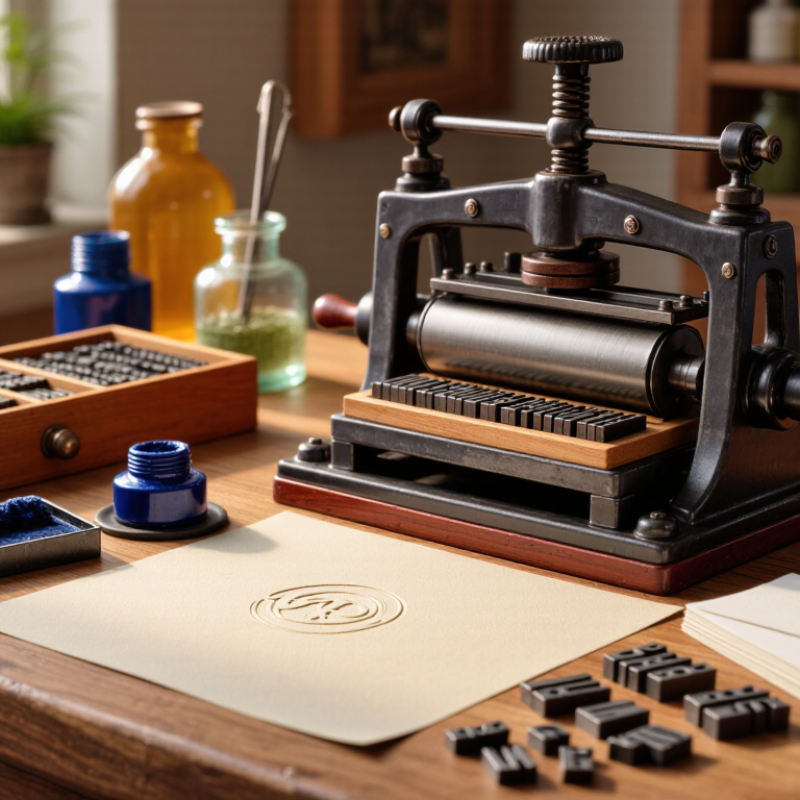
A tabletop letterpress is a compact machine that prints from raised type or an image plate. Ink coats the raised surfaces, while recessed areas stay mostly clean. A sheet of paper is placed against the type, and a platen presses the two together. On many small presses, the operator moves a lever by hand. The press is small, but pressure matters.
To print, the type or plate is secured in a frame, often called a chase. Rollers pass over it to spread a thin, even layer of ink. Too much ink can fill small spaces; too little leaves pale letters. The paper is positioned against guides so each impression lands in the right place. A test print helps reveal uneven pressure or misalignment. Adjustments may take time, especially with fine type or textured paper. That part can be frustrating.
Unlike a digital printer, a letterpress leaves a tactile impression in the sheet. The depth depends on the press, paper, and setup; a very deep impression is not always better. Small tabletop models suit short runs, cards, labels, and hands-on demonstrations, but they are slower than modern production equipment. Beginners may need several proofs before the ink and alignment feel consistent.
Why Choose a Tabletop Letterpress? A Typical Printing Workflow
A tabletop letterpress uses raised type or plates to transfer ink onto paper when the platen applies pressure. The bars show the order of the typical workflow steps, not measured performance data.
Key Components and Printing Materials
A tabletop letterpress works through controlled pressure, so each component affects the impression. The platen presses the sheet against type or a plate held in the chase. Quoins lock the forme in place; loose locking can cause uneven edges or shifting type. Rollers distribute ink across the raised surface, while gauge pins help position each sheet. A tympan and packing layer cushion the impression. Check their condition before a run. Small adjustments matter.
Paper choice matters just as much. Uncoated stocks often show a tactile impression clearly, while very thin sheets may buckle under pressure. Cotton and other soft-fiber papers can take a deeper impression, but results vary with thickness and moisture. Start with test sheets, then record stock, ink, packing, and press settings. It is easy to overlook humidity; that is worth reconsidering. Smithers’ The Future of Global Printing to 2028 estimated the global print market at $818.5 billion in 2021, with a forecast of $834.3 billion in 2026. That broad industry outlook does not predict letterpress demand, but it underlines why dependable material choices and repeatable setup matter. A beautifully printed proof is not always a repeatable production result.
Business Uses for Small-Scale Letterpress Printing
Why Choose a Tabletop Letterpress for Your Business?
Business Uses for Small-Scale Letterpress Printing
A tabletop letterpress suits businesses that need distinctive pieces in modest quantities. Use it for appointment cards, thank-you notes, event invitations, product tags, or short-run packaging inserts. A deep impression on thick, uncoated paper gives a piece a tactile quality that ordinary digital printing may not reproduce. Small runs are the point. You can test a design without ordering thousands.
Physical print can also help a message feel worth keeping. The ANA’s 2023 Response Rate Report reported direct-mail response rates of 4.4% for house lists and 2.9% for prospect lists. Those figures are not a promise of results, but they show that mail can still prompt a response. Two Sides’ 2023 Trend Tracker found that 55% of surveyed consumers preferred reading print and paper communications over digital alternatives.
For a local shop, a pressed card inside each purchase can make a simple follow-up feel personal. A small café might print seasonal menu cards; a maker could add embossed care instructions to gift packaging. Plan for setup time, paper tests, and careful alignment. The first sheets may look uneven. That can be frustrating, and not every “handmade” mark looks intentional. Test the pressure and ink coverage before printing the full batch.
Benefits of Letterpress for Branding and Production
A tabletop letterpress can give business cards, invitation suites, and packaging inserts a tactile identity. Its pressure leaves a visible impression, while ink sits cleanly on the paper’s surface. That texture matters. A customer can feel the raised type and see slight variations that make each piece feel carefully made. Pairing one or two inks with uncoated stock also creates a restrained, consistent look. Smithers’ report, The Future of Global Printing to 2028, values the global print market at about US$818.5 billion in 2023. This figure covers printing broadly, not tabletop letterpress specifically, so it provides market context rather than a sales guarantee.
For production, a tabletop press works well for short runs where detail and hands-on control matter. It can print thank-you cards, limited menus, or small batches of product tags without requiring a large production setup. Operators can adjust paper, ink, and impression between jobs. That flexibility is useful. But setup takes time, and alignment can drift; delicate type may also need patient testing. Keep a sample sheet beside the press, check registration under good light, and record settings that work. The process is not always fast, but thoughtful planning can make its tactile finish a practical part of a brand’s printed materials.
Factors to Consider When Choosing a Press
Choosing a tabletop letterpress starts with the work you plan to make. Check the maximum sheet size, but also leave room for grippers and margins. A press that accepts a large sheet may still feel awkward for small, detailed cards. Consider the impression you need, too. Fine type and thin rules can require careful, even pressure; heavier stock may call for more adjustment. Test a sample if possible.
Think about daily workload, not just the first project. How many impressions can you make comfortably in an hour? A compact press saves floor space, but hand-feeding every sheet can slow a busy schedule. Look closely at registration controls, available rollers, and how easily you can clean ink from the bed and surrounding surfaces. Small details matter. So does maintenance.
The press should fit your operator’s strength and experience. Handles, feed height, and access to the printing area affect comfort during long sessions. Ask whether common replacement parts are easy to obtain, and measure the press against your actual workbench. A little clearance is useful. It is easy to underestimate setup time; paper trimming, inking, and proofing can take longer than the printing itself. That estimate may be wrong for your shop, so leave room to learn.
