
Choosing among China’s top heavy-duty cable reel manufacturers requires more than comparing prices or browsing polished product photos. A Heavy Duty Cable Reel may serve a workshop, construction site, port, or industrial production line, where cable length, load, and handling conditions differ. The right design can support safer cable storage, smoother deployment, and more dependable daily use.
Details matter. Buyers should examine reel capacity, drum dimensions, frame materials, braking options, and compatibility with the intended cable. Ask manufacturers for drawings, material specifications, inspection records, and clear explanations of customization limits. Practical evidence is more useful than broad claims. A sample reel, close-up weld photographs, or a documented load test can help clarify how a product is built. Still, paperwork does not reveal everything; real operating conditions can expose weaknesses that a showroom cannot.
This guide introduces leading Chinese manufacturers and the factors worth checking before requesting a quotation. It considers product range, manufacturing capability, quality controls, communication, and after-sales support. Some suppliers focus on standard reels, while others handle bespoke designs or larger cable-management systems. Those differences can affect lead times and total project cost. Be specific about your operating environment. Dust, moisture, frequent movement, and limited storage space may all shape the best choice. A careful comparison takes time, but it can prevent an expensive mismatch. Manufacturers should welcome precise questions and answer them consistently. That is a useful sign, not a guarantee.
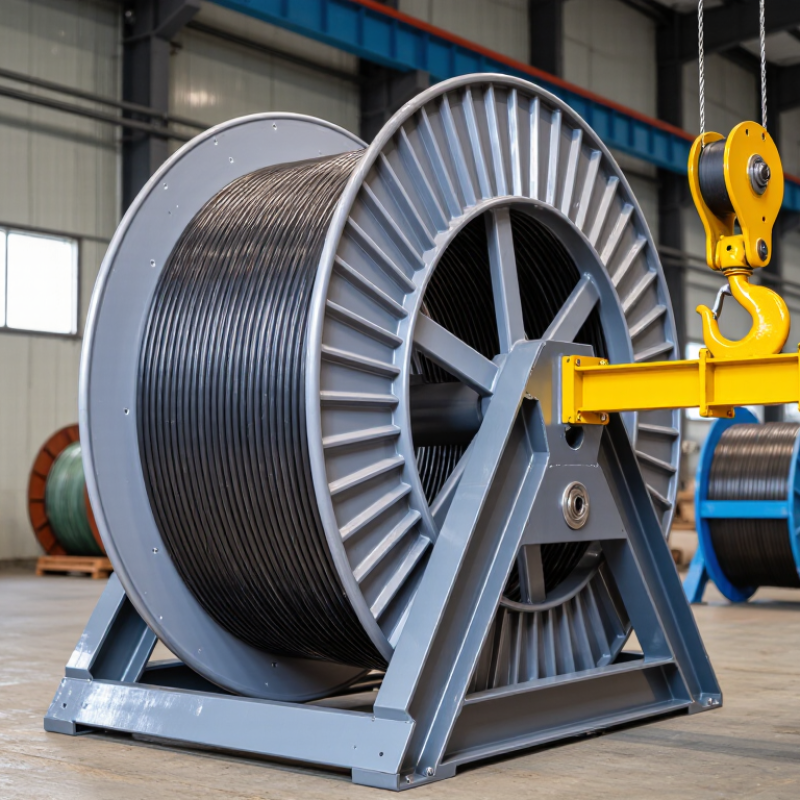
A heavy-duty cable reel is a rotating assembly designed to store, pay out, and retrieve long or thick cables in demanding work settings. It helps prevent tangles and keeps cable off wet floors, gravel, or busy walkways. That matters. “Heavy-duty” has no universal threshold; capacity depends on cable weight, length, diameter, and operating conditions.
The main structure includes a drum, side flanges, a frame, and an axle supported by bearings. The drum holds the cable, while the flanges help keep it in place. A hand crank, gear system, or motor turns the reel. Many powered reels also use slip rings to maintain an electrical connection during rotation. A brake or locking device can control unwanted movement, and a guide may distribute cable evenly across the drum.
Details affect performance. A reel must suit the cable’s minimum bend radius, not just its total length. For example, a thick cable wound too tightly may suffer damage even when the drum appears spacious. Check rated load, speed, mounting position, and exposure to dust or moisture. A large frame can still be a poor match. In practice, cable measurements and the intended route are easy to overlook, but they often determine whether winding stays smooth.
China’s heavy-duty cable reel manufacturing industry serves ports, mines, construction sites, factories, and other demanding workplaces. Manufacturers typically build reels around steel frames, rotating drums, bearings, and cable-guiding systems. In a workshop, the details matter: a clean weld, a properly aligned shaft, and a smooth drum edge can affect daily handling. These are not glamorous parts. They still carry the load.
Product design depends on cable weight, length, operating environment, and how the reel will be moved or mounted. A reel for a fixed production line may need a different drive and braking arrangement from one used on a mobile service vehicle. Buyers should ask for load ratings, drum dimensions, material specifications, and inspection records. Clear answers are useful. Vague claims are not.
Manufacturing quality also depends on testing and practical feedback. Teams may check rotation, structural strength, surface finish, and cable winding under working conditions. Corrosion protection deserves attention where reels face rain, dust, or coastal air. A coating can look sound in a catalogue photo and still need closer inspection at welds and edges. No design is perfect. Real operating conditions often reveal small weaknesses, so maintenance access and replaceable components should be considered before purchase.
China Top Heavy Duty Cable Reel Manufacturers
Leading Heavy-Duty Cable Reel Manufacturers in China
China’s heavy-duty cable reel manufacturers produce equipment for construction sites, factories, mines, and power projects. Their products may handle welding leads, control cables, or long power lines. A reel that looks sturdy in a catalog still needs to fit the actual working conditions.
Check the rated cable weight, drum width, shaft diameter, and braking method. Ask how the frame is welded and how exposed steel is protected from moisture. Details matter. Smooth drum edges help prevent cable damage, while suitable bearings make winding easier under load. For outdoor use, confirm the enclosure and coating requirements rather than relying on broad claims.
Reliable suppliers should explain their design choices and provide clear drawings, material specifications, and relevant inspection records. Ask whether load testing covers the reel configuration you plan to order. Not every reel suits every job. A small mismatch in drum capacity or cable bend radius can create daily frustration. Samples, production photos, and direct technical discussions can reveal more than a polished brochure, though they cannot replace checking the finished unit. Lead times and spare-part availability also deserve attention, especially for customized reels.
Heavy-duty cable reels come in spring-driven, motorized, and hand-cranked designs. Spring reels suit shorter, frequent pulls on workshops and service vehicles. Motorized units handle longer cables and heavier loads, often in ports, mines, and production lines. Hand-cranked reels remain useful where power is unavailable, though winding a long cable takes effort. Small detail, big difference: cable length, conductor size, duty cycle, and mounting position must be specified together.
Applications are widening as electrification expands. The International Energy Agency’s Global EV Outlook 2024 reports that public charging points exceeded four million worldwide in 2023, with more than 1.3 million added that year. This is not direct evidence of reel sales, but it signals more charging infrastructure where managed cable storage can matter. Manufacturing capability should cover reel frames, drums, slip rings, drive systems, cable selection, and load testing. Buyers can ask for rated current, voltage drop, ingress protection, cycle-life results, and drawings for installation clearance. A reel that works in a clean factory may struggle with salt spray, dust, or repeated impact. Specifications still get missed. That deserves a second review.
Qualitative fit ratings (1 = limited fit, 5 = strong fit), based on typical drive and installation characteristics. Ratings are comparative guidance, not market-share or test data.
When evaluating a Chinese heavy-duty cable reel manufacturer, look beyond catalog photos. Ask for drawings that show drum dimensions, shaft details, cable capacity, and rated load. Confirm whether the factory makes key components in-house or relies on subcontractors. Details matter. A video call from the workshop can help you see actual machining, assembly, and inspection steps.
Request test records for the reel’s intended duty, including load, rotation, and braking checks where applicable. Compare the sample with the approved drawing, and check welds, finish, and cable winding by hand. Ask how serial numbers connect products to inspection records. A certificate alone is not enough; verify its scope, issuing body, and relevance to your order. Ask for references from buyers with similar reel sizes or operating conditions.
Discuss tolerances, lead times, spare parts, packaging, and response times in writing. Check how the supplier handles design changes and defects, not only routine orders. A sample may look sound but reveal little about batch consistency. That is easy to miss.
Consider a pilot order before scaling up, and keep a record of agreed specifications. No evaluation is perfect; factory visits and third-party inspections add time and cost, so match the level of checking to the reel’s risk and use.