
What Are the Top Fingerprint Scanner Suppliers in China?
Choosing a Fingerprint Scanner supplier in China takes more than comparing prices or polished product photos. Buyers need to examine sensor type, image quality, durability, integration options, and after-sales support. A scanner mounted beside a factory entrance faces dust, frequent use, and changing light. A compact module in a cabinet has different demands. The right supplier should explain these differences clearly and provide test data that matches the intended application.
Biometric researcher Anil K. Jain describes biometrics as “the science of recognizing individuals based on their physical or behavioral traits.” That principle makes performance and responsible data handling central to supplier evaluation. Ask for sample units, clear specifications, and evidence of testing under realistic conditions. Check whether the supplier offers SDK documentation, integration support, and a defined warranty. A quick demonstration helps, but it does not replace sustained testing.
A neat ranking can still mislead. Some suppliers specialize in access-control terminals, while others focus on OEM sensor modules or embedded devices. Their strengths are not interchangeable. This guide compares leading Chinese suppliers by product range, technical capability, customization, manufacturing experience, and service responsiveness. It also points out practical questions buyers should ask before requesting a quotation. Details matter. Specifications can look impressive on paper, yet a scanner may struggle with dry fingers or repeated enrollment. Use the comparison as a starting point, not a final endorsement.
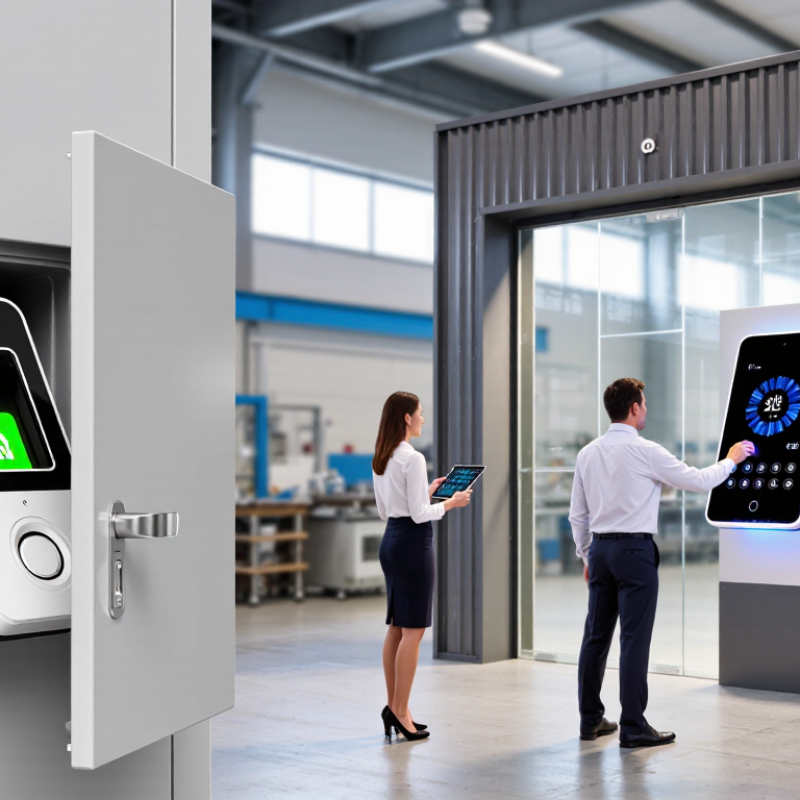
What Fingerprint Scanners Are and How They Work
A fingerprint scanner reads the ridges and valleys on a fingertip, then converts their pattern into a digital image or template. Optical sensors capture reflected light, while capacitive sensors measure tiny electrical differences between raised ridges and recessed valleys. Some devices use ultrasound to map the surface in greater detail. The scanner’s software identifies features such as ridge endings and splits, then compares them with an enrolled template. It usually checks a similarity score, not two perfectly identical pictures.
Capture quality matters. Dry skin, damp fingers, pressure, and sensor scratches can all affect the reading. NIST’s 2012 Fingerprint Vendor Technology Evaluation assessed 18 matching systems, underscoring the importance of testing algorithms with real fingerprint data. A scanner’s performance therefore depends on both its sensor and its matching software. A small but important distinction.
Tip: Test several fingers under ordinary conditions, including slightly dry skin. Check response time and failure rates, not just the advertised sensor type. A clean sensor helps, but it cannot fix every poor capture. That limitation deserves attention.
| Comparison Area | Technology or Capability | How It Works / What to Verify | Practical Strengths | Key Considerations |
|---|---|---|---|---|
| Optical fingerprint scanner | Light-based image capture | A light source illuminates the finger, and an image sensor records the pattern of ridges and valleys from reflected light. | Well-established technology; can capture detailed fingerprint images when the optical design and image processing are suitable. | Image quality can be affected by dirt, moisture, surface condition, and the quality of the optical components. |
| Capacitive fingerprint scanner | Electrical sensing | An array of tiny sensing elements measures differences in capacitance between fingerprint ridges and valleys. | Common in compact touch-based devices; does not require a camera-style optical path. | Performance depends on sensor design and finger contact. Dry, wet, dirty, or damaged skin may affect capture. |
| Ultrasonic fingerprint scanner | Acoustic sensing | Ultrasonic pulses interact with the finger surface, and returning signals are used to form a fingerprint representation. | Can capture surface detail without relying on visible-light imaging. | Implementation, placement, materials, and signal processing affect performance; verify operation in the intended device. |
| Matching and template handling | Sensor, module, or host processing | Captured fingerprint data is processed into a representation and compared with an enrolled template. The matching location depends on the product architecture. | Different architectures can support different device designs, privacy requirements, and system integrations. | Confirm where matching occurs, how templates are protected, and whether raw images are stored or transmitted. |
| Liveness detection | Optional anti-spoofing capability | Some systems analyze additional signals or characteristics to help distinguish a live finger from a presentation attack. | May strengthen authentication when implemented and tested for the intended threat model. | Do not assume every scanner includes liveness detection. Request test evidence and clarify supported attack types. |
| Interfaces and integration | USB, UART, SPI, or other documented interfaces | The sensor or module communicates with a host device through the interfaces supported by that particular product. | Interface options can simplify integration into computers, access-control equipment, and embedded systems. | Check protocol documentation, drivers, SDK availability, operating-system support, power needs, and integration requirements. |
| Environmental and durability testing | Application-specific validation | Ask for documented operating limits and test results for conditions relevant to the target product, such as temperature, humidity, dust, or repeated use. | Helps assess whether a scanner is suitable for its intended indoor or outdoor environment. | Test conditions and ratings vary by model. Compare documented specifications rather than assuming they apply across a product range. |
| Supplier qualification | Technical documentation, quality controls, and production support | Review product specifications, sample-test results, traceability, change-control practices, manufacturing quality processes, and after-sales support. | Provides a practical basis for comparing suppliers without relying on product claims alone. | Confirm the exact model, customization scope, production capacity, lead times, warranty terms, and applicable certifications before ordering. |