
Custom sheet metal parts in as little as 3 days - Get a quote now!

What Are the Top Cat5 Extender Types in 2026?

Cat5 Extender choices in 2026 depend on the signal, the distance, and the equipment at each end. A model that works well for a keyboard may not suit a high-resolution display. Small details matter: cable category, power supply, connector type, and the required resolution can change the result.

This guide compares common Cat5 Extender types, including HDMI, USB, Ethernet, and KVM options. It looks at where each type fits, what its limits are, and which specifications deserve a closer check. Some products advertise impressive distances, but real performance can depend on cable quality, interference, and installation. The label alone is not enough.

A verified expert quotation was not supplied with the source material, so an attribution should not be invented. Add a checked quotation here: “[Insert a verified statement about extender selection],” says [verified expert name and credentials]. That perspective can help readers weigh practical requirements against marketing claims. Measure the cable route. Check compatibility. Then compare the extender’s documented range with the setup you actually need. Some decisions will still involve trade-offs; that deserves a candid look.
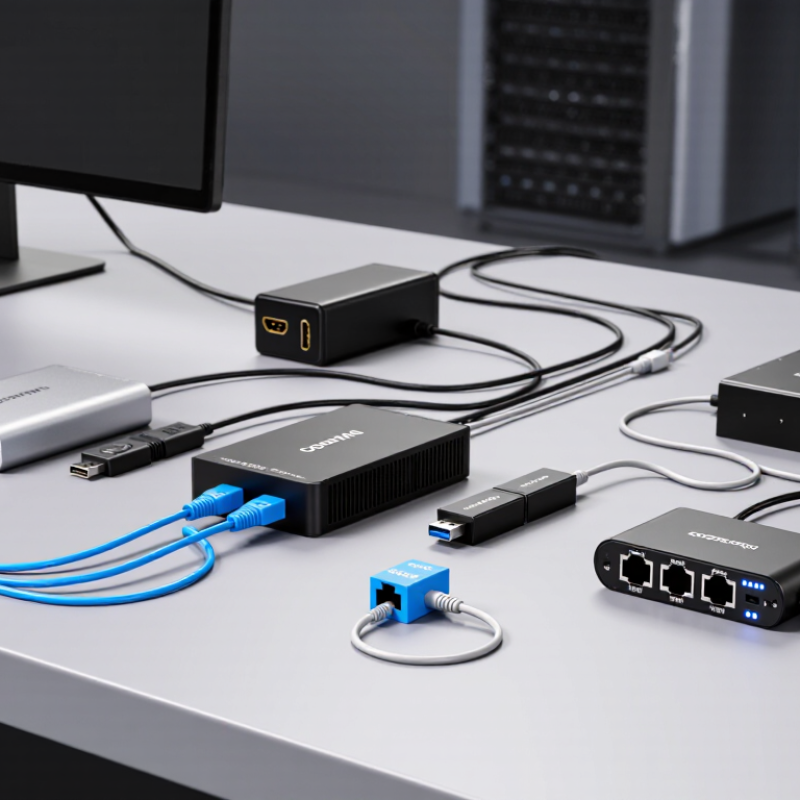
What Are the Top Cat5 Extender Types in 2026?

What a Cat5 Extender Is and How It Works

A Cat5 extender is a device that carries network traffic beyond the usual reach of a copper Ethernet link, often by using the cable already installed in a building. A standard Ethernet channel is generally limited to 100 meters. An extender can regenerate the signal or use another transmission method over the cable pairs, depending on its design. Some models also pass power for devices such as access points or security cameras. Not magic. Many setups use one unit near a switch and another at the far end; some need power at both ends.

The word “extender” covers different designs, so check the distance and speed ratings for the exact cable type. A long link may negotiate at a lower speed than a short one, and power delivery can fall short if the device draws too much. Cable condition matters. In real installations, loose terminations, sharp bends, and old splices can cause intermittent drops that look like equipment failure. Test the run before installation, and confirm that the extender supports the required Ethernet standard and PoE load. The label can be confusing; stated maximum distance is not always the distance you should plan around.

How Cat5 Extenders Are Classified by Signal Type

What Are the Top Cat5 Extender Types in 2026?

Cat5 extenders are best compared by the signal they carry, not just by their cable connections. Video extenders send HDMI or similar display signals between a source and a screen. USB extenders carry data to devices such as keyboards, cameras, or touch panels. Ethernet extenders move network traffic across longer cable runs. Some units instead carry audio or low-voltage control signals. These categories are not interchangeable.

The signal type determines what to check before installation. For video, confirm resolution support and whether the system needs a local power supply. For USB, check device compatibility and the supported data rate. Network extenders may depend on the existing cabling and the network link speed. Read the distance rating carefully; real-world performance can vary with cable quality, connectors, and electrical interference. A cable labeled Cat5 does not guarantee the same result in every setup. That detail is easy to overlook.

Tips: Match the extender to the exact signal and endpoint devices. Test the cable run before mounting equipment, and leave room to troubleshoot. If a long run works only intermittently, the extender may not be the only cause; damaged pairs or poor terminations can also matter.

The Main Cat5 Extender Types Available in 2026

The Main Cat5 Extender Types Available in 2026

Cat5 extenders are not one device category. Ethernet line extenders use a pair of copper wires to carry network traffic beyond a standard Ethernet link. Many rely on DSL-based signaling, so distance and speed depend on cable condition, wire gauge, and interference. IEEE 802.3 cabling guidance sets a 100-meter channel limit for common twisted-pair Ethernet links. An extender can bridge longer routes, but it does not make every old cable reliable. That matters.

PoE extenders pass both data and power to a remote device, such as a ceiling-mounted access point. Check the unit’s power budget and the voltage drop across the cable; a long run may leave too little power at the far end. AV baluns form another group. They convert HDMI or other video signals for transport over Cat5-style cable, but they are not Ethernet extenders. Match the transmitter, receiver, cable type, and resolution requirements.

The 2018–2023 Annual Internet Report projected global IP traffic at 396 exabytes per month by 2022, highlighting the scale of network demand. That forecast is context, not proof that an extender suits a specific site. For a real installation, test the actual cable and verify throughput, latency, and power under load. A tidy label can help. Yet cable quality is often the weak link.

What Are the Top Cat5 Extender Types in 2026? — The Main Cat5 Extender Types Available in 2026

Extender Type What It Carries Typical Reach or Extension Common Applications Key Considerations
Ethernet Repeater or Active Extender Ethernet data over twisted-pair network cable Typically adds another Ethernet segment; standard copper Ethernet channels are generally limited to 100 m per segment. Connecting network devices in long corridors, warehouses, and large buildings Each added segment needs suitable powered equipment. Cable category, installation quality, and network speed affect performance.
PoE Extender Ethernet data and Power over Ethernet Often extends a PoE link by approximately one additional cable segment; some installations use multiple extenders where supported. Supplying access points, IP cameras, and other PoE devices beyond the original cable run Available power decreases with cable length and each extender. Check the PoE standard, device power demand, and total channel length.
VDSL2 Ethernet Extender Ethernet traffic converted for transmission over a copper pair Can reach several hundred metres or more, but achievable speed and distance vary substantially with cable condition and pair quality. Reusing existing building wiring between network locations Requires compatible endpoint units and a suitable copper pair. Longer runs generally mean lower data rates; it is not equivalent to standard Ethernet cabling.
HDMI-over-Cat5/5e Extender HDMI video and, depending on the system, audio and control signals Commonly tens of metres; some HDBaseT systems support runs up to about 100 m under specified conditions. Connecting a media source to a display in a classroom, meeting room, or digital-signage installation Supported resolution, refresh rate, HDR, and other features depend on the extender design and cable. Use the cable category and wiring method specified for the system.
USB-over-Cat5 Extender USB data between a host computer and remote peripherals Model-dependent; many systems are designed for runs longer than a direct USB cable, with supported distances commonly measured in tens of metres. Remote keyboards, mice, touchscreens, printers, and USB peripherals USB version, data rate, power delivery, and compatibility vary. Some units require local power at the remote end.
KVM Extender Keyboard, video, and mouse signals; some systems also carry USB audio or other peripherals Often supports remote operation across a building; maximum reach and video capability depend on the system and cable. Controlling a computer from a separate room, control desk, or equipment area Check supported video resolution, number of displays, USB features, and whether the link needs one cable or multiple cable runs.
Serial Extender RS-232, RS-422, or RS-485 serial data Range depends on the serial standard, baud rate, wiring, and converter design; RS-485 is commonly used for longer multidrop links than RS-232. Connecting industrial controllers, sensors, access-control equipment, and legacy devices Confirm the electrical interface, wiring pinout, termination, and grounding requirements. A Cat5 cable does not itself convert serial signals.

Selection note: “Cat5 extender” describes equipment that uses twisted-pair cable; it does not identify one universal extension standard. Actual distance and performance depend on the extender type, cable category and condition, installation, and required signal quality. Cat5e or higher cable is commonly chosen for new installations.

How to Compare Range, Speed, and Compatibility

What Are the Top Cat5 Extender Types in 2026?
How to Compare Range, Speed, and Compatibility

Cat5 extenders generally serve different jobs: Ethernet models carry network data, while HDMI and KVM models extend video, keyboard, and mouse signals. Their range and speed depend on the extender pair, cable quality, and installation conditions. A quoted maximum distance is not always a practical target. Long runs, tight bends, and electrical interference can reduce performance. Check whether the unit supports your required resolution or network rate, not just its advertised distance. No single type wins.

Tips: Read the cable category printed on the jacket. Cat5e may support higher data rates than older Cat5, but the extender must support them too. Check whether power is needed at one end or both. Test the actual cable run before mounting equipment.

Compatibility deserves equal attention. Confirm connector types, required power, and supported signal formats at both ends. For Ethernet, compare the extender’s rated throughput with your devices; a fast port does not guarantee fast real-world transfers. For video, check resolution and refresh rate together. Small print is easy to miss, and specifications can be less clear than they should be. If the route passes near motors or fluorescent lights, allow extra margin or consider a different cable path. A short bench test can reveal problems before the cable disappears behind a wall.

What Are the Top Cat5 Extender Types in 2026? How to Compare Range, Speed, and Compatibility

Typical added segment reach for common extension approaches. Values are reference examples, not a guarantee for every device or installation.

How to compare: A passive coupler adds no extra supported cable length; standard copper Ethernet channels are limited to 100 m. A powered repeater or PoE extender can add another copper segment, typically up to 100 m, subject to device specifications and network limits. For reference, 1000BASE-SX supports up to 550 m over OM2 multimode fiber at 1 Gbps; this is the fiber segment, not a Cat5 cable run.

Speed and compatibility: Cat5e supports 1 Gbps Ethernet for a compliant channel up to 100 m. Repeater and PoE extender speeds vary by model, so check the port rate, supported Ethernet and PoE standards, and available power budget before buying. Fiber conversion requires compatible optical interfaces and fiber type.

How to Choose and Install the Right Cat5 Extender

Choosing a Cat5 extender starts with the signal you need to carry. Ethernet repeaters extend network links; PoE extenders also pass power to a remote camera or access point. USB and HDMI extenders serve peripherals and displays, but require matching transmitter and receiver units. Check the device’s supported resolution, data rate, and power budget before buying. IEEE 802.3 sets a 100-meter channel limit for standard 1000BASE-T cabling. ANSI/TIA-568.2-E cabling guidance also distinguishes permanent links from complete channels, including patch cords. An extender may bridge a gap, but it does not guarantee full rated speed over any cable.

For installation, map the route and measure the actual cable path, including slack and patch leads. Use sound, correctly terminated Cat5e or better cable, and avoid tight bends, crushed sections, and runs beside electrical wiring. Mount powered units where they can shed heat, then connect the source and destination as specified by the device manual. Test link speed, packet loss, and PoE operation at the far end. A link light alone is not enough. If performance falls short, cable quality or power loss may be the cause; the extender is not always the weak point.

Tips: Label both ends before routing. Test before closing walls. Keep spare cable away from motors and fluorescent fixtures, which can introduce interference. One detail worth rechecking: advertised extension distances often depend on cable grade, connected load, and data rate, so treat the maximum as a condition—not a promise.