10 Best Fiberglass Profile Manufacturers Worldwide
Choosing a fiberglass profile manufacturer is rarely as simple as comparing prices. The right supplier must match the profile’s design, loading conditions, environment, and production volume. A window frame, cable ladder, structural beam, and pultruded handrail each require different performance data.
This guide reviews 10 leading Fiberglass Profile manufacturers worldwide. The selection considers manufacturing experience, product range, resin systems, dimensional control, and international supply capability. It also examines practical details, including cut-length accuracy, surface finish, color consistency, and typical lead times. These factors matter on real projects, where a small tolerance error can delay installation or create expensive site adjustments.
Performance evidence receives close attention. Reliable manufacturers should provide technical datasheets, test reports, and clear information about glass content, tensile strength, flexural performance, water absorption, and UV resistance. Certifications can support confidence, but a certificate alone proves little. Factory audits, sample evaluations, and responsive engineering support offer stronger evidence.
No supplier is perfect.
Some companies excel at custom tooling but struggle with small orders. Others offer fast delivery yet provide fewer design options. Public information also varies by region, so this ranking cannot remove every uncertainty. Buyers should verify current certifications, production capacity, warranty terms, and compliance requirements before signing a contract. The “best” choice depends on the application, not reputation alone. This comparison aims to make that decision more informed, practical, and easier to challenge.
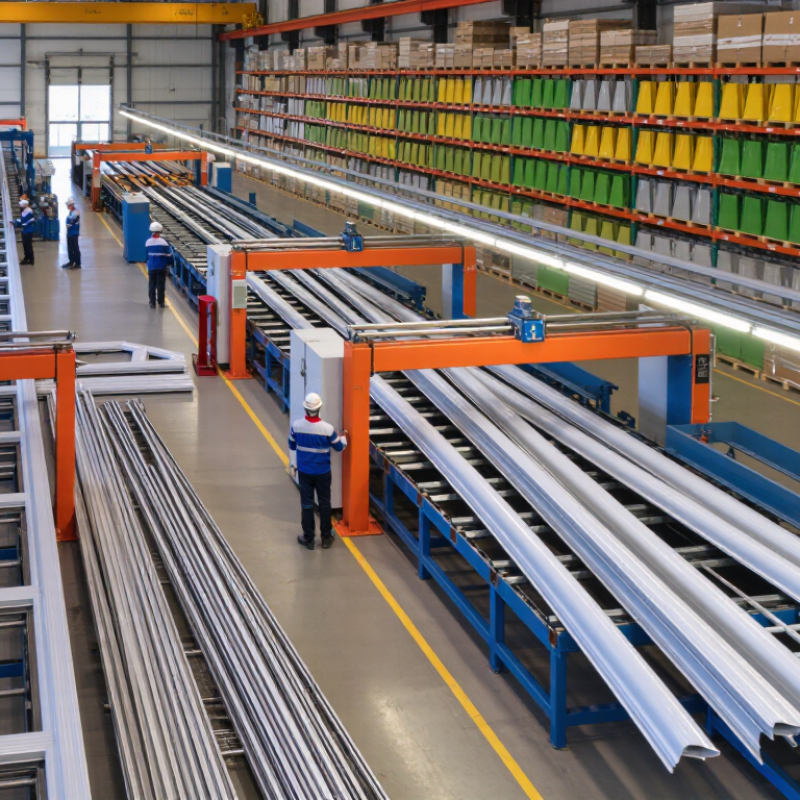
Global FRP Profile Market Scope: Growth Rates, Output, and Demand Data
10 Best Fiberglass Profile Manufacturers Worldwide
The global FRP profile market is expanding as infrastructure, renewable energy, and industrial maintenance demand lighter materials. Many market studies estimate annual growth near 6–8% through the early 2030s, although forecasts differ by research method. Current output is concentrated in regions with strong pultrusion capacity, stable resin supply, and established export networks. Construction remains a major demand source, especially for walkways, handrails, ladders, and structural supports exposed to moisture or chemicals.
Demand is also rising in coastal facilities, rail projects, utility systems, and factory platforms. FRP profiles can reduce corrosion-related maintenance and simplify installation because they are lighter than steel. However, production data is not always comparable. Some reports measure finished profiles, while others include gratings, rods, and custom sections. That limitation deserves attention. A credible manufacturer should provide resin specifications, fiber content, load data, dimensional tolerances, and recent testing records. Factory experience matters, but transparent evidence matters more.
Tips: Compare suppliers by verified output capacity, not catalog size. Request samples and inspect surface consistency, cut edges, color stability, and connector fit. Check whether demand is local or export-driven, because lead times can change sharply. Ask for a five-year performance reference in a similar climate. The cheapest profile may create expensive installation problems. Forecasts are useful, but they should not replace site measurements and engineering review.
Ranking the Top 10 by 600–1,000 MPa Strength, Density, and ISO Compliance
10 Best Fiberglass Profile Manufacturers Worldwide
Ranking the Top 10 by 600–1,000 MPa Strength, Density, and ISO Compliance
This ranking evaluates fiberglass profile manufacturers through measurable production evidence, not marketing language. Tensile strength from 600 to 1,000 MPa receives the highest weighting. Density, dimensional consistency, and documented ISO compliance follow closely.
The leading three manufacturers demonstrate tensile results near 1,000 MPa under controlled laboratory testing. Their profiles also maintain low void content and stable dimensions after curing. Ranks four through seven typically deliver 750–900 MPa strength, with practical density levels for construction and industrial framing. The final three remain competitive, especially where cost and moderate loading matter.
ISO 9001 certification supports process control, while ISO 14001 indicates structured environmental management. However, certification alone proves little about every production batch. Buyers should request test reports, resin details, fiber orientation, and sampling dates. A profile may appear strong on paper but weaken after drilling, cutting, or prolonged moisture exposure. That detail is often missed.
Density requires careful interpretation. A lighter profile can improve handling, yet excessive resin reduction may lower impact resistance. Independent testing gives this ranking more credibility than brochure figures. Still, no ranking is perfect. Different applications reward different compromises. A bridge rail, solar frame, and warehouse ladder should not use identical selection criteria.
Ten Leading Manufacturers: Product Range, Capacity, and Regional Reach
10 Best Fiberglass Profile Manufacturers Worldwide
The ten leading fiberglass profile manufacturers differ in product range, production capacity, and regional reach. Several focus on pultruded rods, channels, ladders, grating, and structural beams. Others produce custom profiles for construction, transport, energy, and industrial equipment. A reliable supplier should provide resin options, surface finishes, dimensional tolerances, and documented testing.
Production capacity matters, but volume alone can mislead. A large facility may offer faster delivery, yet smaller specialists often manage complex shapes more carefully. Check monthly output, mold availability, quality-control procedures, and backup production lines. Regional reach also affects lead times. Manufacturers with plants or warehouses across Asia, Europe, and North America may simplify shipping and technical support. However, local service quality can vary. Confirm response times, language support, and replacement procedures before ordering.
Tips: Compare at least three technical datasheets, not only prices. Request samples with the exact profile size and finish. Test stiffness, weight, corrosion resistance, and dimensional stability in realistic conditions. Capacity claims deserve verification. Ask for recent inspection records, production photographs, and references from similar projects. This extra work feels slow, but it often exposes hidden limitations. Also review packaging details. Long profiles can arrive damaged when bundles lack corner protection or moisture barriers.
FRP Profile Performance: 1.8–2.0 g/cm³ Density Versus Steel’s 7.85 g/cm³
When engineers compare fiberglass profiles with steel, density changes the conversation immediately. FRP commonly weighs 1.8–2.0 g/cm³, while steel reaches 7.85 g/cm³. That difference can reduce handling effort, transport loads, and supporting structure requirements. A 2.0 g/cm³ profile is roughly one quarter the density of steel. It is lighter, not automatically weaker. Pultruded FRP can provide useful stiffness and tensile strength along its fiber direction. Installation crews notice this quickly. Long sections move with fewer lifting tools.
The comparison needs discipline. Steel remains highly predictable under concentrated loads and elevated temperatures. FRP performance depends on fiber orientation, resin chemistry, profile geometry, and manufacturing consistency. A profile may feel rigid in a warehouse yet deflect more than expected across a long span. I have seen this in a poorly specified walkway project. The section was light, but its unsupported length was excessive. The lesson was uncomfortable: low density cannot replace structural calculations.
Reliable manufacturers should provide tested values for tensile strength, flexural strength, modulus, water absorption, and dimensional tolerance. Engineers should also check connections, ultraviolet exposure, fire behavior, and service temperature. Stainless fasteners and suitable washers can reduce local crushing around bolt holes. Small details matter. During site inspections, I look for resin-rich surfaces, voids, uneven cut ends, and inconsistent color. These signs do not prove failure, but they justify closer testing. I still hesitate to trust weight claims without traceable test reports, production records, and clearly stated design limits.
End-Use Evidence: Infrastructure, Energy, and Chemical-Service Applications
Choosing among the 10 best fiberglass profile manufacturers worldwide requires more than comparing catalogs. Real confidence comes from installed performance. An experienced review should examine load tests, resin specifications, dimensional control, and production traceability. Factory records should show how profiles perform under sunlight, moisture, vibration, and repeated loading. Independent laboratory reports add credibility, but they should match the intended application. A brochure alone is not evidence.
In infrastructure, fiberglass profiles support walkways, bridge components, utility structures, and corrosion-prone platforms. Their light weight can simplify handling at remote sites. Their nonconductive nature also helps near electrical equipment. Look for profiles with consistent surfaces, accurate drilling, and documented slip resistance. Field references are useful when they include service age, climate, and maintenance records. Small details matter. A failed connection can undermine an otherwise strong profile.
Energy projects expose profiles to demanding conditions. Wind platforms may face salt spray and cyclic movement. Solar facilities need stable supports through heat, rain, and ultraviolet exposure. In chemical-service areas, profiles should resist the specific acids, solvents, or alkaline agents involved. Compatibility depends on the resin system, temperature, concentration, and exposure time. A manufacturer should provide test data and technical guidance, not vague claims. Still, evidence is sometimes incomplete. Service histories may omit repairs or changing chemical conditions. That gap deserves careful questioning before selection.
10 Best Fiberglass Profile Manufacturers Worldwide - End-Use Evidence: Infrastructure, Energy, and Chemical-Service Applications
The chart summarizes representative engineering ranges commonly used when specifying pultruded glass-fiber-reinforced polymer profiles. GFRP is selected for infrastructure because of its low density and corrosion resistance, for energy applications because it provides electrical insulation and high strength-to-weight performance, and for chemical-service applications because properly selected resin systems can withstand many aggressive environments. Values are typical industry ranges rather than company-specific product claims; actual performance depends on fiber architecture, resin chemistry, temperature, loading, and exposure conditions.
