
Stainless Steel Hollow Bar is a specialized product, not simply solid bar with a hole. Its internal bore, wall thickness, straightness, surface finish, and grade all affect machining time and service life. For buyers, small differences matter. A rough bore can mean extra tool wear; inconsistent dimensions can disrupt a production run.
The market sits within a substantial materials industry. World Stainless reported global stainless-steel crude production of about 58.4 million tonnes in 2023, up from 55.3 million tonnes in 2022. This figure covers stainless steel overall, not hollow bar alone—a distinction supplier comparisons often overlook. Metallurgist Harry Brearley is widely associated with the remark, “I did not invent stainless steel; I discovered it.” His work reminds buyers that material performance depends on understanding the alloy, not just its name.
This guide examines ten suppliers through practical criteria: product range, grade availability, manufacturing capability, quality documentation, customization, and export experience. The aim is to help engineers and purchasing teams ask better questions before requesting quotations. Can a supplier provide traceable test certificates? Are tolerances stated clearly? Will sample dimensions match the production order? These details deserve attention.
No list can suit every application. Some buyers need corrosion resistance; others prioritize machinability, lead time, or cost. Supplier information also changes, and published claims may not tell the whole story. Use this overview as a starting point, then verify specifications directly with each company. A careful comparison takes time. So does correcting a poor fit.
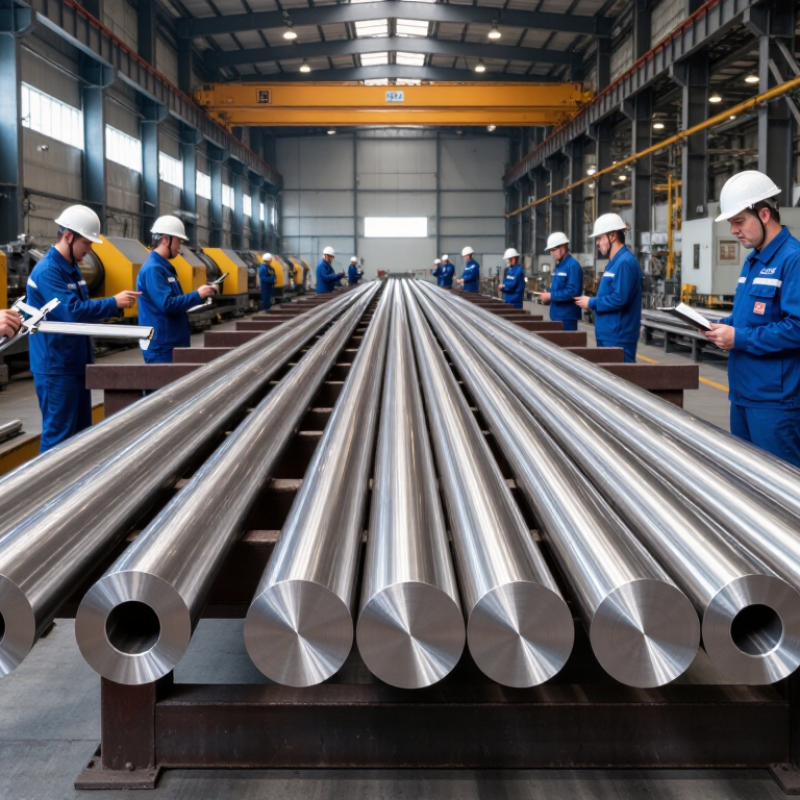
A stainless steel hollow bar is a round product with a central bore running through its length. It is often used when a component needs a machined inner and outer surface, such as a pump shaft or valve body. The bore can reduce excess material, but it does not automatically make a part lighter or cheaper. Dimensions and machining needs matter.
Production routes vary. One common method heats a solid stainless billet and pierces it to create a hollow center. The tube-like shell may then be rolled or drawn to refine its diameter and wall thickness. Some products are made by drilling or boring solid stock instead. Heat treatment can help achieve specified mechanical properties, while pickling removes surface scale. Straightening and dimensional checks follow. Small variations remain possible.
The route is not identical at every mill, and the label “hollow bar” alone says little about tolerances or surface condition. Buyers should check the stated outer diameter, bore size, straightness, grade, and inspection documents. A clean, concentric bore is useful. So is asking how it was made. One detail is easy to overlook: a tighter bore tolerance may add cost, yet still save machining time later.
Supplier-neutral technical reference: key product characteristics, manufacturing stages, and checks to consider when evaluating stainless steel hollow bar suppliers.
| No. | Evaluation Dimension | Typical Technical Information | What Buyers Should Verify |
|---|---|---|---|
| 1 | Product definition | A stainless steel hollow bar is a hollow-section product supplied in bar form. It has an outside diameter and an inside diameter, and may be produced as a seamless product or finished by further machining. | Confirm whether the quotation is for hollow bar, mechanical tubing, or another hollow product, and agree on the applicable product specification. |
| 2 | Common stainless steel grades | Commonly specified grades include 304 (UNS S30400), 316L (UNS S31603), and duplex 2205 (commonly UNS S32205 or S31803). Grade suitability depends on the service environment and required properties. | Check the ordered grade against the material test certificate and verify that its composition and mechanical properties meet the purchase specification. |
| 3 | Starting material | Manufacturing commonly begins with a stainless steel billet or other suitable solid feedstock. The feedstock is selected for the required grade and product route. | Request traceability between the finished bars and the original heat or batch identification. |
| 4 | Heating and forming | For hot-worked seamless routes, the billet is heated and formed into a hollow shape, for example by piercing or extrusion. The exact route depends on product dimensions and the producer’s process. | Ask the supplier to identify the production route and confirm that it is compatible with the specified dimensions and quality requirements. |
| 5 | Sizing and finishing | After forming, the hollow product may be sized, straightened, cut to length, and further processed. Cold drawing or machining may be used where tighter dimensions or a particular surface finish are required. | Specify outside diameter, inside diameter or wall thickness, length, straightness, tolerances, and surface condition on the purchase order. |
| 6 | Heat treatment | Heat treatment may be applied as required by the grade, product specification, and manufacturing route. The required condition should be stated rather than assumed. | Confirm the required heat-treatment condition and request supporting test documentation where specified. |
| 7 | Descaling and surface condition | Hot-worked stainless products may require descaling or other surface treatment. Supplied finishes can vary, so the required finish should be agreed in advance. | Define acceptable surface condition and clarify whether pickling, polishing, or machining is included in the quoted scope. |
| 8 | Dimensional inspection | Relevant measurements can include outside diameter, inside diameter or wall thickness, length, and straightness. Applicable tolerances depend on the order and governing specification. | Request inspection records showing the measured characteristics and the acceptance criteria used. |
| 9 | Material and mechanical testing | Depending on the order specification, verification may include chemical analysis and mechanical testing. Test requirements should be agreed before production. | Review the material test certificate and confirm that heat numbers, grade, test results, and product identification are consistent. |
| 10 | Standards and documentation | ASTM A511/A511M covers seamless stainless steel mechanical tubing; EN 10297-2 addresses seamless stainless steel tubes for mechanical purposes. The term “hollow bar” alone does not establish which standard or tolerances apply. | State the required standard and edition in the order, and confirm that its scope, dimensions, inspection, and documentation requirements match the intended product. |
Note: This table provides general technical guidance, not a ranking of suppliers. Final grade, dimensions, tolerances, testing, and acceptance criteria should be confirmed against the applicable standard and the written purchase specification.
China Top 10 Stainless Steel Hollow Bar Suppliers?
Common Grades, Standards, and Product Specifications
Stainless steel hollow bars are selected by grade, service environment, and machining needs. Grade 304 suits many indoor and mildly corrosive applications. Grade 316, with added molybdenum, is often specified where chloride exposure is a concern. Low-carbon grades such as 304L and 316L can support welding requirements. Duplex 2205 offers higher strength, but fabrication and heat treatment need careful control. No grade fits every job.
For seamless mechanical tubing, buyers may reference ASTM A511/A511M; EN 10297-2 covers stainless steel tubes for mechanical and general engineering purposes. These standards are not interchangeable with a grade designation alone. Confirm the applicable edition, manufacturing route, inspection requirements, and acceptance criteria in the purchase specification. ASTM A276 addresses stainless steel bars and shapes, so it should not automatically be treated as a hollow-bar specification.
State outside diameter, inside diameter or wall thickness, length, dimensional tolerances, straightness, and surface condition. Include heat-treatment condition, test documentation, and any required nondestructive examination. Small differences matter: a thick wall can reduce machining time, yet increase material use and weight. A quotation can appear complete while leaving tolerances unclear. That deserves a second look. Ask suppliers to identify deviations explicitly, rather than assuming every catalog dimension is available to the same tolerance.
Comparison of midpoint values from the specified chemical-composition ranges for selected stainless steel grades. Actual limits depend on the applicable product standard and grade requirements.
Composition ranges shown are based on ASTM A240 grade specifications and are provided for general comparison. Hollow bar product requirements may be specified under standards such as ASTM A511/A511M or EN 10297-2; confirm the grade, dimensions, delivery condition, and inspection requirements with the supplier.
Choosing a stainless steel hollow bar supplier in China takes more than comparing prices. Match the supplier’s production range to your required outer diameter, wall thickness, length, and grade. Ask how dimensional tolerances are checked, and request inspection records for relevant orders. For critical applications, confirm material traceability and available chemical or mechanical test reports. A polished certificate is useful, but it should match the actual batch.
Review the supplier’s process, not only its catalog. Ask whether bars are seamless or welded, how surface defects are handled, and which inspection stages are documented. Discuss packaging details, such as end protection and moisture barriers, especially for long-distance shipping. Check that quoted lead times include production and packing, and get changes confirmed in writing. A video call can help clarify equipment and workflow, though it cannot replace independent inspection when risk is high. Communication matters. Slow replies may not prove poor quality, but unclear answers about tolerances deserve follow-up. No checklist catches every issue; even experienced buyers can miss a detail when specifications are vague. Clear requirements make comparison fairer.
China’s stainless steel hollow bar market includes suppliers with different production strengths. These ten profiles are useful starting points, not a verified ranking.
One profile is an integrated producer offering melting, rolling, and finishing. Another focuses on cold-drawn bars with tighter dimensional control. A third serves hydraulic applications, where straightness and surface condition matter. A fourth supplies machining stock, often cut to customer lengths. A fifth supports export orders and provides detailed packing records. A sixth handles specified stainless grades and custom dimensions. A seventh accepts smaller batches for specialist projects. An eighth is equipped for larger diameters and heavier sections. A ninth emphasizes inspection, with material certificates and test reports. A tenth offers regional processing or delivery support. Details vary.
When comparing suppliers, request the grade standard, outside diameter, wall thickness, tolerance, and minimum order quantity in writing. Ask for a recent inspection report and confirm whether testing covers the full batch. A polished surface can look convincing. It proves little by itself. Also clarify lead time, packaging, and how discrepancies are handled. Some profiles sound stronger on paper than they perform in practice, so sample approval and clear purchase specifications remain worthwhile.
Stainless steel hollow bars serve in pump shafts, fluid-handling parts, and machined components where strength and corrosion resistance matter. The right grade depends on the service environment, temperature, and machining needs. A bar used near saltwater may need different corrosion performance from one used indoors. Share drawings, dimensions, tolerances, and expected quantities when requesting quotes from suppliers in China. Clear details make comparisons more useful.
Quality checks should go beyond a polished surface. Review the material test certificate and confirm that its heat number matches the supplied bundle. Check outside diameter, wall thickness, straightness, and end condition against the agreed specification. For critical applications, discuss suitable non-destructive testing and request sample inspection records. A certificate helps, but it does not replace independent verification when risk is high. A checklist cannot catch everything; that is worth remembering.
Tips: Ask how the supplier controls batch traceability and handles out-of-tolerance material. Confirm packaging, export documents, lead time, and the process for resolving defects before placing an order. Compare quotes on the same grade and inspection scope, not price alone. If a sample differs from production, pause and investigate. Small gaps in communication can become costly later.