7 Tips for Choosing the Best Fertilizer Dye
A fertilizer’s color can do more than make a product look distinctive. It can help workers see whether granules, liquids, or treated surfaces have received an even application. Choosing a suitable Fertilizer Dye, however, takes more than matching a shade to a brand label. The dye should suit the fertilizer’s formulation, application equipment, and intended use. A color that looks vivid in a sample jar may appear faint across a field. That difference matters.
This guide examines seven practical factors, including compatibility, color strength, stability, ease of mixing, and supplier documentation. It also considers how the product behaves during storage and application, where heat, moisture, or handling may affect appearance. Check technical information and test a small batch before committing to a larger quantity. Observe whether the dye disperses evenly, changes the fertilizer’s flow, or leaves unwanted residue. Results can vary between formulations, so one successful test should not be treated as universal proof. A detail can be missed. Safe handling instructions and clear product specifications deserve attention, too. The best choice is not always the brightest or least expensive option; it is the one that performs consistently under real working conditions. These tips offer a grounded starting point, while leaving room for careful testing and informed judgment.
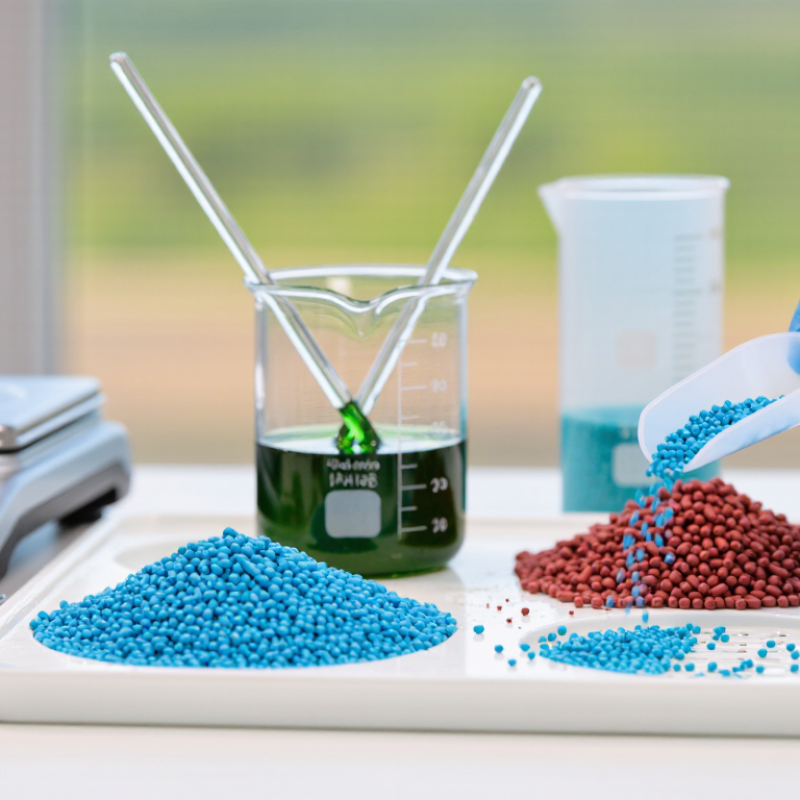
Understand the Purpose of Dye in Fertilizer Products
Fertilizer dye serves a practical visual purpose: it can help distinguish product types, show whether granules have been treated, and make uneven coverage easier to notice. It is not a nutrient, and color alone cannot confirm a product’s analysis or application rate. Color is not chemistry. The USDA’s 2022 Census of Agriculture reported commercial fertilizer, lime, and soil-conditioner use across 265 million U.S. acres. That figure describes agricultural use, not dye performance, but it illustrates the scale of product handling where clear identification can matter.
Choose a dye for the job it must do. A field-applied product may need a visible, consistent color, while a stored product also needs color that remains stable during handling. Check compatibility with the fertilizer formulation, including its moisture and storage conditions; a small batch test can reveal fading, clumping, or uneven coating. Keep the color distinct from other products handled nearby. Yet a vivid shade can create false confidence. It cannot replace nutrient labels, calibration, or a proper application check. In practice, the best dye is one that improves recognition without obscuring the product’s real information.
Assess Color Strength, Consistency, and Appearance
A fertilizer dye should look vivid in the concentrate and remain recognizable after dilution. Judge it under consistent lighting, not beside a sunny window one day and a fluorescent lamp the next. ASTM E1164 describes obtaining spectrometric data for color evaluation, while ISO/CIE 11664-4:2019 defines the CIELAB color space. These references support repeatable measurement; they do not set a universal color-strength requirement for fertilizer dyes. Record the dye concentration, water source, mixing time, and reading conditions for each test.
Tip: Compare equal dilutions in clear containers against a white background. Check for streaks, sediment, or uneven color after mixing. A handheld spectrophotometer can help track batch variation. A ΔE00 below 2 may serve as an in-house screening target, but it is not a universal fertilizer specification. Keep a retained sample as a visual reference.
Appearance can change with formulation, water hardness, and storage, so assess the dye in the intended fertilizer mixture as well as on its own. Look at a thin film on a white surface and a deeper pool in the same light. Both reveal different issues. I still trust my eyes—then check them. If the color looks strong but measurements vary between batches, the dye may be difficult for customers to dose consistently. Note that judgment can be imperfect; repeat the test before rejecting a batch.
Test Performance and Compare Suppliers Before Choosing
Before choosing a fertilizer dye, test it in the mixture and equipment you actually use. A jar test can reveal settling, clumping, or unexpected color shifts within minutes. Start with the intended dilution, then inspect the liquid after mixing and again after it stands. Small tests matter. Check whether the dye disperses evenly and stays visible on damp granules. Record water temperature, mixing time, and dose; changing one variable at a time makes results easier to interpret. Color alone is not enough. Look for residue on tank walls, clogged screens, and stains on gloves or concrete.
Repeat the trial at working scale with the pump, nozzle, and application rate planned for use. Check several samples for consistent color, not just the first bucket. Keep notes. A small test cannot reproduce every storage period or weather condition, so leave room for doubt. Ask suppliers for current technical data, recommended use rates, compatibility limits, and storage guidance. Compare their answers in writing. Request samples and test them under identical conditions; otherwise, a stronger-looking result may simply reflect a higher dose. Consider consistency, delivery timing, and clear handling instructions alongside price. If a supplier cannot answer a basic compatibility question, pause and verify before purchasing.
7 Tips for Choosing the Best Fertilizer Dye
Compare suppliers using consistent tests for color strength, solubility, light stability, pH stability, and application consistency.
Illustrative example scores on a 1–5 scale, not measured supplier data. Test samples under the same conditions and compare your own results before choosing.
