
7 Tips for Choosing a Slitting and Rewinding Machine
A slitting and rewinding machine can influence product quality, production speed, and material waste. Choosing one is not just a matter of comparing prices or maximum speeds. The right machine should suit the materials, roll widths, and output targets your operation handles every day. A thin packaging film may stretch or wrinkle under settings that work well for thicker paper. Small details matter.
Before comparing models, map out your real production needs. Note the material types and thicknesses you process, the narrowest slit width required, and the roll dimensions your customers expect. Consider how often operators change jobs, load new rolls, and adjust tension. These routine tasks can reveal whether a machine is practical, not just impressive in a brochure. Not every line runs perfectly.
This guide presents seven tips for evaluating a slitting and rewinding machine, from cutting methods and tension control to safety features and after-sales support. It also highlights questions worth asking suppliers, such as whether demonstrations can use your own material and whether replacement parts are readily available. Specifications are useful, but they do not tell the whole story. A fast machine may be a poor fit if setup takes too long or finished rolls vary in firmness. Even experienced buyers can overlook a mismatch. Comparing operating needs with verified specifications, service options, and a realistic trial can help narrow the choices and support a more confident purchase.
Define Your Production Requirements and Output Goals
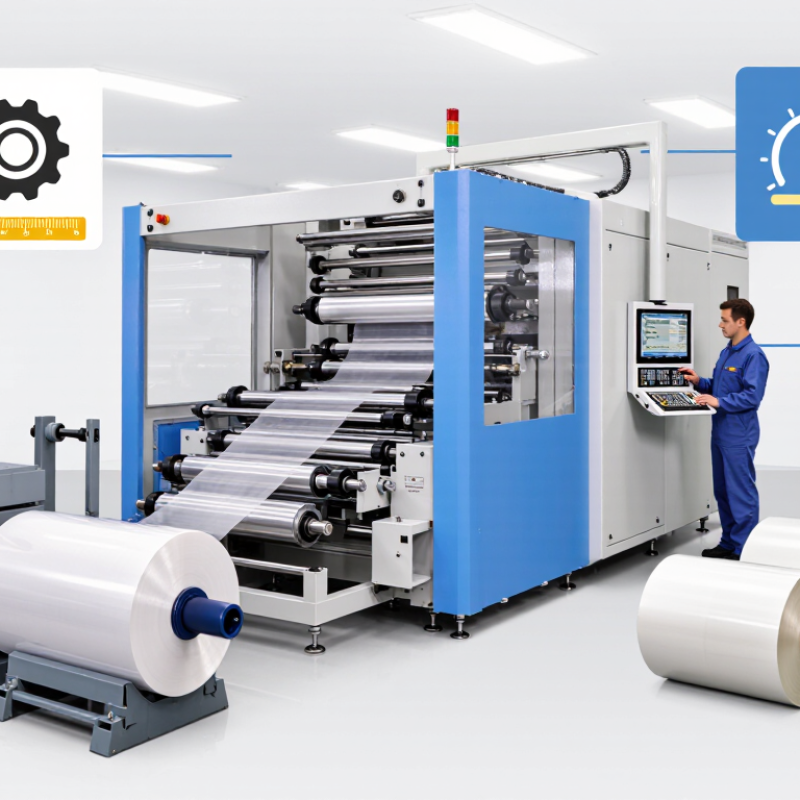
Before selecting a slitting and rewinding machine, define what it must produce on an ordinary shift—not just its advertised maximum speed. Record the material types, web width, incoming roll diameter, core sizes, finished roll dimensions, and required tolerances. Include actual shift hours, changeover frequency, and expected scrap. Small details matter: a 10-micron film and a thick laminate can need very different tension control.
Set goals in saleable output, such as finished rolls per shift or usable metres per hour. Then account for downtime, setup, roll changes, and edge trim. The Flexible Packaging Association’s 2023 State of the U.S. Flexible Packaging Industry report estimated U.S. industry sales at $42.9 billion in 2022. That scale points to a varied market, not one universal production profile. Match capacity to your own product mix. Not just speed.
A practical specification should also capture the heaviest finished roll, shaft handling method, and available floor space. Check whether operators can load and unload rolls safely within the planned cycle time. A spreadsheet may still miss real-world waste. Run a representative material trial, and compare measured output with your target before finalizing the machine requirements. A modest buffer helps, but an oversized capacity target can leave you paying for speed your line rarely uses.
7 Tips for Choosing a Slitting and Rewinding Machine — Define Your Production Requirements and Output Goals
Use this planning table to define your operating needs before comparing machines. Example figures are illustrative starting points; confirm material limits and performance with the machine supplier and your own production trials.
| Production Requirement | What to Define | Illustrative Planning Example | Why It Matters |
|---|---|---|---|
| 1. Material types | List every substrate, including its composition, coating, surface sensitivity, and whether it is supplied as film, paper, foil, or laminate. | Flexible packaging film, paper, and laminated webs, assessed separately for handling and tension needs. | Material properties affect web tension, knife selection, winding quality, and the risk of stretching, wrinkles, or surface marks. |
| 2. Web width and thickness | Record the minimum and maximum incoming web width, thickness range, and required slit widths. | Incoming web width: 1,000–1,600 mm; finished slit widths: 100–500 mm. | The machine must accommodate the widest parent roll and the narrowest slit without compromising setup or finished-roll quality. |
| 3. Roll dimensions and weight | Specify maximum parent-roll diameter and weight, core inside diameters, and finished-roll diameter limits. | Parent roll: up to 1,000 mm diameter; finished rolls: up to 600 mm diameter; core sizes confirmed from customer specifications. | These limits determine whether the unwind, rewind, shafts, and roll-handling equipment can safely manage your work. |
| 4. Output goals | Set a realistic target in finished rolls, square metres, or tonnes per shift, and include scheduled operating hours. | Target: 30,000 m² per 8-hour shift, with planned time reserved for setup, splicing, inspection, and roll changes. | Rated line speed alone does not equal daily output. Usable production time and job mix must be included in capacity estimates. |
| 5. Slitting method and quality | Identify the required slit method and define acceptable edge condition, width tolerance, dust, and roll hardness. | Choose a suitable shear, razor, or crush-cut arrangement after trials; set width tolerance and edge-quality criteria for each product. | Different materials and quality requirements call for different tooling and adjustment practices. Sample testing helps verify the result. |
| 6. Changeovers and product mix | Estimate the number of jobs, slit patterns, and material changes per shift; note how often knife positioning and cores must be changed. | Six job changeovers per shift, with a planned setup-time target established from current production records. | Frequent changeovers can reduce effective output. Setup features and accessible adjustments may be important when job variety is high. |
| 7. Staffing, safety, and future capacity | Define operator availability, loading and unloading method, required guarding, and expected production growth. | One trained operator per shift where the workflow and risk assessment allow; review assisted handling and a 20% capacity allowance for growth. | Staffing and safe roll handling affect workflow, while a reasonable growth allowance can help avoid an early capacity bottleneck. |