
Custom sheet metal parts in as little as 3 days - Get a quote now!

Why Choose Insulated Wire Terminals for Safe Connections?

Every electrical connection carries a small but important responsibility: keeping current contained, stable, and predictable. In workshops, loose strands can spread beneath a screw terminal, causing heat, vibration, or intermittent faults. Insulated Wire Terminals offer a practical barrier around the crimped connection. Their sleeves help prevent accidental contact and reduce exposure to abrasion during installation. A properly selected terminal also supports cleaner routing inside control panels, vehicles, appliances, and low-voltage equipment. The result is not merely a neater appearance. It is a connection that can be inspected, tested, and maintained with greater confidence. Still, insulation alone cannot correct poor crimping. That detail is easy to underestimate.

This article examines why these terminals are chosen for safe connections and how experienced technicians evaluate them. It considers wire size, terminal material, insulation quality, crimp-tool compatibility, and the demands of heat, moisture, and movement. Reliable work begins with manufacturer specifications, then continues with careful stripping, full conductor insertion, and a firm pull test. Small checks matter. Industry guidance and product documentation provide the foundation, while hands-on inspection reveals issues a checklist may miss. A terminal may look secure yet fail under vibration if the crimp is shallow or uneven. I have learned that “almost tight” is not a useful standard. Good practice is repeatable, visible, and supported by testing. Readers will also see where insulated designs have limits, because safe engineering depends on honest choices rather than attractive assumptions.
Why Choose Insulated Wire Terminals for Safe Connections?

What Are Insulated Wire Terminals?

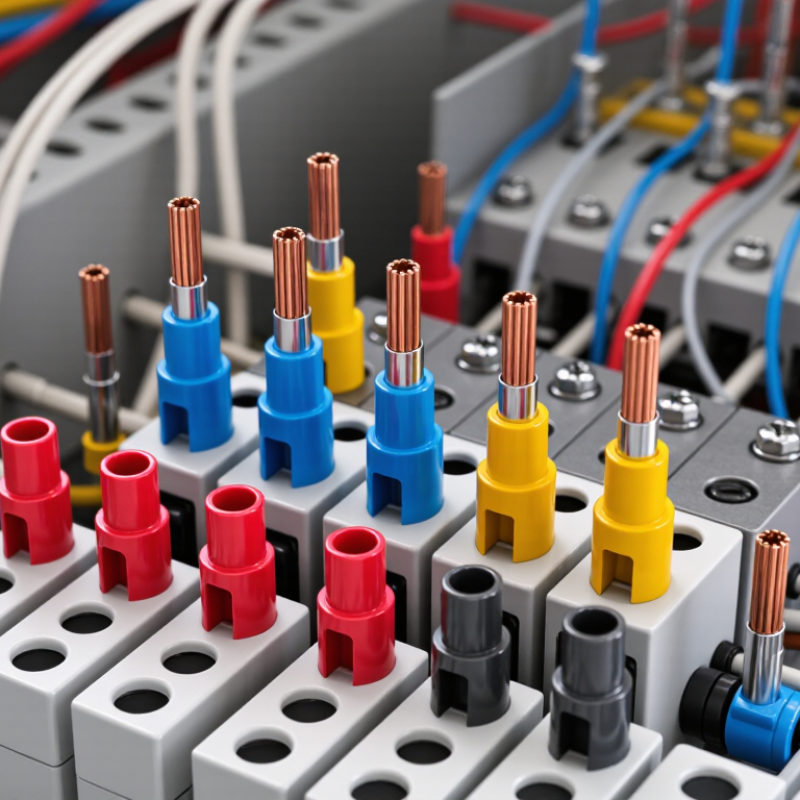
Insulated wire terminals are crimp connectors with a metal contact covered by a nonconductive sleeve. The sleeve helps prevent accidental contact, short circuits, and conductor damage near the connection point. Common forms include ring, fork, butt, and quick-disconnect terminals. Each design fits a different installation need.

A properly crimped terminal creates stable electrical and mechanical contact. It also keeps loose strands contained inside the connector. The NFPA Home Structure Fires report for 2016–2020 linked electrical distribution and lighting equipment to about 7% of reported home fires. Insulated terminals cannot remove every hazard. They can, however, reduce exposed-conductor risks when selected and installed correctly. Testing requirements in UL 486A-486B address wire-terminal connections, including mechanical strength and current-carrying performance. A terminal may look secure and still fail. That detail is easy to miss.

Tips: Match the terminal size to the wire gauge and load. Strip only the recommended insulation length. Use a calibrated crimping tool, not ordinary pliers. After crimping, pull the wire firmly. No movement should occur. Check the sleeve for cuts, gaps, or heat damage. In damp or vibrating areas, review the terminal’s environmental rating before installation. Recheck your method against the manufacturer’s instructions and applicable electrical codes. Mistakes happen, even during routine work.

How Do Insulated Wire Terminals Work?

Insulated wire terminals create a secure electrical path through a metal contact barrel covered by an insulating sleeve. The barrel receives the stripped conductor. A crimping tool then compresses the metal around the wire strands. This pressure forms a firm mechanical and electrical connection. The sleeve keeps nearby terminals from touching. It also helps shield the connection from accidental contact, light abrasion, and small amounts of moisture.

The process depends on proper preparation. Strip only the required insulation length. Exposed strands should fit fully inside the barrel. Too much bare wire can weaken insulation protection. Too little wire can produce a shallow crimp. The terminal size must match the conductor size. A correctly selected crimp tool is equally important. Pliers may squeeze the terminal, but they rarely create consistent pressure. After crimping, a gentle pull test can reveal a loose connection. It should not slide out.

Small details matter. I have seen a terminal look perfect while hiding broken strands beneath the sleeve. That mistake is easy to miss. Inspect the crimp for even compression and check that no copper strands escape. In vibrating equipment, the insulated sleeve reduces accidental contact, while the crimped barrel carries the current. However, insulation is not waterproof by itself. Harsh environments may require an additional sealed design. A careful installer should also review temperature, current, and vibration requirements before assembly. Getting the first connection wrong is possible, even with experience.

Why Choose Insulated Wire Terminals for Safe Connections?

Insulated wire terminals combine a crimped metal conductor path with an insulating sleeve. The crimp creates mechanical retention and a low-resistance electrical connection, while the insulation helps prevent accidental contact, short circuits, and exposure to moisture or abrasion.

The chart shows the calculated resistance of one metre of copper conductor at 20°C using copper resistivity of 0.01724 Ω·mm²/m. Larger conductor cross-sectional areas have lower resistance and therefore lower voltage drop and heat generation at the same current. Actual terminal performance also depends on the terminal design, crimp quality, conductor condition, and installation environment.

What Safety Benefits Do They Provide?

Why Choose Insulated Wire Terminals for Safe Connections?

Insulated wire terminals help protect electrical connections from accidental contact, abrasion, and short circuits. Their sleeves cover exposed metal near the connection point. This matters in crowded control boxes, vehicles, and household equipment. A secure terminal also reduces loose strands that may touch neighboring conductors. In practical wiring work, I have found that small details often prevent larger failures. Correct crimping is one of them. An insulated terminal cannot repair damaged wire or replace careful installation.

These terminals can improve resistance to vibration and pulling when matched with the correct wire size. Some designs also help limit moisture and dust from reaching the conductive area. Safety depends on more than insulation, though. The terminal must suit the conductor, current, temperature, and equipment requirements. A poor crimp may look acceptable while heating under load. That is easy to overlook. Periodic inspection can reveal discoloration, looseness, cracked insulation, or corrosion before the connection becomes unreliable.

Tips: Strip only the required length, and avoid cutting wire strands. Select the terminal for the conductor size and application. Use a suitable crimping tool, then perform a gentle pull test. The wire should remain firmly held. Keep connections away from sharp edges and excessive heat. When conditions are damp or exposed to movement, add appropriate strain relief. I still double-check finished connections, because even experienced installers can miss one weak point.

Why Choose Insulated Wire Terminals for Safe Connections? - What Safety Benefits Do They Provide?

Safety dimension How insulated terminals help Safety benefit Important limitation or verification
Accidental contact An insulating sleeve covers the conductive barrel and reduces exposure to energized metal. Helps reduce the likelihood of unintended contact, short circuits, and arc-producing faults. The sleeve must be intact, correctly positioned, and suitable for the working voltage and environment.
Short-circuit prevention The covered terminal provides separation between the crimped conductor and nearby conductive parts. Lowers the chance of conductor-to-conductor or conductor-to-chassis contact during assembly and service. Maintain required clearances and creepage distances for the applicable circuit and installation.
Strain relief Many insulated terminal designs include a sleeve or insulation-support area that helps protect the wire near the crimp. Can reduce conductor flexing and insulation damage at the connection when the correct terminal and crimp method are used. A terminal sleeve is not a substitute for cable clamps, routing, or independent mechanical strain relief where required.
Contamination resistance The insulation helps shield the connection area from incidental dust, moisture, and contact with other materials. May help limit contamination-related leakage paths and corrosion at the exposed connection area. Standard insulated terminals are not automatically waterproof; use a sealed design when the enclosure or application requires it.
Assembly identification Color-coded insulation is commonly used to associate terminal size ranges with compatible wire gauges. Can reduce selection and installation errors when the color code is checked against the terminal specification. Color conventions are not universal for every product; always confirm the printed or documented wire-size range.
Pull-out resistance The metal barrel forms the electrical and mechanical crimp around the stripped conductor. A correctly selected and crimped terminal helps maintain connection integrity under normal handling and vibration. Insulation does not determine crimp strength; use the specified tool, die, conductor size, and inspection method.
Electrical heating The insulation protects the connection area, while the metal crimp provides the current path. A sound crimp can help avoid high-resistance joints that may generate excessive heat. Overheating is mainly controlled by correct terminal sizing, conductor preparation, crimp quality, current rating, and circuit protection.
Inspection and maintenance The terminal’s insulation and visible crimp area can be checked for cuts, deformation, incomplete insertion, or exposed conductor. Supports visual quality control and helps identify installation defects before energizing the circuit. Visual inspection should be combined with appropriate pull testing, continuity testing, and electrical safety checks.
Material and environmental suitability Insulated terminals can be selected with insulation materials and ratings suited to temperature, chemicals, vibration, and moisture conditions. Proper material selection helps preserve insulation performance and connection reliability over the intended service life. Confirm the terminal’s temperature, voltage, conductor, flammability, and environmental ratings for the specific application.

Installation note: Insulated wire terminals improve protection against accidental contact, but they do not replace correct terminal selection, approved crimping procedures, circuit protection, required clearances, or applicable electrical codes and standards.

How to Select the Right Insulated Wire Terminal

Why Choose Insulated Wire Terminals for Safe Connections?

How to Select the Right Insulated Wire Terminal

Choosing an insulated wire terminal starts with the conductor, not the color. Check the wire gauge, current rating, voltage, and insulation diameter. A terminal that fits loosely can create heat at the connection. Too small, and the conductor may be damaged during crimping. Measure carefully.

Match the terminal material to the working environment. Tin-plated copper suits many indoor electrical assemblies, while damp or corrosive areas may require better protection. Consider temperature, vibration, and exposure to oils or chemicals. The insulation sleeve should stay firm after crimping. It should not slide along the barrel.

Use the correct crimping tool for the terminal design. A casual squeeze with pliers is unreliable. I have seen terminals look secure but fail a light pull test. That mistake is easy to miss. Strip only the required insulation length, then place the conductor fully inside the barrel. Check that no copper strands escape. Inspect the crimp from both sides, and follow the applicable electrical standard and product datasheet. In practice, selecting by color alone is tempting, but it is not enough.

How to Install and Inspect Insulated Wire Terminals

Insulated wire terminals support safer, more stable electrical connections when installed correctly. Their sleeves reduce accidental contact with nearby conductors and metal surfaces. The U.S. Fire Administration recorded 1,504,500 fires in 2023, including 529,500 structure fires. Poor connections are not the only cause, but they can increase heat and failure risks. A properly crimped terminal helps control that risk.

Before installation, disconnect power and confirm the circuit is dead with a suitable tester. Select a terminal matching the wire size, conductor material, and application. Strip only the required length. Do not nick the copper strands. Insert the conductor fully into the barrel, then use the correct crimp profile. A loose crimp may pull out. An over-crimped terminal may damage the conductor. Both mistakes are easy to miss.

Tips: Pull-test the finished connection by hand. The wire should not move. Check that insulation reaches the terminal’s support area. Inspect the sleeve for cuts, melting, or discoloration. Look for exposed copper beyond the barrel.

UL 486A-486B and IEC 60352-2 provide recognized requirements for wire connectors and crimped connections. I still recheck crimp height when a connection feels unusually firm. It may be secure, or it may be damaged. Record the wire size, terminal type, crimp tool, and inspection result. That small record improves traceability during maintenance.