
China’s restaurant sector is large, fast-moving, and demanding on refrigeration. The National Bureau of Statistics of China reported catering revenue of 5,571.8 billion yuan in 2024, up 5.3% year on year. That scale makes reliable cold storage a daily operating need, not a back-room extra. A Restaurant Cooler must protect ingredients while coping with frequent door openings, humid kitchens, and long service hours.
Cold-chain conditions matter too. The China Cold Chain Logistics Development Report, published by the China Federation of Logistics & Purchasing, examines the infrastructure and operating challenges behind temperature-controlled supply. For restaurant buyers, the practical lesson is clear: equipment selection should consider the full journey from delivery to prep station. Look at usable capacity, temperature recovery, energy use, compressor performance, door seals, and local service availability. Check whether shelves fit your trays and whether the unit can pass through your kitchen doorway. Small details can become expensive problems.
Still, a sales brochure cannot predict every kitchen. A busy hot-pot restaurant and a compact bakery may need very different layouts and cooling patterns. Compare specifications with your menu, peak-hour volume, and available floor space. Ask suppliers for test data and a written warranty, then verify service coverage in your city. One point is easy to overlook: the cheapest model may cost more when doors fog or temperatures fluctuate. No choice is perfect. This guide explains how to assess options in China with evidence, practical checks, and a little healthy skepticism.
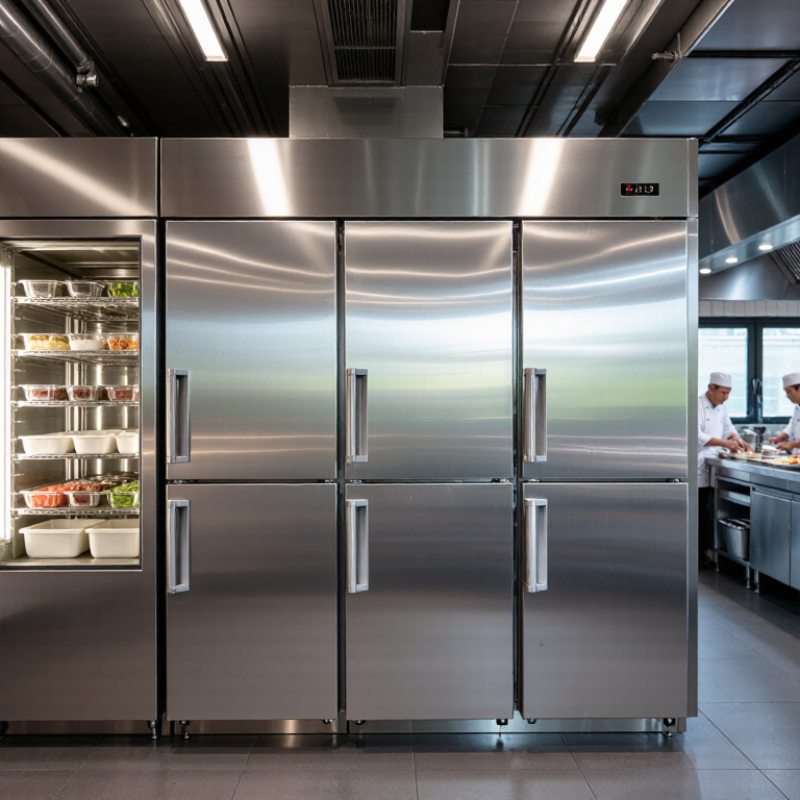
Before choosing a restaurant cooler in China, map what needs chilling and when it arrives. A noodle shop may need quick access to prepared ingredients, while a bakery may prioritize trays and dairy. List the items, estimate peak-day quantities, and note how often staff open the door. Measure the floor space, doorway, and aisle clearance; a unit that fits the plan may still block a busy route. Measure twice.
Track a typical week, including delivery days and service peaks. Leave room for airflow around stored items, and avoid packing shelves tightly. In a hot, humid kitchen, door openings and warm deliveries can make cooling harder. Consider shelf layout, door style, cleaning access, and whether the site’s electrical supply suits the equipment. Confirm temperature requirements against applicable food-safety guidance. A first capacity estimate can look tidy on paper, but real stock levels often change; review it after a trial period.
Tips: Keep a simple stock log for one week. Record the busiest shift, not just average use. Check the cooler’s dimensions against the actual doorway, and leave space for maintenance access. If two staff members must reach inside during service, test whether the layout still feels practical.
Restaurant cooler types suit different workflows. Reach-in models keep ingredients close to the cooking line and offer shelves for pans, bottles, or produce. Undercounter units save floor space beside a prep station, but their smaller interiors can fill quickly. Prep-table coolers combine chilled storage with a worktop, useful when cooks assemble dishes during busy service. Walk-in coolers handle larger inventories, though they need dedicated space and careful planning.
Capacity should match actual stock, not an optimistic growth estimate. List the ingredients used on a typical busy day, then allow room for restocking and airflow. A compact kitchen may manage with a few hundred litres; a high-volume operation may need a walk-in. Check usable shelf dimensions, door swing, and aisle clearance. Measure twice. A large cooler is not helpful if staff cannot open its doors fully.
Compare features that affect daily work: stable temperature control, even airflow, easy-to-clean interiors, reliable door seals, and clear temperature displays. Automatic defrost can reduce routine work, while adjustable shelves fit changing containers. Check the stated operating range and electrical requirements before ordering in China, and confirm local service support. Small details matter. I would not choose by capacity alone; in practice, a poorly placed cooler can slow service, even when its specifications look impressive.
A reliable restaurant cooler starts with a supplier you can verify, not a persuasive catalog. Ask for the manufacturer’s registered company details, factory address, and recent export references. Then check that the documents match the legal company name and the actual production site. Paperwork matters. Request current quality-system certificates and product test reports, and confirm their scope with the issuing body where possible. Ask who performs final inspections and what records are kept for each unit. A certificate alone does not prove that every cooler meets your needs.
Look beyond documents. Request a written specification for usable capacity, operating temperature, power requirements, and temperature recovery under a stated load. Ask for photos or a live video of the workshop, including assembly and testing areas. If practical, arrange an independent inspection before shipment. Check spare-parts availability, warranty response times, and whether instructions are clear enough for local staff. Compare the quotation with the specification line by line; unusually vague terms deserve questions. A document can look convincing and still leave gaps. No checklist is perfect, so record unanswered questions and get important promises in writing.
When comparing restaurant coolers in China, inspect the cabinet, not just the specification sheet. Check door seals for gaps, look for clean, even welds, and open the door several times to test its hinges. Ask for temperature recovery results after frequent opening; a busy kitchen may challenge a cooler more than a showroom test. A worn seal lets warm, humid air in. Small detail, big clue.
Energy use deserves a closer look. Compare annual consumption in kilowatt-hours under the same test conditions, rather than relying on cooling capacity alone. The U.S. Environmental Protection Agency reports that qualifying commercial refrigerators and freezers use about 20% less energy than standard models. Treat that as a benchmark, not a guarantee: kitchen temperature, door openings, and maintenance affect real bills. Request the test method and measured consumption for the exact model.
Safety paperwork matters. Confirm that the product’s electrical and refrigerant details match its nameplate, then check which Chinese GB requirements and CCC rules apply to that equipment category. Ask for current certificates and test reports, and verify that the model numbers match exactly. A document for a similar model is not enough. I would also inspect the plug, cable entry, and drainage during delivery; paperwork alone cannot reveal a loose fitting or poor finish.
| Evaluation Area | Suggested Weight* | What to Check | Evidence to Request | Good Sign | Warning Sign |
|---|---|---|---|---|---|
| Cooling performance | 25% | Confirm the stated operating temperature range and whether the unit can maintain the required temperature under the specified ambient conditions and loading. | Model-specific technical datasheet, operating manual, and temperature test results with test conditions stated. | Performance figures identify the test conditions, intended use, and temperature range. | Only a single temperature figure is provided, with no test conditions or operating limits. |
| Temperature consistency | 15% | Check temperature variation between shelves and compartments, recovery after door opening, and the location and readability of the temperature display. | Temperature mapping or test records covering multiple measurement points and a stated test period. | The seller explains the measurement method and provides results from more than one point in the cabinet. | A display reading is presented as proof of uniform temperature throughout the cabinet. |
| Energy efficiency | 20% | Compare energy use for units of similar type, capacity, and intended application. Check whether consumption is reported in kWh per 24 hours or another clearly defined unit. | Model-specific test report showing the measured energy consumption, test method, ambient conditions, and cabinet configuration. | The figures are tied to the exact model and comparable test conditions; any claimed energy label can be checked against its applicable scope. | A low energy-use claim is given without a test method, unit, or supporting report. |
| Construction and insulation | 15% | Inspect door seals, hinges, panel joints, internal surfaces, drainage, and ease of cleaning. Check the stated insulation material and construction details. | Product drawings or specifications, material details, and an inspection of the finished unit or a representative sample. | Doors close evenly, seals contact the frame, surfaces are accessible for cleaning, and construction details are documented. | Loose seals, sharp or unfinished edges, standing water, or vague material descriptions. |
| Electrical safety and certification | 15% | Identify the exact model and intended market. Verify which mandatory Chinese certification requirements, if any, apply to that product category; requirements depend on product scope. | Applicable certification documents and model details. Where a CCC certificate is claimed, check the certificate status and scope through an official certification information service. | Certificate details match the exact model and product category, and the seller can explain any applicable requirements. | A certificate for a different model is offered, or a certification mark is shown without verifiable documentation. |
| Food-contact materials | 5% | For surfaces intended to contact food, identify the material and check the applicable Chinese food-contact material requirements for that material and use. | Material declarations and relevant compliance or test documents. GB 4806.1 is a general safety standard for food-contact materials and articles; material-specific standards may also apply. | Documentation identifies the material, intended food-contact use, and applicable standards. | The seller describes a surface as “food grade” but cannot identify its material or provide supporting documents. |
| Serviceability and warranty | 5% | Confirm warranty coverage, response arrangements, availability of replacement parts, and maintenance instructions for the installation location. | Written warranty terms, service contact details, parts list, and maintenance schedule. | Terms clearly state coverage, exclusions, service process, and parts support. | Warranty promises are verbal, unclear, or not tied to the supplied model. |
*Suggested weights are an illustrative buyer scorecard, not official certification grades or regulatory ratings. Compare like-for-like models and verify documents against the exact model being purchased.
A restaurant cooler is a long-term operating cost, not just a purchase price. Compare written quotations for the same capacity, temperature range, shelving, and delivery conditions. A lower quote may exclude installation or add-on parts. Check the details. Ask how much electricity the unit typically uses and whether the estimate reflects your kitchen’s daily opening hours. These figures can vary, so request the assumptions behind them.
Tips: Compare warranty terms line by line. Confirm which parts and labor are covered, how long coverage lasts, and whether travel fees apply. Ask for the service response time in writing. Keep the quotation and warranty documents together. Small details matter.
After-sales support deserves as much attention as price. Ask whether technicians can reach your location and how common replacement parts are supplied. Clarify the process for reporting faults, including what information or photos the service team needs. A quick promise sounds reassuring, but a clear procedure is more useful. I would not assume the longest warranty is automatically the best; limited coverage may leave important repair costs to you. Check the exclusions before choosing.