
Custom sheet metal parts in as little as 3 days - Get a quote now!

7 Tips for Buying Tungsten Tiles

Tungsten Tiles can look nearly identical on a product page, yet vary in composition, density, dimensions, and finish. Those differences matter. A tile intended for wear resistance may not suit shielding or a precision assembly. Before comparing prices, buyers should identify the application, operating conditions, and tolerances. Then they can ask suppliers for material specifications, inspection records, and traceable test results.

Supply deserves scrutiny, too. The U.S. Geological Survey’s Mineral Commodity Summaries 2025 estimates global tungsten mine production at 81,000 metric tons in 2024, with China accounting for 67,000. The figures describe raw-material production, not finished tiles, but they show why origin and documentation are worth checking. USGS tungsten specialist Kim B. Shedd’s report states, “The United States was 100% import reliant for tungsten concentrates.” That is a supply-chain warning, not a verdict on any individual supplier.

A careful purchase starts with specifics: tungsten content, alloy or carbide grade, tile thickness, flatness, surface condition, and dimensional tolerances. Ask how each property is verified. Request a sample when the application allows it. The label alone is not enough. And the cheapest quote may leave important questions unanswered. These seven tips will help buyers compare Tungsten Tiles with clearer criteria, spot gaps in supplier information, and choose a product suited to its actual job. Some details still require independent verification; that is part of buying responsibly.
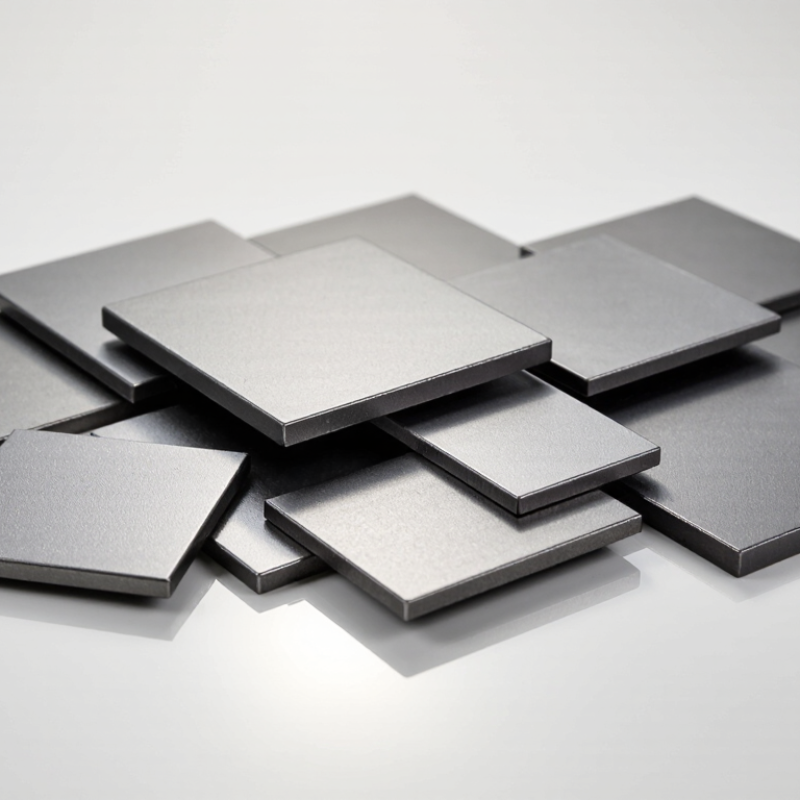
7 Tips for Buying Tungsten Tiles

Understand Tungsten Tile Types and Common Applications

Tungsten tiles come in several forms, and the material changes how each tile should be used. Pure tungsten offers exceptional heat resistance and density, but it is difficult to shape and can be brittle. Tungsten carbide tiles combine tungsten carbide with a binder. They resist abrasion well, though sharp impacts may chip them. Heavy tungsten alloys use tungsten with metals such as nickel and iron. They are dense and generally easier to machine than pure tungsten. Not interchangeable.

These differences matter in real settings. Carbide tiles often protect chutes, mixers, and other surfaces exposed to sliding grit. Heavy-alloy tiles can form modular shielding in industrial equipment, where their high density is useful; the full assembly still needs suitable engineering. Pure tungsten tiles may suit protected hot zones in high-temperature furnaces. Air exposure at elevated temperatures can cause oxidation, so the operating atmosphere matters. Check the tile’s composition, thickness, temperature limits, and impact conditions before choosing. The naming can be confusing, and product descriptions do not always explain the binder or alloy clearly. Request material details, then compare them with the actual wear, heat, and installation conditions.

Match Tile Dimensions and Properties to Your Project

Tungsten tiles are not one-size-fits-all. For a chute liner, measure the contact area, fastener locations, and clearance at corners. A few millimeters can create gaps where abrasive material catches. Check thickness against the supporting structure, too; heavier tiles may require stronger backing. Ask for the tile’s composition and dimensional tolerances, not just its nominal size.

Tip 1: Match tile length and width to the panel layout, allowing for joints and installation access. Tip 2: Compare hardness, fracture toughness, and binder composition with the actual wear conditions. A hard tile can resist abrasion yet chip under impact. Small differences matter.

For a hot, wet, or chemically exposed location, confirm the supplier’s test conditions match your site. Request test data and a drawing before ordering. The USGS Mineral Commodity Summaries 2024 estimates global tungsten mine production at 78,000 metric tons in 2023, including 63,000 tons from China. That is useful supply-chain context, not proof of tile quality. One detail is easy to overlook: stated dimensions may not include mounting features. Double-check them. I would also review the layout once more; field measurements are rarely perfect.

Evaluate Material Quality, Tolerances, and Documentation

7 Tips for Buying Tungsten Tiles

Material quality starts with composition, density, and consistency between lots. Tungsten’s high density is useful, but a certificate should state the actual grade and measured properties, not just say “tungsten.” The USGS Mineral Commodity Summaries 2024 estimated global mine production at about 78,000 metric tons in 2023. That figure describes supply, not tile quality. Check whether the supplier’s material specification and test methods fit your application.

Tolerances need numbers. Specify thickness, length, width, flatness, squareness, and edge condition on the purchase drawing. Ask how each dimension is measured and whether the inspection report covers every tile or a sample. ASTM B777 describes requirements for tungsten-based high-density metals, but it is not automatically a complete tile specification. Confirm which standard, if any, applies to the product. A tiny mismatch can complicate a close-fitting assembly. It happens.

Review the paperwork before ordering. Request a lot-linked material certificate, dimensional inspection results, and the measurement equipment’s calibration status. For critical uses, ask about hardness, density, and chemical analysis, including the test method and acceptance limits. Compare the certificate’s lot number with the packaging label when the tiles arrive. Keep the drawing revision on file. I would not rely on a polished certificate alone; unclear units or missing sampling details deserve a follow-up.

Compare Suppliers, Pricing, and Delivery Requirements

Tungsten tile prices are comparable only when the material and specification match. Confirm whether a quote covers tungsten carbide or a tungsten heavy alloy. Then compare grade, tile dimensions, thickness, flatness, and allowable tolerance. The USGS Mineral Commodity Summaries 2025 estimated 2024 global tungsten mine production at 81,000 tonnes, with China producing 67,000 tonnes. This concentrated supply makes origin, stock availability, and quoted lead time useful questions—not minor details. Ask suppliers for a current inspection report and material certificate.

Tip: Request an itemized quote. Separate tile price, machining, packaging, freight, insurance, and any import charges. Compare the delivered cost, not just the unit price. A lower quote may exclude edge finishing or inspection. Check whether the supplier can provide a sample tile and confirm its dimensions before approving a larger order. Keep the specification identical across bids; otherwise, the cheapest offer may not be the same product.

Tip: Get delivery terms in writing. Ask whether tiles are in stock or made to order, when the lead-time clock starts, and how delays are handled. Confirm packaging protects corners and surfaces; a chipped edge can spoil a close-fitting installation. Request shipment tracking and a packing list. I would leave a small schedule buffer, even with a written date. Suppliers can estimate production well, but freight and inspection sometimes take longer than expected.

7 Tips for Buying Tungsten Tiles - Compare Suppliers, Pricing, and Delivery Requirements

Tip What to Check How to Compare Suppliers Why It Matters
1. Clarify the material Confirm whether the product is pure tungsten, tungsten carbide, or another tungsten-based material. Request the material grade and a written specification. Compare quotations only when the material type, grade, and any binder or coating are clearly stated. These materials have different properties, uses, and costs; the name “tungsten tile” alone may not identify the product precisely.
2. Specify size and tolerances Provide tile length, width, thickness, permitted dimensional variation, flatness requirements, and any hole or edge details. Ask each supplier to confirm which tolerances are included and whether tighter tolerances affect price or production time. Clear dimensions reduce the risk of parts that do not fit the intended assembly or require extra machining.
3. Match the tile to its use Describe the operating conditions, such as impact, abrasion, heat, corrosion, or contact with other materials. Request supporting technical data and ask the supplier to explain how the proposed grade suits the stated conditions. Hardness, toughness, and wear performance vary by composition and product design; one grade is not ideal for every application.
4. Compare complete pricing Check unit price, order quantity, tooling or setup charges, finishing, packaging, taxes, freight, and any import fees that apply. Use the same specifications and delivery destination for every quote, and compare the total landed cost rather than unit price alone. Additional charges and minimum order quantities can make apparently similar offers differ substantially in total cost.
5. Verify quality documentation Ask what inspection records, material certificates, dimensional reports, or batch traceability documents are available. Confirm the documents apply to the quoted product and clarify inspection methods, acceptance criteria, and how nonconforming items are handled. Documented checks help you assess consistency and resolve specification issues before accepting an order.
6. Confirm lead time and delivery terms Request the estimated production time, dispatch date, shipping method, delivery estimate, and applicable delivery terms. Compare written schedules and check whether the quoted timing starts after order confirmation, drawing approval, or payment. Production and transit times vary by product complexity, order size, stock availability, and destination; estimates should be confirmed in writing.
7. Check packaging and after-sales terms Ask how tiles will be protected against chipping, movement, moisture, or damage during transport, and review warranty and claims procedures. Compare packaging details, damage-reporting deadlines, replacement or refund terms, and the process for technical questions. Suitable packaging and clear remedies help reduce handling damage and make delivery or quality issues easier to address.

Plan for Handling, Installation, and Long-Term Care

Tungsten tiles can be surprisingly heavy, even when a box looks small. Check the shipment weight before delivery, and clear a level route to the work area. Use two-person lifting for large pieces. Keep tiles upright in padded racks; shifting stacks can chip their edges. Handle them gently.

Tips: Verify the tile’s composition, thickness, and installation requirements before ordering. Dry-lay several pieces to check the pattern and joint spacing. Keep a spare tile, since matching a later batch may be difficult.

Before installation, confirm that the floor or wall can carry the added weight. Standard grout or adhesive may not suit every product, so follow the written specifications and choose an installer familiar with dense tile. Cutting can create sharp fragments and fine dust; use suitable diamond tooling, eye protection, and dust extraction. For routine care, sweep grit before mopping and use a pH-neutral cleaner, testing it in an inconspicuous spot first. Avoid sudden impacts. I would not assume every tungsten tile behaves alike; checking the exact product details is worthwhile.