
Custom sheet metal parts in as little as 3 days - Get a quote now!

How to Choose the Right A105 Valve Body?

Choosing an A105 Valve Body is not simply a matter of matching pipe size. ASTM A105/A105M specifies forged carbon-steel components for pressure piping, including service at ambient and higher temperatures. It does not, by itself, confirm that a particular valve suits your process. Operating pressure, temperature, fluid composition, and connection type all matter.

Start with the published pressure-temperature data in ASME B16.34. Its rating tables help engineers evaluate valve materials and pressure classes against service conditions. For flanged ends, ASME B16.5 provides dimensional and pressure-class requirements. These standards are useful checks, not a substitute for reviewing the manufacturer’s drawings and material documentation. A Class rating alone can be misleading when temperature changes the allowable working pressure.

Then examine the details that are easy to overlook: body dimensions, wall thickness, end connections, trim compatibility, and traceability records. ASTM A105 identifies the material specification; it does not guarantee every feature of a finished valve or its suitability for every fluid. API 598 provides inspection and testing requirements commonly referenced for valves, but the purchase specification should state the required tests clearly. Small detail. Big consequence.

A sound selection process compares actual service conditions with documented ratings and verifies the exact part number before ordering. Reports and standards can narrow the options, but they cannot fill gaps in an incomplete datasheet. And sometimes the datasheet is incomplete. That is a reason to ask for clarification, not to assume.
How to Choose the Right A105 Valve Body?

Understanding ASTM A105 Valve Body Materials and Applications

How to Choose the Right A105 Valve Body?
Understanding ASTM A105 Valve Body Materials and Applications

ASTM A105 is a forged carbon steel specification commonly used for pressure-containing valve parts in ambient and higher-temperature piping. Forging produces a strong, workable body, but the grade alone does not determine a valve’s pressure capability. Design, wall thickness, connection type, and pressure-temperature ratings matter too. Check the details.

A105 bodies suit many oil, gas, steam, and general industrial services when fluid chemistry and operating conditions are compatible. They are not automatically the best choice for wet, corrosive, or very cold service. Carbon steel can rust, so protective measures or another alloy may be needed. A105N indicates normalized material; confirm the required specification and mechanical properties in the purchase documents. Small details matter.

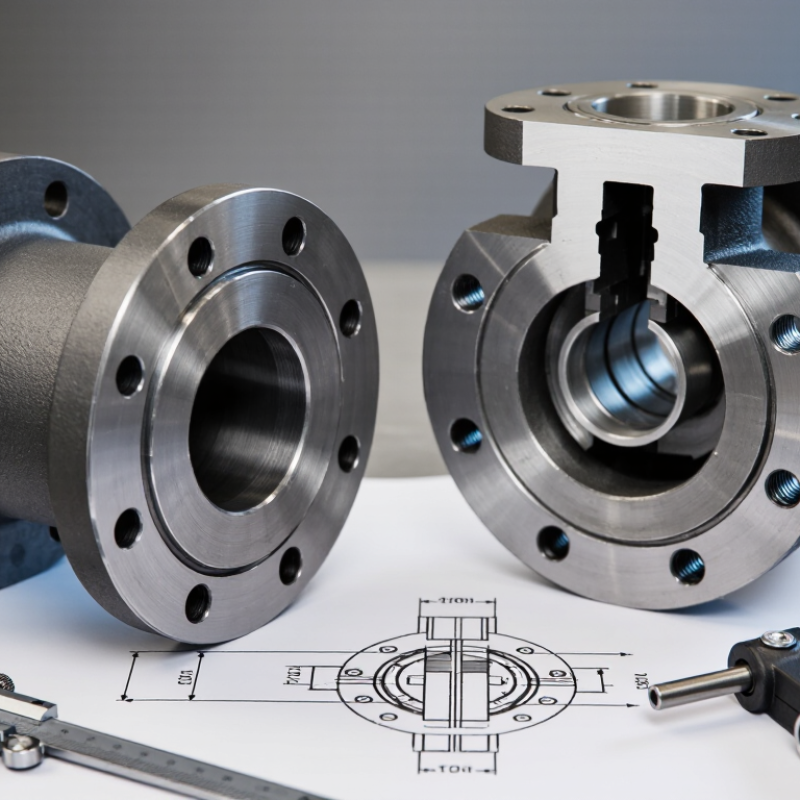
Match the body to maximum pressure, temperature range, fluid chemistry, and expected cycling. Confirm end connections, inspection requirements, and traceable material documentation. A compliant body can still be a poor fit if corrosion allowance or maintenance access is overlooked. A drawing can make the choice seem obvious, but actual service conditions may change the answer. This deserves a second look.

Assessing Pressure, Temperature, and Fluid-Service Requirements

How to Choose the Right A105 Valve Body?

Assessing Pressure, Temperature, and Fluid-Service Requirements

Choose an A105 valve body by checking the full pressure-temperature range, not just the line’s nominal pressure. ASTM A105 covers forged carbon-steel components for pressure service, but it does not set a finished valve’s allowable rating. ASME B16.34-2020 Table 2-1 rates Class 300, Group 1.1 at 740 psi at 100°F. The table gives lower allowable pressures at higher temperatures. Verify the applicable material group and valve design against certified documentation.

Fluid chemistry matters just as much. API Recommended Practice 571 describes damage mechanisms in process equipment, including carbon-steel corrosion and erosion-corrosion. Wet, acidic, or sour fluids may call for closer review of corrosion allowance, material compatibility, and service conditions. Pressure ratings do not predict corrosion. Temperature swings matter.

A hot startup, trapped liquid, or abrasive solids can change the practical selection, even when steady-state pressure appears acceptable. I would also check operating records for pressure surges and unexpected fluid contamination; these details are easy to overlook. Match the body’s documented limits to the real service, including the highest operating temperature and any credible pressure spike.

Selecting the Valve Type, Size, and End Connections

For an A105 valve body, choose the valve type by function, not by material alone. Gate and ball valves suit on-off isolation; globe valves offer more controlled throttling, while check valves prevent reverse flow. Size the valve against flow rate, pressure drop, and operating conditions. Matching the pipe size can be a useful starting point, but it is an imperfect shortcut. I would double-check it against the system’s actual flow requirements.

End connections affect installation, maintenance, and pressure containment. ASME B16.5 covers flanged sizes from NPS 1/2 through NPS 24 and pressure classes 150 through 2500; confirm the exact size-class combination in its tables. Threaded ends can simplify compact installations, while socket-weld and butt-weld ends suit welded piping arrangements. Keep the connection compatible with the piping specification and available inspection access. Fit matters.

ASTM A105/A105M specifies minimum tensile strength of 70 ksi and yield strength of 36 ksi for the forging material. These figures describe material requirements, not a complete valve pressure rating. Temperature, wall design, trim, and the applicable valve standard still matter. A detail people sometimes miss: the body material alone cannot confirm that a selected valve is suitable. Check the manufacturer’s pressure-temperature ratings and connection dimensions before ordering.

How to Choose the Right A105 Valve Body?

Select the valve type for the service, match its pressure class and nominal size to the piping system, and confirm that the end connections are compatible.

Standard pipe outside diameter increases with nominal pipe size. These values are pipe dimensions—not valve body dimensions. Verify the valve’s pressure class, materials, and threaded, socket-weld, or butt-weld end requirements against the project specifications.

Checking Standards, Ratings, and Manufacturer Certifications

Choosing an A105 valve body starts with checking the material specification, not just the stamped grade. ASTM A105/A105M lists minimum tensile strength of 70 ksi (485 MPa) and yield strength of 36 ksi (250 MPa). These figures describe material requirements, not the finished valve’s pressure limit. Ask for the material test report and match its heat number to the body marking. Small details matter. A mismatched number can make traceability difficult.

Next, verify the pressure-temperature rating against ASME B16.34. A class rating is not a universal pressure value; allowable pressure changes with temperature and material group. Confirm the valve’s size, end connections, service temperature, and design conditions against the applicable tables. API 598 sets inspection and pressure-test requirements, so request the test record for the specific valve. A certificate without matching model and serial details is weak evidence.

Review the manufacturer’s quality credentials, too. ISO 9001 certification indicates a quality-management system, but it does not prove that one valve meets every purchase specification. Check the certificate’s scope and validity, then compare it with the purchase documents, material report, and test results. I treat paperwork as evidence, not a substitute for checking the actual markings. It is easy to miss one.

How to Choose the Right A105 Valve Body? — Checking Standards, Ratings, and Manufacturer Certifications
Selection Check What to Confirm How to Verify Why It Matters
Material specification The body material is specified as ASTM A105/A105M, the standard covering carbon-steel forgings for piping components used in pressure systems. Check the purchase specification, material marking, and material test report (MTR). Confirm the applicable standard edition and any supplementary requirements. A105 identifies a forged material specification; it does not, by itself, define the complete valve design or its pressure rating.
Product form and condition Confirm that the component is a forging and that any required heat treatment or supplementary condition is stated. Where normalized material is required, specify and verify that requirement explicitly. Compare the order documents and MTR with the applicable A105/A105M requirements and the project specification. Material condition and manufacturing requirements can affect the properties required for the intended service.
Valve design standard Identify the valve standard applicable to the valve type and service. ASME B16.34 covers design, materials, dimensions, pressure-temperature ratings, testing, and marking for many flanged, threaded, and welding-end valves. Check the valve data sheet, nameplate, drawings, and purchase order for the specified standard and edition. The body material specification alone does not establish whether the complete valve design meets the required code.
Pressure class and temperature Confirm the required pressure class and the maximum and minimum operating temperatures. Use the pressure-temperature limits for the applicable valve standard, material, class, and design. Review the standard’s pressure-temperature tables and the manufacturer’s rated limits for the complete valve assembly. A pressure class is not a single allowable pressure at every temperature. The permitted pressure can vary with temperature and applicable design requirements.
End connections Verify flange, threaded, or welding-end type, size, facing, schedule or wall thickness where applicable, and dimensional compatibility with the piping system. For flanged ends, check the specified flange standard, such as ASME B16.5 where applicable. Confirm that the valve-end rating and dimensions match the system. Flange standards address flange requirements; they do not, by themselves, certify the pressure capability of the entire valve.
Material traceability Require an MTR with heat identification and chemical and mechanical test results traceable to the supplied body or forging. Match the heat number on the material marking to the MTR and shipment records. Specify the required inspection-document type, such as EN 10204 Type 3.1, if required by the project. Traceability helps establish that the delivered material corresponds to the specified grade and inspection records.
Testing and inspection State the required shell and seat testing, inspection scope, acceptance criteria, and test standard. API 598 is commonly specified for inspection and testing of valves; applicability depends on the valve and order requirements. Review test procedures and reports, and confirm the named standard, test pressure, duration, acceptance criteria, and valve identification. Testing requirements should be confirmed for the complete valve, not inferred from the body material grade.
Service environment Assess corrosion, erosion, fluid compatibility, operating cycles, and any sour-service requirements. For sour service, specify the applicable requirements, such as ISO 15156/NACE MR0175, where relevant. Check the project’s service specification and verify required material, hardness, heat-treatment, and documentation controls against the applicable standard. A105 is a carbon-steel grade; the designation alone does not establish suitability for every corrosive or sour environment.
Manufacturer quality documentation Review the manufacturer’s quality-management-system certificate if required, along with product-specific inspection and traceability documents. Check that any ISO 9001 certificate is valid and applies to the relevant manufacturing scope. Treat it as a quality-system credential, not proof that a particular valve meets every product requirement. Quality-system certification and product conformity are different forms of evidence and should be assessed separately.
Final purchase review Align the material grade, valve design standard, class, temperature range, end connections, testing, service requirements, and documentation in one approved specification. Compare the quotation, data sheet, drawings, nameplate details, certificates, and inspection plan before release and again at receipt. A complete review reduces the risk of selecting a correctly marked A105 body in a valve configuration that does not suit the system.

Evaluating Quality, Inspection, and Long-Term Maintenance Needs

Choosing an A105 valve body starts with confirming service conditions, not relying on the material name alone. ASTM A105 covers forged carbon-steel components, but suitability still depends on pressure, temperature, fluid, and the valve design. Check the specified pressure-temperature rating and connection dimensions. Request material records that identify the grade and heat number, then confirm those details match the component. Inspect the body for dents, cracks, corrosion, and damaged flange faces. Small defects matter. Non-destructive examination and pressure testing should follow the project specification and the valve’s intended service; requirements can vary.

Long-term reliability depends on what happens after installation. Keep a baseline record of leakage, operating torque, and visible surface condition. During planned maintenance, look for rust near joints, erosion around the flow path, and wear on sealing surfaces. A change in operating sound or torque can be an early warning, though it is not a diagnosis by itself. Use compatible cleaning and repair methods, and have qualified personnel assess damage before returning the valve to service. A checklist helps, but it can miss a gradual change between inspections. Compare findings over time, especially after temperature cycling or frequent operation.