How to Choose a Granular Zinc Oxide Supplier?
Choosing a Granular Zinc Oxide supplier is not simply a price comparison. Buyers need material that performs consistently in their process, arrives with dependable documentation, and remains available when production schedules tighten. A low quotation can look attractive until uneven granules slow feeding or create extra handling. Details matter.
The U.S. Geological Survey’s Mineral Commodity Summaries 2025 estimates global zinc mine production at about 12 million metric tons in 2024. This figure describes zinc supply, not zinc oxide availability, but it highlights the value of checking a supplier’s sourcing and continuity plans. Ask for a current certificate of analysis, representative batch data, and clear specifications for purity, moisture, particle-size distribution, and bulk density. For rubber applications, ISO 9298:2017 provides relevant zinc oxide test methods; confirm which tests the supplier actually performs.
Good suppliers make verification practical. They explain how granules are made, identify any surface treatment, and provide traceable lot numbers with shipment documents. A sample should behave like the production lot, not merely look clean in a jar. Request technical support for your application, too. A polished datasheet is useful, but it cannot replace repeatable results on your equipment. No supplier removes every risk. The better choice is one that states limits plainly, responds with evidence, and welcomes careful questions.
Understanding Granular Zinc Oxide and Its Intended Applications
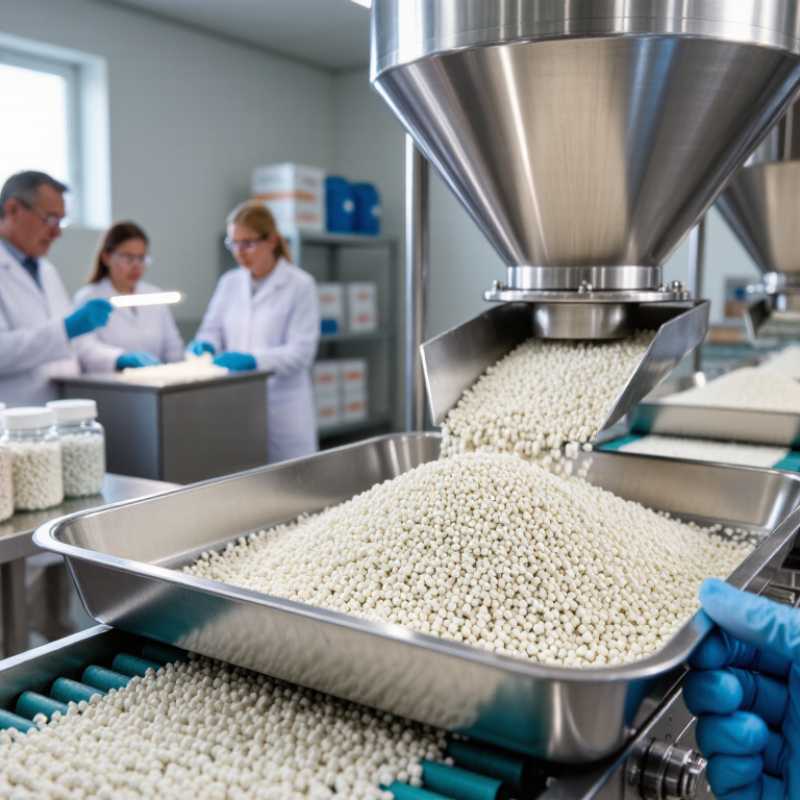
Granular zinc oxide is zinc oxide formed into larger, free-flowing particles. Compared with fine powder, granules can be easier to pour, weigh, and handle with less visible dust. That difference matters on a busy production floor. But granule size is not the same as the size of the underlying zinc oxide particles. It also does not guarantee easy mixing.
Its intended use should guide supplier selection. In rubber compounds, zinc oxide can contribute to vulcanization, while ceramics and coatings may require different purity, particle properties, or processing behavior. Ask for a current specification and batch documentation, including assay, moisture, and particle-size information. Then check whether the material disperses in your actual process. A small trial can reveal settling, residue, or uneven distribution that a data sheet cannot show. Details matter.
Granules may need extra mixing time or a suitable dispersion step before they perform as expected. That point is easy to overlook, and I would not assume one grade fits every application. Compare samples under the same conditions, and record feeding behavior, mixing time, and final product consistency. A dependable supplier should explain the material’s limits clearly, not just describe it as “high quality.”
Defining Product Specifications and Quality Requirements
How to Choose a Granular Zinc Oxide Supplier?
Defining Product Specifications and Quality Requirements
A reliable purchase begins with a written specification, not a supplier’s general grade description. Set acceptable limits for zinc oxide assay, moisture, lead and cadmium, particle-size distribution, and bulk density. For granular material, ask how granule size and friability are measured; pellets that crumble during transport may create dust and inconsistent feeding. Match each limit to the end use, since rubber compounding and ceramics can require different performance. ISO 9298 describes test methods for zinc oxide used in rubber compounding, but it does not set every buyer’s acceptance limits.
Ask for a recent certificate of analysis and confirm the test methods, sampling frequency, and lot traceability. The USGS Mineral Commodity Summaries 2025 estimates global zinc mine production at about 12 million metric tons in 2024. That figure describes mined zinc, not zinc oxide output, but it underscores why origin and process controls deserve scrutiny. Check that trial lots match the stated assay and physical properties. One sample is not enough.
Tips: Request a representative sample, sieve results, and moisture data from the same production lot. Record your own handling observations, too; a neat specification sheet cannot predict every feeding issue. Some limits may need revision after production trials.
Evaluating Supplier Production, Testing, and Certifications
How to Choose a Granular Zinc Oxide Supplier?
Evaluating Supplier Production, Testing, and Certifications
A dependable supplier should explain how granules are made, not just provide a product sheet. Ask about batch controls, drying, granule-size distribution, and how material is protected from moisture and contamination. The USGS Mineral Commodity Summaries 2025 estimates world zinc mine production at roughly 12 million metric tons in 2024. This broad supply figure does not describe zinc oxide quality, but it highlights why buyers should check feedstock traceability and lot consistency.
Review recent certificates of analysis and compare them with your own purchase specifications. Look for zinc oxide assay, particle-size results, moisture, and relevant impurity limits. Ask which test methods are used and whether results come from routine in-house checks or an independent laboratory. Request representative records from several lots; one excellent sample proves little. Also verify that any ISO certification covers the actual manufacturing site and process. A certificate alone is not a quality guarantee.
Tips: Ask for a sample, a sieve-analysis report, and a written explanation of batch variation. Check that packaging seals are intact and labels link each lot to its test results. If a supplier cannot explain an out-of-spec result clearly, pause and investigate. Even a tidy document can leave practical questions unanswered.
Assessing Pricing, Communication, and Supplier Reliability
How to Choose a Granular Zinc Oxide Supplier?
Assessing Pricing, Communication, and Supplier Reliability
Compare quotes on delivered cost, not price per kilogram alone. Ask suppliers to separate product cost, freight, packaging, and any testing fees. Then compare zinc oxide assay, particle-size distribution, moisture, and packaging weight on the same basis. The USGS Mineral Commodity Summaries 2024 estimated global zinc mine production at about 12 million metric tons in 2023. This is useful market context, but it is not a zinc oxide price index. Treat sudden quote changes as a prompt to ask about raw-material timing and quote validity. A low quote can still be expensive. That part is easy to miss.
Communication is part of quality control. Request a recent certificate of analysis, sieve data, lot identification, and a clear process for reporting out-of-spec material. Send the same technical questions to each shortlisted supplier and note how completely they answer. Vague replies about particle size or changing lead times deserve follow-up. The World Bank’s 2023 Logistics Performance Index covered 139 economies and assessed areas including shipment tracking and timeliness. It cannot rate an individual supplier, but its focus highlights practical checks: request dispatch records, realistic lead times, and updates when schedules change. Test a small lot before committing to regular orders. Keep the first comparison simple, though not perfect; actual performance across several deliveries is a stronger reliability check than one polished sales call.
