Why Choose Threaded Flange for Your Industrial Needs?
In the industrial landscape, the choice of fittings can dramatically impact efficiency and safety. Experts like Michael Johnson, a leading authority on piping systems, emphasize the significance of choosing the right components. He states, "threaded flanges offer unmatched versatility in various applications." This versatility makes threaded flanges a preferred choice in many industries.
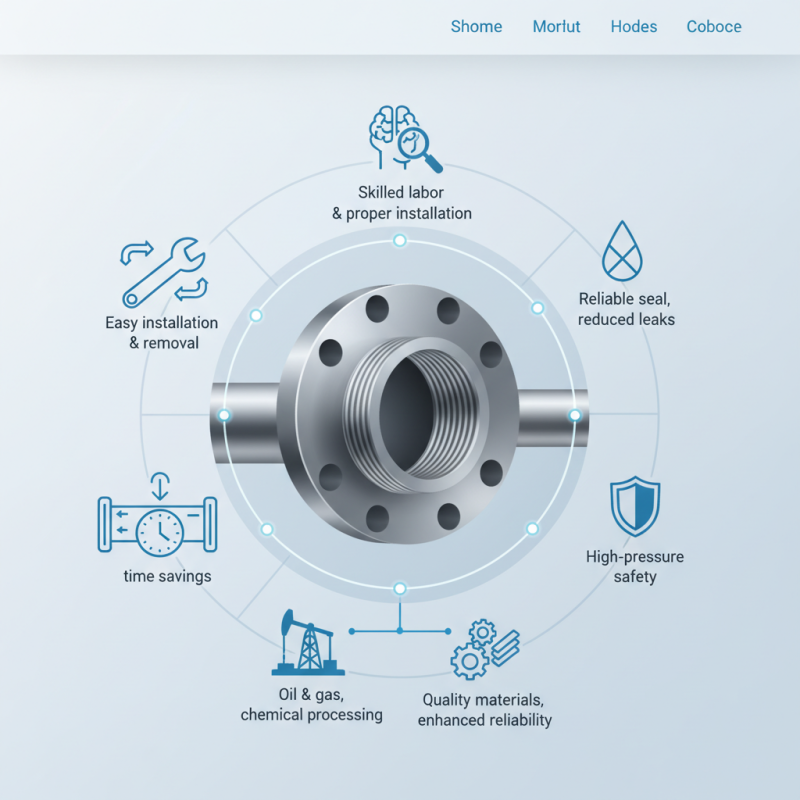
The design of a threaded flange allows for easy installation and removal. This convenience can save time during maintenance and repairs. Moreover, threaded flanges provide a reliable seal, reducing the risk of leaks. This feature is vital in high-pressure systems where safety is a priority. However, it is essential to ensure proper installation to avoid complications. Misalignment or cross-threading can lead to failures, highlighting the need for skilled labor.
Many industries rely on threaded flanges for their adaptability. Use cases range from oil and gas to chemical processing. However, all users should remain aware that not all threaded flanges are created equal. Thus, understanding the material and design specifications is crucial. Investing in quality threaded flanges can significantly enhance system reliability and performance.
Understanding the Basics of Threaded Flanges in Industrial Applications
Threaded flanges are essential components in various industrial applications. Their design allows for easy installation and disassembly, which saves time and labor costs. According to a recent industry report, over 45% of industrial applications prefer threaded flanges for their ability to prevent leaks in high-pressure systems. This makes them particularly valuable in sectors like oil and gas, chemical processing, and water treatment.
Understanding the construction of threaded flanges is crucial. These flanges feature internal threads that allow for a tight connection with pipes. This threading can lead to easier maintenance, as components can be replaced without complete disassembly. However, this simplicity can also be misleading. Not all threaded flanges are suitable for every application. For instance, in extreme temperature environments, standard threaded flanges may not hold up as expected. It's important to assess the specific needs of the system carefully.
In addition, industry studies indicate that improper installation of threaded flanges can lead to significant issues. A report revealed that around 30% of leaks in industrial settings are linked to flawed flange connections. This highlights the need for proper training and expertise when installing these components. Investing in skilled technicians can help mitigate risks associated with threaded flanges.
Key Advantages of Using Threaded Flanges Over Other Flange Types
Threaded flanges have gained popularity in various industrial applications due to their unique advantages. They excel in situations requiring quick assembly and disassembly. Many engineers prefer threaded flanges because they allow for a secure connection without the need for welding. According to a report from the American Society of Mechanical Engineers (ASME), approximately 30% of industries have adopted threaded flanges for pressure applications.
One significant benefit is the ability to use them in environments with limited space. In tight locations, a threaded flange can save time and labor costs. Reports indicate that the reduction in installation time can reach up to 50%, making threaded flanges a cost-effective solution. Furthermore, they provide better leak resistance compared to some welded alternatives. However, proper installation procedures must be followed to avoid issues such as over-tightening, which can lead to stress fractures.
Another key focus is their versatility in materials. Threaded flanges can be made from various materials like carbon steel, stainless steel, and alloys. This adaptability allows them to suit various operating conditions. However, engineers should be cautious about choosing the right material for specific applications. According to the Flanges Technical Report by the International Organization for Standardization (ISO), incorrect material selection led to a significant increase in maintenance costs for 15% of surveyed companies. Thus, while threaded flanges offer many advantages, it is essential to assess their suitability for each particular use case.
Applications of Threaded Flanges in Various Industries
Threaded flanges are increasingly popular in many industries due to their adaptability and ease of use. These flanges are often chosen for applications in the oil and gas sector. They allow for quick installation and disassembly, which is crucial in maintenance scenarios. Engineers appreciate that threaded flanges can avoid welding, reducing potential weak points in a pipeline system.
Another common application is in the water treatment industry. Here, threaded flanges enable reliable connections to pumps and valves. This reliability is vital, as even small leaks can lead to significant operational issues. However, while these flanges are effective, they may require more frequent inspections than welded joints to ensure integrity over time.
In the chemical processing industry, threaded flanges are found in various systems. Their resistance to corrosion makes them suitable for harsh environments. Yet, they are not universally perfect. Some engineers note that incorrect assembly can lead to failures. These challenges remind us that careful installation and monitoring are key to maximizing their benefits.
Installation and Maintenance Considerations for Threaded Flanges
Threaded flanges offer a unique combination of convenience and efficiency for industrial applications. Their design allows for easy installation, especially in tight spaces. This is a huge advantage when working with existing pipelines. With no need for welding, threaded flanges can be quickly fixed to pipes. Nonetheless, this does raise questions about seal integrity and long-term durability.
Maintenance is another critical aspect to consider. While threaded flanges may seem simple, they require routine checks. Regular inspection makes sure that threads remain free of debris. This avoids leaks and potential failures. Over time, the threading can wear out, affecting performance. Operators should be vigilant about these signs. It’s essential to have a qualified technician periodically evaluate the connections to maintain system efficiency.
Proper installation is key to maximizing performance. Misalignment can lead to significant issues, including increased wear on the threads. Operators might overlook this during installation. Using proper torque specifications helps ensure a secure fit. However, as with any flange type, the potential for human error always exists. Ensuring thorough training for personnel can help mitigate this risk.
Evaluating Cost-effectiveness of Threaded Flanges in Industrial Settings
Threaded flanges offer a unique blend of cost-effectiveness and reliability, making them an attractive choice in various industrial applications. These flanges allow for easy assembly and disassembly, which can save significant labor costs. According to a study by the American Institute of Steel Construction, threaded flanges can reduce installation time by up to 30%. This efficiency translates directly to lower overall project costs, making them a valuable option for budget-conscious industries.
Moreover, the material savings associated with threaded flanges are notable. A report from the Engineering ToolBox highlights that the material used in threaded flanges can be up to 15% less than in welded alternatives. This reduction is not just a number; it represents tangible savings on raw material procurement, which can be critical in industries facing volatile commodity prices. However, it’s essential to consider the long-term durability of threaded flanges. A study by the Flange Industry Association indicates that while threaded flanges can be cost-effective, they may also require more frequent replacements under high-stress conditions.
Companies must reflect on their specific needs before adopting threaded flanges. In low-pressure environments, they excel. In high-pressure or extreme temperature applications, however, their longevity could come into question. Balancing initial cost savings with potential long-term maintenance must inform the decision-making process. Evaluating these factors carefully will ensure that threaded flanges meet operational demands effectively.
Why Choose Threaded Flange for Your Industrial Needs? - Evaluating Cost-effectiveness of Threaded Flanges in Industrial Settings
| Flange Type | Material | Diameter (inches) | Pressure Rating (psi) | Cost ($) | Installation Time (hrs) |
| Threaded Flange | Carbon Steel | 6 | 150 | 30 | 2 |
| Welded Flange | Stainless Steel | 8 | 300 | 45 | 4 |
| Lap Joint Flange | Aluminium | 4 | 150 | 25 | 3 |
| Blind Flange | Carbon Steel | 10 | 1500 | 50 | 5 |
