
Custom sheet metal parts in as little as 3 days - Get a quote now!

China Top Paper Bag Production Line Manufacturers for Global Buyers

Choosing a Paper Bags Line is a production decision, not just a machine purchase. Buyers comparing manufacturers in China need to look beyond advertised speed. Paper weight, bag dimensions, handle style, and print requirements all affect the right configuration. A line that runs smoothly with one paper stock may need careful adjustment with another.

A useful observation from this fictional composite specialist, packaging engineer Daniel Wu, is: “A reliable line is measured not only by speed, but by consistent bags, manageable changeovers, and support when production stops.” This is an illustrative quote, not a verified statement from a real person. The principle is practical. Watch how the roll feeds, how print registration holds, and how the tube-forming and bottom-gluing stations perform during a sustained run. Ask for sample bags made to your specifications. Inspect the seams and dimensions closely.

Small details matter. Spare-part availability matters, too. This guide examines Chinese manufacturers through criteria global buyers can verify, including equipment options, customization, factory communication, commissioning, and after-sales service. No single supplier fits every operation. Some buyers may also underestimate training time or the cost of changing established workflows. That deserves a closer look. By comparing documented capabilities and asking specific technical questions, buyers can make a more grounded shortlist before requesting quotations.
China Top Paper Bag Production Line Manufacturers for Global Buyers

Paper Bag Production Lines: Types, Components, and Applications

Paper bag production lines generally fall into three groups: square-bottom, V-bottom, and multiwall systems. Square-bottom lines make stable grocery and retail bags, often with flat or twisted handles. V-bottom machines produce compact bags for bakeries and pharmacies. Multiwall lines form stronger sacks for flour, feed, and building materials. FAO’s 2022 Forest Products report estimates global paper and paperboard production at roughly 401 million tonnes. This figure indicates the scale of the material supply, not paper-bag output specifically.

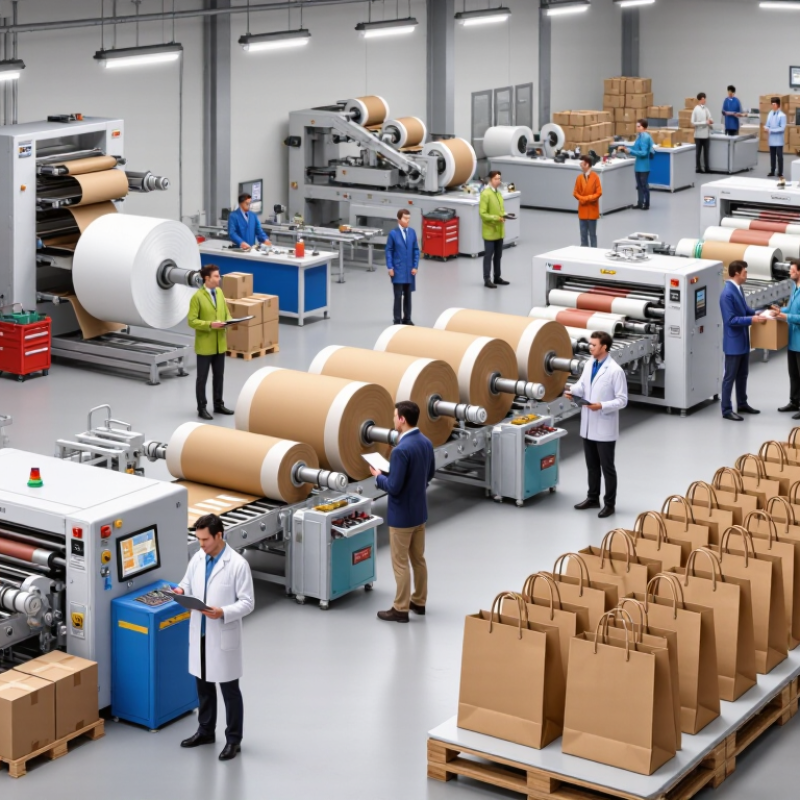
A typical line includes a roll unwinder, tension controls, printing units, tube-forming sections, cutting knives, and gluing stations. Square-bottom equipment also folds and seals the base; handle modules may apply paper handles before final inspection. Operators monitor web alignment and adhesive application, since small shifts can cause crooked seams or weak bottoms. It is easy to overstate flexibility. A machine configured for thin bakery bags may need substantial adjustment for heavier retail stock.

Applications shape line selection. Grocery producers often prioritize output speed and consistent handles, while bakeries need smaller formats and clean folds. Industrial sack lines require stronger paper, layered construction, and dependable valve or bottom sealing. Buyers should compare usable paper widths, changeover time, waste rates, and in-line quality checks—not just rated speed. A fast line can still disappoint when frequent size changes disrupt production.

China’s Paper Bag Manufacturing Industry and Its Global Role

China’s paper bag manufacturing industry supports a broad export network, serving retailers, food businesses, and packaging distributors across many markets. Its role extends beyond making machines: production-line suppliers help buyers match bag styles, output needs, and available factory space. Options may include flat-bottom, square-bottom, or handled bags. Each format brings different forming, gluing, and feeding requirements.

A reliable purchasing decision depends on more than advertised speed. Buyers should review sample bags, material compatibility, changeover time, and access to technical support. Ask how the line performs with the paper weight and bag dimensions you actually plan to use. Small details matter. A feeding issue can slow an otherwise capable line. China’s supplier base offers varied production experience, but capabilities differ, so clear specifications and careful trials remain important. Faster is not always better; I would also question whether a quoted output rate reflects steady production or ideal test conditions.

Tips: Request a sample run using your intended paper and bag design. Check finished-bag dimensions, handle strength, and glue seams. Keep a written record of test settings. It helps, though it cannot replace a proper factory inspection.

Leading Chinese Manufacturers and Their Production Capabilities

Chinese paper bag production line manufacturers serve buyers with different output goals, bag formats, and factory layouts. Many offer configurable systems for square-bottom or V-bottom bags, with options for handle attachment and inline printing. The useful question is not how many features appear on a brochure. It is whether those features match the bags a buyer plans to make.

Production capability depends on more than rated speed. Ask about paper width, material range, changeover time, and the line’s performance during longer runs. A practical factory review should include sample bags, control-panel access, and inspection of cutting and gluing points. Details matter. Ask how operators detect misalignment and record rejected products. A fast machine may still create waste if setup takes too long.

Manufacturers may also support installation, operator training, and spare-parts planning, but service terms should be confirmed in writing. Request a test using the intended paper grade and bag dimensions. Watch the handles, folds, and bottom seals closely. I would be cautious about choosing on speed alone; that figure can be less useful when specifications differ. Even a capable line needs skilled operators and routine maintenance, and buyers should leave room in their plans for both.

Paper Bag Production: Common Kraft Paper Grammages

Representative paper-weight options used when specifying paper bag production lines

Kraft paper is available in a range of basis weights, measured in grams per square meter (g/m²). These representative values illustrate material options buyers may discuss when specifying a production line; suitable weights depend on bag design, intended load, and machine configuration.

How Global Buyers Can Compare Suppliers and Equipment

When comparing paper bag production line suppliers, start with the bags you actually sell. Record their width, gusset depth, paper weight, handle style, and daily volume. A line that runs quickly on one bag size may slow down during frequent size changes. Ask suppliers for output figures using your paper specifications, not just a best-case speed. Request a sample run and inspect the folds, glued seams, and handle strength. Small defects matter.

Check the equipment itself. Ask how long a routine changeover takes, which parts wear first, and whether operators can clear jams without special tools. Review the machine layout, guarding, and control interface during a factory visit or live video demonstration. Also compare installation, training, spare-parts availability, and response times for technical support. A lower purchase price can become costly if production stops for a minor component. Estimates are not guarantees; leave room for a learning curve.

Tips: Bring a written checklist to supplier meetings. Compare actual samples, energy use, waste rates, and service terms side by side. Ask for a reference from a buyer making similar bags. If possible, test several paper grades. It may feel excessive, but assumptions made before purchase are hard to fix later.

China Top Paper Bag Production Line Manufacturers for Global Buyers – How Global Buyers Can Compare Suppliers and Equipment
Comparison Dimension Equipment or Specification to Compare Typical Reference or Evaluation Point Evidence to Request from Each Supplier
Bag style and line configuration V-bottom, square-bottom, flat-handle, or twisted-handle paper bag production Confirm that the proposed line supports the required bag style, handle type, and production sequence. Handle making may be integrated or handled by a separate machine. Written configuration list, process-flow diagram, and sample bags produced on the proposed equipment
Bag dimensions Minimum and maximum bag width, side gusset, and cut-off length Compare the quoted operating range with the buyer’s actual product sizes; check whether size limits differ by bag style or paper grade. Machine specification sheet showing dimensional ranges and any format-specific restrictions
Paper material compatibility Paper grammage, roll width, roll diameter, and supported paper grades Compatibility depends on the machine design, paper characteristics, bag dimensions, and production speed. Verify the exact material intended for production rather than relying on a general range. Test results using the buyer’s paper, including grammage, roll details, and finished-bag samples
Rated and demonstrated output Machine speed, measured in bags per minute, for the required bag format Distinguish the maximum rated speed from the sustained speed achieved with the buyer’s paper, bag size, printing, and handle configuration. Factory acceptance test (FAT) results recording the bag specification, material, run duration, output, and reject count
Printing capability Inline or offline printing, number of colors, print width, and registration control Check whether printing is included in the line quotation and whether the print unit can handle the intended artwork, ink system, and paper surface. Printing-unit specification, approved print samples, and details of included tooling and setup
Changeover and adjustment Format-change procedure, tooling requirements, and changeover time Compare the number of manual adjustments and special parts needed when switching between the buyer’s bag sizes or handle options. Demonstration of a format change and a written list of change parts, tools, and operator steps
Quality control and waste Glue application, fold accuracy, handle attachment, detection systems, and start-up waste Agree on acceptance criteria for finished bags and clarify how defects, stoppages, and material waste will be measured during testing. Sample inspection report, agreed quality checklist, and documented production-test results
Electrical and utility requirements Supply voltage, frequency, installed power, compressed air, and extraction needs Confirm compatibility with the installation site and local electrical standards before ordering. Requirements vary by machine configuration and destination country. Electrical drawings, utility schedule, and a site-preparation checklist
Automation and operator interface Control system, recipe storage, alarms, safety interlocks, and language options Check which functions are standard, how production settings are saved, and whether manuals and operator training are available in the required language. Control-system description, sample manual, safety documentation, and training plan
Installation and after-sales support Commissioning, training, spare parts, remote support, and service response arrangements Compare the scope and cost of installation support, warranty coverage, recommended spare parts, and service availability in the buyer’s region. Written warranty terms, service plan, spare-parts list, and commissioning schedule
Comparison note: Use the same bag specifications, paper, testing conditions, and acceptance criteria when assessing quotations. Performance figures and equipment limits are configuration-specific; confirm all values in the supplier’s written technical proposal and acceptance test.

Purchasing, Installation, Compliance, and After-Sales Support

Choosing a Chinese paper bag production line requires more than comparing quoted prices. Smithers’ 2024 paper-packaging outlook projects the global market will approach US$500 billion by 2029. FAO’s 2023 Forest Products Yearbook records about 401 million tonnes of paper and paperboard produced worldwide in 2022. These figures signal scale, not guaranteed demand for every bag format. Small details matter.

Before purchasing, ask the manufacturer to test your paper grade, bag dimensions, handle type, and print design. Record output speed, reject rate, and changeover time during acceptance testing. A machine’s headline speed can flatter; stable production with your materials is more useful. I would still request another test if results vary between runs. During installation, confirm floor space, power supply, compressed air, and operator training before shipment.

Compliance documents should match your destination market and intended use, especially for food-contact bags. Request material specifications, relevant test records, operating manuals, and clear maintenance schedules. After-sales terms should state response times, remote troubleshooting arrangements, spare-parts availability, and warranty coverage. Ask for a practical training session using real production settings, not only slides. Even a thorough contract cannot prevent every delay, so keep critical wear parts on hand.