
Custom sheet metal parts in as little as 3 days - Get a quote now!

What Is the Best Surface Mount Machine in 2026?

Choosing the best Surface Mount Machine in 2026 is less about finding one celebrated model and more about matching equipment to real production needs. A compact line assembling prototype boards has different demands from a high-volume factory running mixed products across multiple shifts. Placement accuracy matters, but so do feeder capacity, changeover time, software usability, service access, and the availability of trained operators. Small details count. A difficult feeder change can disrupt an otherwise efficient shift.

Electronics-assembly trainer Bob Willis is known for emphasizing practical process control. Rather than present invented words as a verbatim quotation, his perspective can be summarized this way: “A machine is only as effective as the process and people supporting it.” That is a useful test. Ask how the machine handles your actual board designs, component range, production volume, and inspection workflow. Then consider what happens when a nozzle needs replacement or a new product arrives with little warning.

This guide compares the factors that matter when evaluating a Surface Mount Machine in 2026, including placement capability, flexibility, operating costs, and supplier support. There is no universal winner. A faster machine may not be the better choice if changeovers are frequent or maintenance support is far away. And specifications can look impressive on paper. They still need validation with representative boards and realistic cycle-time expectations. Some trade-offs are easy to miss. The right choice should fit the factory you have, while leaving room for the one you are building.
What Is the Best Surface Mount Machine in 2026?

What a Surface Mount Machine Does and How It Works

What Is the Best Surface Mount Machine in 2026?
What a Surface Mount Machine Does and How It Works

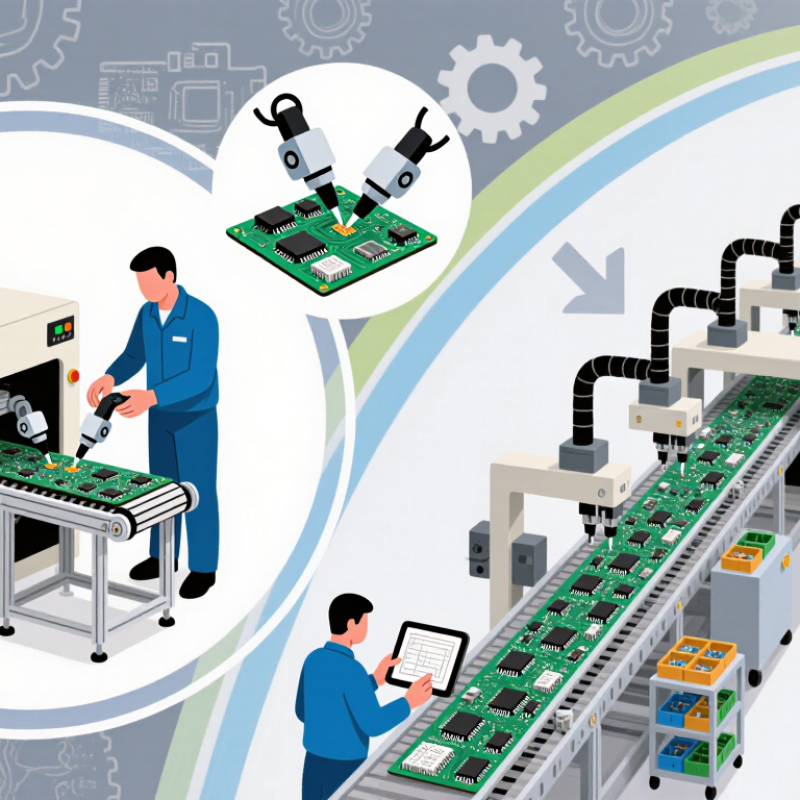
A surface mount machine places electronic components directly onto solder-pasted circuit boards. Feeders present parts from tape, trays, or tubes. A nozzle picks each component, while cameras check its position and orientation. The placement head then aligns it with a board coordinate and presses it into the paste. The board moves on; reflow soldering later forms the electrical joints. Small parts can be hard to see, and a slightly shifted component may cause defects.

Machine performance depends on more than placement speed. Feeder changes, board handling, component range, software, and inspection all affect real output. IPC-9850 sets out a method for characterizing placement equipment, including placement accuracy and throughput. Deloitte and MAPI’s 2019 Smart Factory Study found that 86% of surveyed manufacturers expected smart-factory initiatives to drive competitiveness within five years. That broader finding supports connected production, but it does not prove one machine is best. Real lines are messier.

Tips: Compare verified placement accuracy and sustained output, not headline speed alone. Ask for a trial using your board, smallest components, and typical changeovers. Watch the feeder setup. It often reveals bottlenecks. Choose equipment that fits your product mix and operator skills; the most advanced option may not be the most practical.

Which Factors Define the Best Machine in 2026

What Is the Best Surface Mount Machine in 2026?

Which Factors Define the Best Machine in 2026

The best surface mount machine is the one that reliably handles your actual product mix, not just a headline speed. Check placement accuracy, repeatability, feeder capacity, and supported board dimensions against real production needs. A fast machine can still create bottlenecks if changeovers take too long or delicate components require frequent intervention.

Speed is not quality.

Ask for a trial using your own boards and components. Measure usable placements per hour, setup time, first-pass yield, and stoppages—not only the specification-sheet rate. Inspect small-component placement and fine-pitch alignment under production conditions. Then review software integration, traceability, operator training, maintenance access, and service response times.

Small details matter.

Automation compatibility also deserves attention. The International Federation of Robotics’ World Robotics 2024 report recorded 541,302 industrial robot installations worldwide in 2023, with 4.28 million robots operating globally. Those figures reflect broader automation adoption, not SMT machine performance, but they underline the value of equipment that communicates reliably with inspection and factory systems.

No single score captures fit.

Buyers should also compare energy use and floor-space needs against expected output. A specification may look perfect; a difficult feeder change can tell another story.

How Surface Mount Machine Types Compare

Surface-mount machines differ less by their headline speed than by how consistently they handle your boards, components, and changeovers. Manual pick-and-place systems suit prototypes and small batches, where an operator positions parts using magnification or basic vision. They take more hands-on time. But they can be practical when layouts change daily and feeder investments are hard to justify.

Semi-automatic machines add programmable placement, alignment cameras, and more controlled motion. They can reduce repetitive work on modest production runs, though setup still matters. A feeder loaded incorrectly can slow the line or place the wrong component. Check support for your smallest parts, board dimensions, and required placement tolerances—not just the advertised placements per hour. Ask how the machine handles a board with mixed component sizes, including a fine-pitch IC beside larger connectors.

Fully automatic systems are designed for sustained throughput and can connect with printers, conveyors, and inspection equipment. They often need more floor space, maintenance planning, and carefully balanced production. More automation is not always better. A fast machine may sit idle if changeovers take too long or upstream printing falls behind. Compare realistic cycle times using your own board files and component mix. There is no perfect ranking; production volume and operator skill can change the answer.

What Is the Best Surface Mount Machine in 2026? — How Surface Mount Machine Types Compare
Machine type Indicative placement rate Component range Placement capability Typical setup and footprint Best suited for Main trade-off
Manual pick-and-place Operator-dependent; generally a few hundred placements per hour Common surface-mount parts; practical limits depend on operator vision and tooling Operator-controlled; consistency depends on skill and inspection Low setup cost; compact bench or hand-tool station Prototypes, repairs, very small runs, and occasional assembly Labor-intensive and difficult to scale; repeatability can vary
Benchtop automatic placer Typically hundreds to a few thousand placements per hour, depending on model and job mix Often supports common chip components and selected larger parts; verify feeder and nozzle compatibility Machine-controlled placement; capability varies with vision system, calibration, and component type Relatively compact; usually suited to a small production area Low-volume production, engineering labs, and frequent product changes Lower throughput and feeder capacity than full-size production platforms
Mid-range flexible placer Several thousand to tens of thousands of placements per hour; real output depends on board mix Broad mix of small chips and larger or more varied components, subject to machine configuration Vision-assisted placement; supports a balance of fine-pitch work and component variety Production-line equipment; requires feeder setup, programming, and process control Small-to-medium batches, mixed products, and manufacturers needing changeover flexibility Typically slower on simple, high-volume boards than a dedicated high-speed line
High-speed modular placer Tens of thousands of placements per hour; stated rates are usually based on optimized conditions Strong performance with common high-volume parts; specialized parts may require different modules or setup Designed for fast, repeatable placement; actual accuracy and output depend on configuration and process conditions Larger line footprint; often integrated with conveyors, feeders, inspection, and upstream/downstream equipment High-volume production with stable designs and repeatable board schedules Higher investment and setup demands; nominal speed may not reflect mixed-product output
Hybrid or multi-function placer Varies widely; usually optimized for a broad component mix rather than maximum chip speed Can accommodate a wider range of package sizes and component styles, depending on tooling Flexible placement capability; confirm support for fine-pitch, odd-form, and special components Production equipment with more configuration options and potentially longer changeovers Assemblies combining standard surface-mount parts with larger or less common components Versatility can come at the cost of peak throughput or simpler operation
How to choose: Compare verified output on your actual board mix, component range, feeder capacity, changeover time, placement capability, service access, and total line requirements. Placement-rate figures are indicative rather than directly comparable: published rates and real production output vary by machine configuration, board design, component mix, operator workflow, and process conditions.

Which Machine Features Suit Different Production Needs

What Is the Best Surface Mount Machine in 2026?
Which Machine Features Suit Different Production Needs

The best surface mount machine depends on the work it must handle, not a single headline speed. A small prototyping shop may value quick changeovers, intuitive programming, and support for varied component sizes. A machine that switches feeders easily can reduce setup time when jobs change several times a day. Check whether its placement range covers tiny passives and larger connectors used on your actual boards.

High-volume lines often need fast placement, ample feeder capacity, and stable accuracy across long runs. Yet maximum speed alone can mislead: frequent replenishment or difficult programming may slow real output. No machine is perfect. For mixed production, compare changeover time, software workflow, floor space, and the operator training required. Ask suppliers to run a representative board, then review placement results and setup steps. Inspect how errors are flagged and how routine maintenance is performed. A short trial can reveal awkward feeder access or unclear software prompts. That matters. Specifications help narrow the options, but a machine should fit the components, board mix, and staffing of the line.

What Is the Best Surface Mount Machine in 2026?

Which machine features suit different production needs?

The ratings are a qualitative planning guide, not measured machine performance or a product comparison. High-mix lines typically prioritize quick changeovers; high-volume lines emphasize placement speed and feeder capacity; precision work calls for strong vision and placement accuracy; and space-constrained lines benefit from a compact footprint. Confirm actual specifications against your components, boards, and target output.

How to Evaluate Costs, Support, and Long-Term Value

A surface mount machine can look affordable until the quote leaves out feeders, nozzles, installation, software, and operator training. Request a complete cost breakdown, including calibration and planned maintenance. Then estimate cost per board using your real product mix, changeover frequency, and expected operating hours. A fast placement rate means little if frequent feeder changes interrupt the line. That gap matters.

Support deserves the same scrutiny as price. Ask how quickly a technician can respond, which spare parts are held locally, and what remote troubleshooting includes. Request written service terms, not only reassuring sales language. Speak with users running comparable products, and ask how a recent fault was handled. Ask for proof. A vague promise can sound convincing during a demonstration.

Long-term value depends on whether the machine fits tomorrow’s work, not just today’s board. Check supported component sizes, feeder capacity, placement accuracy, software updates, and integration with existing production data. Run your own boards during a trial, then review placement logs and changeover steps with operators. Forecasting value is imperfect; product mixes rarely stay still. I still find that difficult to predict. Include realistic downtime and training needs in your comparison, even when the numbers feel uncertain.