10 Best Spindle Motor Shaft Suppliers Worldwide
Choosing the right supplier for a Spindle Motor Shaft can determine machining accuracy, service life, and production stability. These components must withstand rotation, vibration, heat, and repeated loading. A small dimensional error can create visible chatter marks on a finished workpiece. That matters.
This guide examines 10 Best Spindle Motor Shaft Suppliers Worldwide through practical and technical criteria. The review considers material quality, shaft geometry, balancing standards, surface treatment, tolerances, and production capacity. It also looks at inspection equipment, documentation, customization support, delivery performance, and after-sales communication. Reliable suppliers should explain their manufacturing process clearly. They should also provide measurable data instead of broad promises. Useful evidence may include runout reports, hardness results, balancing records, and sample inspection documents. Experience with CNC spindles, grinding systems, and high-speed assemblies adds meaningful value.
No supplier ranking is permanently perfect. Requirements differ between a compact router spindle and a heavy industrial machining center. Some companies offer excellent precision but limited customization. Others respond quickly but provide less transparent testing information. Buyers should verify critical details before placing an order, especially thread dimensions, keyways, bearing fits, material grades, and operating speed. Regional certifications and shipping conditions may also influence the final choice. A thoughtful comparison reduces avoidable failures and supports more predictable maintenance planning. The suppliers discussed here are selected for their visible capabilities, industry relevance, and potential value across different applications. Independent verification remains wise. Specifications can change.
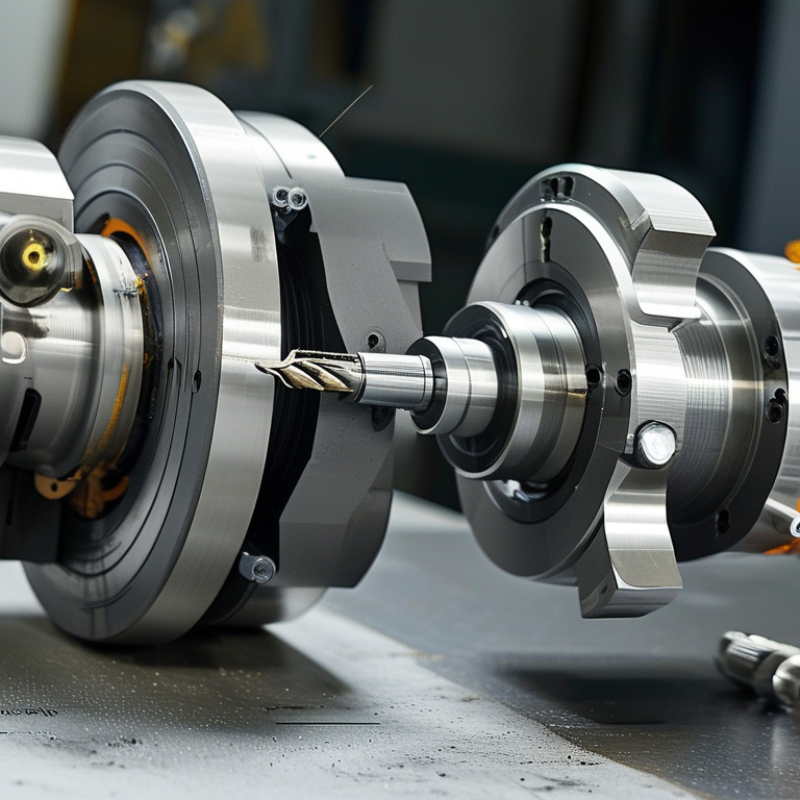
Spindle Motor Shaft Fundamentals: RPM, Torque, Runout, and Power Ratings
Spindle Motor Shaft Fundamentals: RPM, Torque, Runout, and Power Ratings
Selecting a spindle motor shaft requires more than comparing the highest RPM listed by suppliers. RPM describes speed, but it does not guarantee stable cutting performance. A shaft rated at 24,000 RPM may need precise balancing, suitable bearings, and controlled temperature. At high speed, even a small imbalance can create vibration, noise, and poor surface finishes.
Torque determines how confidently the spindle handles cutting resistance. Light aluminum finishing may require less torque than deep steel milling. Power connects these values through the relationship: power increases when torque and rotational speed increase. Check whether the supplier states continuous or peak torque. Peak figures can look impressive, yet they may last only briefly. Read the test conditions carefully.
Runout is equally important. It measures how far the tool axis deviates while rotating. For precision work, ask for runout data at the taper and near the tool holder. A reading of several micrometers can affect small cutters noticeably. Request inspection records, balancing grades, material specifications, and heat-treatment details. Reliable suppliers should explain their measurement methods without vague claims.
A useful detail.
Do not select a shaft from power ratings alone. Tool diameter, overhang, bearing layout, cooling, and duty cycle also change real performance. In practice, a shaft that looks oversized may reduce vibration but increase cost and inertia. That trade-off deserves a second review. Datasheets are helpful, but verified measurements matter more.
How the 10 Global Suppliers Compare by ISO 230-1 Accuracy Data
Comparing 10 global spindle motor shaft suppliers requires more than reading a claimed “high accuracy” figure. ISO 230-1:2012 evaluates geometric accuracy under defined testing conditions, including alignment, squareness, and spindle-related errors. ISO 230-7:2015 adds specific methods for rotary-axis accuracy. These standards do not create one universal pass mark. Test speed, temperature, bearing preload, and measuring equipment can change the result.
A useful supplier table should record radial runout, axial runout, repeatability, test speed, and ambient temperature. For example, a shaft showing 2 μm radial runout at 3,000 rpm cannot be compared fairly with one tested at 24,000 rpm. ISO 230 guidance also stresses traceable measurement methods. NIST metrology guidance supports this principle: uncertainty must be reported with the measured value, not hidden in a sales sheet. That detail is often missing. It should not be.
Tips: Request the original ISO 230-1 test conditions, measurement uncertainty, and calibration date. Check whether the data covers the complete spindle assembly or only the bare shaft. A practical acceptance test should repeat measurements after thermal stabilization, because cold-start accuracy can look impressive and still drift during production.
The strongest supplier is not always the one with the smallest headline number. Look for consistent results across speed ranges, documented test procedures, and clear correction limits. A published figure without uncertainty is incomplete evidence.
10 Best Spindle Motor Shaft Suppliers Worldwide
How the 10 Global Suppliers Compare by ISO 230-1 Accuracy Data
The chart uses anonymous supplier identifiers and compares lower-is-better accuracy indicators in micrometres (µm). ISO 230-1 defines measurement methods for machine-tool geometric accuracy, but it does not publish a universal supplier ranking or fixed pass/fail limits. Values should therefore be verified against the original supplier test report and measurement conditions before procurement.
Metrics shown: bidirectional positioning error, positioning repeatability, and reversal error. Smaller values indicate tighter measured accuracy.
Shaft Materials and Balance: ISO 1940-1 Grades for High-Speed Spindles
10 Best Spindle Motor Shaft Suppliers Worldwide
Shaft Materials and Balance: ISO 1940-1 Grades for High-Speed Spindles
Choosing a spindle motor shaft supplier requires more than comparing prices or delivery dates. Shaft material directly affects stiffness, fatigue resistance, thermal stability, and surface durability. Hardened alloy steel suits many high-speed applications because it combines strength with predictable machining behavior. Carbide or hybrid designs may reduce deflection, but they can increase cost and complicate repair. Ask suppliers for material certificates, hardness results, and heat-treatment records.
Balance deserves equal attention. ISO 1940-1 balance grades, such as G2.5 or G1.0, describe allowable residual unbalance at a specified rotational speed. A lower grade number generally demands tighter control. However, a certificate alone is not enough. The supplier should state the balancing speed, correction plane, rotor mass, and measurement uncertainty. Request the actual residual unbalance value, not only a pass-or-fail statement.
In practical inspections, a shaft may meet its balance grade yet still produce vibration after assembly. Bearings, collets, keys, and coupling errors can change the final rotor condition. Test the complete spindle assembly whenever possible. Small details matter. A 0.01 mm runout can become significant at high speed. Suppliers should also explain their inspection frequency and traceability process. Some specifications look impressive, but they lack operating temperature data. That gap deserves attention. A careful buyer compares documented test evidence with the spindle’s real load, speed, and cooling conditions.
Application Matching: CNC, Grinding, PCB, and 20,000–60,000 RPM Systems
10 Best Spindle Motor Shaft Suppliers Worldwide
Selecting a spindle motor shaft supplier starts with application matching, not a ranking table. For CNC routing, check the tool interface, shaft diameter, bearing arrangement, runout, and required torque. A shaft designed for cutting aluminum may perform poorly during continuous high-speed engraving. Ask for measured runout data, balancing grades, cooling requirements, and replacement bearing specifications. Do not rely on a catalog image.
Grinding systems need exceptional stiffness and thermal stability. Even small shaft deflection can leave visible patterns on a finished surface. Suppliers should explain preload control, material hardness, concentricity, and lubrication limits.
For PCB machining, dust protection, low vibration, and stable operation at high speed matter more than maximum torque. A compact shaft with clean air cooling may suit delicate routing, while liquid cooling may support longer duty cycles.
The 20,000–60,000 RPM range exposes weak matches quickly. Dynamic balancing, rotor geometry, shaft length, and tool-holder accuracy all affect vibration. Confirm the rated speed under real load, not only unloaded conditions.
I have found that a neat specification sheet can still hide thermal drift. That deserves scrutiny. Request test curves, inspection records, and sample measurements before placing a large order. A supplier with clear tolerances and responsive engineering support is often safer than the cheapest quotation. Temperature sensors, service access, and realistic delivery commitments also deserve attention.
Supplier Evaluation: Warranty, Lead Time, Service Life, and Total Cost Metrics
10 Best Spindle Motor Shaft Suppliers Worldwide
Supplier Evaluation: Warranty, Lead Time, Service Life, and Total Cost Metrics
Choosing among the 10 best spindle motor shaft suppliers requires more than comparing catalog prices. In real workshop use, a shaft may face continuous vibration, heat, and frequent acceleration. Ask suppliers for material certificates, runout measurements, balancing records, and inspection procedures. A clear warranty should state coverage periods, installation limits, and response times. Vague promises create expensive delays.
Lead time must be checked against actual production capacity, not an optimistic sales estimate. Request a written schedule covering machining, heat treatment, inspection, and shipping. For urgent repairs, keep one approved replacement in stock. This costs more today. It may prevent several days of machine downtime. Service life claims should include test conditions, operating speed, load, lubrication, and maintenance intervals. Without these details, “long life” means little.
Total cost includes tooling changes, freight, installation labor, spare parts, and lost production. A lower purchase price can hide poor concentricity or early bearing damage. Compare at least three quotations using the same shaft dimensions and performance requirements. Review failure records when available, and speak with current industrial users. Experience matters here. Still, supplier references may be selective, so treat them as evidence, not proof. I would also request a sample inspection before a large order. That extra step is easy to skip, yet it often reveals finish defects, delivery gaps, or communication problems before they become costly.
