
Custom sheet metal parts in as little as 3 days - Get a quote now!

Best Ring Mechanism Manufacturer in China for Buyers?

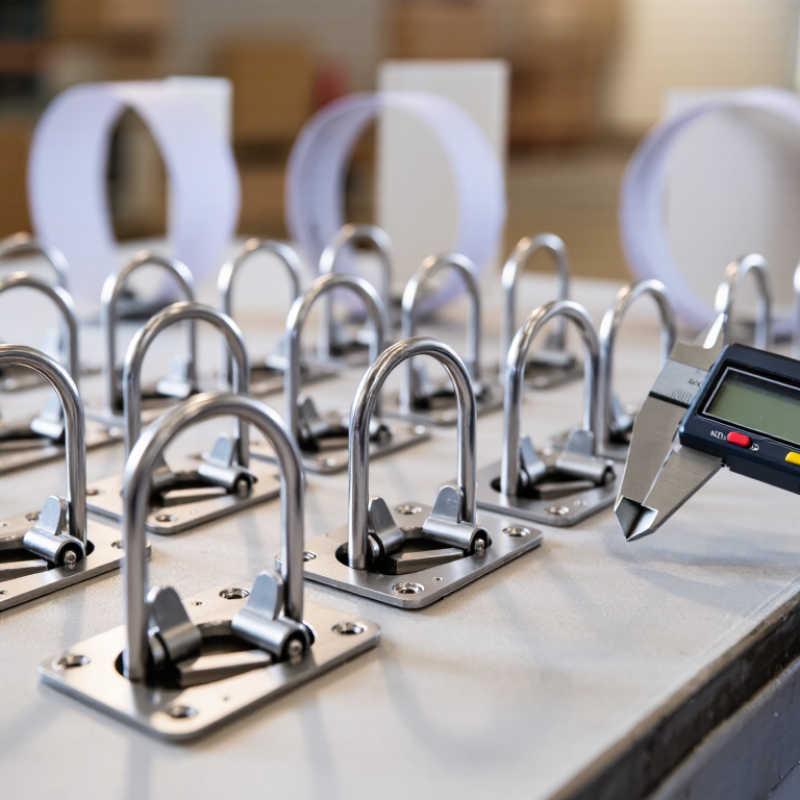
Choosing the best Ring Mechanism Manufacturer in China takes more than comparing unit prices. Buyers should examine steel thickness, rivet consistency, opening cycles, plating quality, and carton protection. Ask for production samples. Test each ring with the paper capacity you actually plan to sell. Small differences matter: a rough lever, uneven alignment, or weak rivet can turn a neat binder into a return.

The OECD’s Global Material Resources Outlook to 2060 projects global material use rising from 89 billion tonnes in 2017 to 167 billion tonnes by 2060. This broad resource outlook is not ring-mechanism market data, but it reinforces the value of checking material efficiency and scrap controls. For quality context, management expert W. Edwards Deming wrote, “Quality is everyone’s responsibility.” His principle applies to sourcing, though he was not a ring-mechanism specialist. I cannot verify a public, attributable quotation from a named expert in this niche, so inventing one would mislead buyers. A dependable supplier should instead provide traceable specifications, sample records, inspection criteria, and clear answers about tooling and lead times. There is no perfect checklist. Factory claims still need checking against the parts in your hand.
Best Ring Mechanism Manufacturer in China for Buyers?

What Is a Ring Mechanism and Where Is It Used?

A ring mechanism is the metal assembly inside a binder or notebook that holds punched sheets in place. Its rings open to add or remove pages, then close to keep them aligned. Common shapes include round, D-shaped, and O-shaped rings, each offering a different balance of page capacity and ease of turning. A simple detail matters: pages can catch if the ring ends do not meet evenly.

You will find ring mechanisms in office binders, planners, presentation folders, menus, and fabric-swatch books. In a sample catalog, for example, wider rings can make thick material easier to browse. For a compact planner, smaller rings may keep the cover slim. There is no single best size. The right choice depends on the sheet format, hole spacing, expected page count, and how often users open the mechanism.

When evaluating a manufacturer in China, ask for samples that match your intended cover and paper weight. Check ring alignment, opening force, plating consistency, and repeated-use performance. Also confirm the mechanism’s mounting-hole positions before approving production. Ask for the test method, not only a durability claim. A specification sheet helps, but it cannot reveal every issue; a physical sample may still behave differently in your finished product. Small differences matter.

Best Ring Mechanism Manufacturer in China for Buyers? — What Is a Ring Mechanism and Where Is It Used?
Mechanism Type Typical Configuration Common Uses Key Buyer Checks
Round-ring mechanism Two or more circular rings mounted on a metal bar or plate Notebooks, journals, planners, small binders, and sample books Confirm ring count, internal ring diameter, opening alignment, and compatibility with the punched pages.
D-ring mechanism Rings have a straight section and a curved section; often supplied in multi-ring formats Reference binders, manuals, presentations, and document storage Check the usable spine space, ring diameter, mounting-hole positions, and whether pages turn freely when the binder is full.
Two-ring file mechanism Two rings spaced to match a particular filing or binder format Document files and binders; hole spacing varies by market and format Specify the hole-center distance and intended paper format rather than relying on “two-ring” alone.
Three-ring mechanism Three rings arranged for a matching punched-page layout Binders for school, office, and training materials, especially in North American formats Verify the required paper size, hole spacing, ring profile, and opening action.
Four-ring mechanism Four rings positioned for the binder and paper format Many A4-oriented binders, office files, and document organizers Confirm the exact hole pattern and binder dimensions; four-ring layouts are not interchangeable in every market.
Six-ring mechanism Six smaller rings, commonly used with compact page formats Personal planners, organizers, address books, and pocket notebooks Check page size, hole spacing, ring diameter, and the mechanism’s closed alignment.
Lever-arch mechanism Arch-shaped filing mechanism with a lever-operated opening and compression bar High-volume office filing and archive binders Assess the intended filing capacity, lever operation, arch alignment, and compatibility with the file cover.
What a ring mechanism is: A metal fitting that opens and closes rings to hold punched sheets in a cover or binder. Capacity and compatibility depend on ring diameter, ring shape, paper thickness, hole pattern, and cover design. Request a drawing or sample to verify dimensions before ordering.

Which Specifications Should Buyers Define Before Sourcing?

Before requesting quotes, define the mechanism’s closed length, ring diameter, and number of rings. Measure the binder spine and the intended paper stack. State whether the rings should be round, D-shaped, or another profile. Capacity needs evidence: specify sheet count and paper weight, not just a rough stack height. “Standard size” is not precise enough. Specify the opening method and the force needed to operate it.

Name the base metal, wire diameter, plate thickness, and surface finish. For humid storage or frequent handling, ask about corrosion resistance and finish durability. List mounting-hole spacing and the position of screws or rivets against a dimensioned drawing. Set acceptable tolerances for ring alignment and closure gaps. Keep it measurable. A sample can mislead if it differs from production material.

Send a physical sample or clear drawings with critical dimensions marked. Request a pre-production sample and agree on checks for opening, closing, and alignment. Include order quantity, packaging needs, and any labeling requirements in the quotation request. Confirm how defects will be recorded and handled. Check it twice. A polished sample may still hide a loose rivet or uneven coating, so inspect the mechanism under repeated use before approving bulk production.

How to Assess a Manufacturer’s Production and Quality Standards

Best Ring Mechanism Manufacturer in China for Buyers?
How to Assess a Manufacturer’s Production and Quality Standards

A buyer should inspect how a mechanism is made, not just its catalogue photos. Ask for a process flow covering wire forming, riveting, assembly, and coating. Then trace a sample lot from raw-material records to final inspection. The ISO Survey 2022 reported 1,265,216 ISO 9001 certificates across 189 countries and economies. This shows how widely quality systems are used; it does not prove a specific ring opens smoothly or withstands daily handling. Certificates matter. Production records matter more.

Request measured results for ring alignment, opening force, rivet retention, and cycle life. Ask how often samples are tested and what limits trigger rejection. Check whether failed lots are recorded alongside corrective actions. Look closely. Watch an operator open and close a finished mechanism repeatedly. Note uneven gaps, sharp edges, loose rivets, or coating chips near contact points. For corrosion claims, request the test method, exposure time, and results; “passed” alone is thin evidence. A useful inspection plan identifies sampling rules, gauges, calibration dates, and batch traceability. Some suppliers may offer polished reports but little raw data. That deserves a follow-up, not an instant rejection. Compare samples from separate batches before approving a larger order.

How to Compare Ring Mechanism Manufacturers in China

Comparing ring mechanism manufacturers in China starts with the drawing, not the quotation. Specify ring count, wire diameter, base width, pitch, opening force, finish, and paper capacity. Ask for tolerance ranges and a measured sample. Small differences matter: a 25 mm mechanism may bind if its pitch drifts or its rivets sit unevenly. Request samples from the intended production line, not only a polished showroom sample.

The World Bank’s 2023 Logistics Performance Index gave China a score of 3.7 out of 5, ranking it 19th among 139 economies. This helps frame freight planning, but it does not prove factory quality. Check lead-time records, packing tests, and responses to delays. Details matter. Request lot-level inspection records, material certificates, corrosion-test results, and traceability for wire and coatings. If sampling is used, agree on a plan based on ISO 2859-1, which defines sampling procedures but cannot guarantee defect-free goods.

The WTO’s World Trade Statistical Review 2024 reports China’s 2023 merchandise exports at about US$3.38 trillion. That scale supports broad sourcing capacity, but says little about one factory’s consistency. Compare tooling ownership, change-control practices, and repeat-order dimensions. Ask the manufacturer to measure ten mechanisms across several cartons. A neat report helps. It can still miss a weak rivet, so test loaded pages through repeated opening before approval.

What to Verify Before Placing a Supplier Order

Best Ring Mechanism Manufacturer in China for Buyers?

Before placing an order, verify the mechanism against a written drawing, not just a sales sample. Check wire diameter, ring spacing, baseplate thickness, rivet finish, and opening alignment. Small differences matter. Ask for a pre-production sample and test it with the paper size and load you actually use. Open and close each ring repeatedly; watch for catching, uneven gaps, or loose rivets. A clean sample can still hide inconsistent production, so request inspection records from the production batch.

Confirm the steel grade, coating method, tolerances, packaging, and agreed defect criteria in writing. For incoming checks, buyers can agree on a sampling plan referencing ISO 2859-1; specify who inspects and what happens if results fail. Ask for material records and dated photos of packed goods, plus a realistic production schedule. McKinsey’s 2020 report, “Risk, resilience, and rebalancing in global value chains,” found that 93% of surveyed supply-chain leaders planned to make their supply chains more resilient. For a buyer, that makes backup capacity and clear lead-time updates worth checking—not just the unit price. It is easy to overfocus on quotations. A better order starts with measurable acceptance points and a sample that matches the shipment.