10 Best Heat Shrink Wire Terminals for Global Buyers
A wiring connection may be small, but its failure can stop a vehicle, machine, or control panel. Heat Shrink Wire Terminals combine a crimp connection with a heat-activated sleeve designed to seal around the wire and terminal barrel. That added protection is useful where moisture, vibration, or abrasion may affect a connection. Still, a sealed sleeve cannot correct a poor crimp or an incorrectly sized terminal. Details matter.
The scale of modern electrical manufacturing offers useful context. OICA reported 93.5 million motor vehicles produced worldwide in 2023. The IEA’s Global EV Outlook 2024 estimated that nearly 14 million electric cars were sold that year, about 18% of global car sales. These figures do not measure terminal demand directly, but they illustrate the expanding reach of vehicle wiring and electrification. Small parts matter. For global buyers, choosing among products requires more than comparing price or appearance. Wire-gauge range, stud size, barrel material, insulation quality, shrink ratio, and adhesive lining all deserve attention. Buyers should also request clear specifications and test documentation, then confirm compatibility with their crimping tools and operating environment. A product listing may look convincing; the technical details can still be incomplete. This guide compares ten heat shrink wire terminal options using practical selection criteria, while recognizing that no single terminal suits every application. Check the datasheet before ordering.
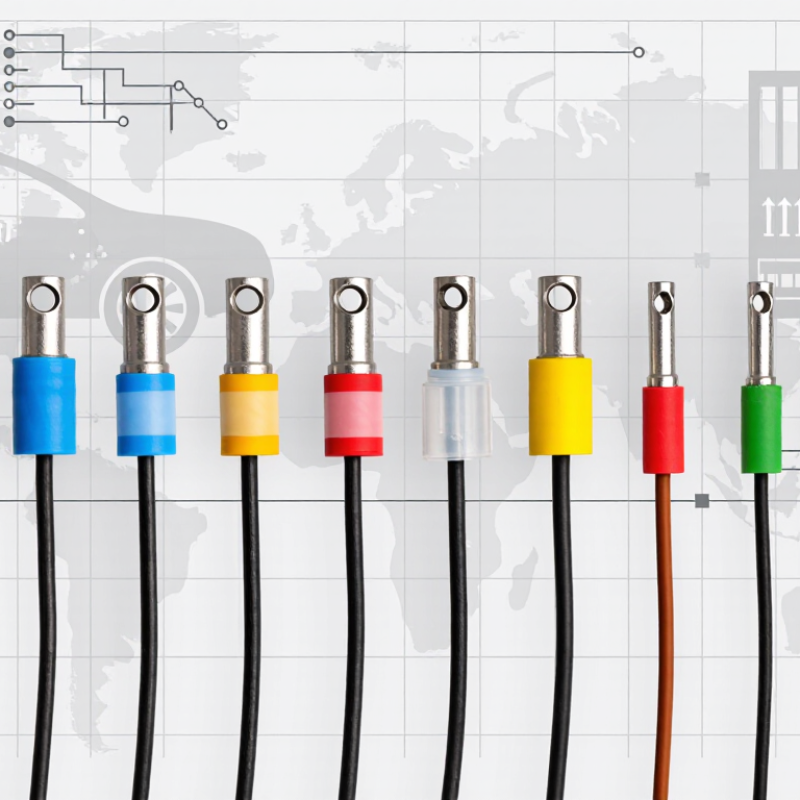
What Heat Shrink Wire Terminals Are and How They Work
Heat shrink wire terminals combine a metal crimp barrel with a heat-shrinkable insulating sleeve. Common forms include butt, ring, and spade terminals. The barrel joins stripped conductors; the sleeve covers the connection and nearby insulation. Some sleeves contain an inner adhesive layer that softens when heated and helps seal the joint.
Installation has two distinct steps. First, strip the wire to the length specified for the terminal and crimp it with a compatible tool. Then apply controlled heat evenly around the sleeve. As it contracts, the tube grips the wire; adhesive, when present, flows around the connection. Watch the edges. A neat adhesive bead can indicate coverage, but it does not prove the joint is waterproof. Not magic.
For example, a correctly sized butt terminal can join two conductors inside a vehicle harness, while its sleeve adds insulation and helps limit moisture exposure. Match the terminal to the wire gauge, conductor type, and environment. Too small a barrel may damage strands; too large a one may crimp loosely. Heating also takes judgment: excess heat can scorch insulation, while too little may leave the sleeve slack. Real installations vary, so test the crimp and inspect the finished joint rather than relying on appearance alone.
Main Types of Heat Shrink Wire Terminals and Their Uses
Heat-shrink wire terminals combine a metal crimp barrel with a shrinkable insulating sleeve. Common styles include butt splices, ring terminals, fork terminals, and quick-disconnect tabs. Each serves a different connection: butt splices join two wires, while ring terminals secure wires beneath a screw or stud. Fork terminals allow faster removal where connections are serviced regularly.
The MarketsandMarkets 2023 Wire and Cable Market report estimated the global market at $202.1 billion in 2023 and projected $294.9 billion by 2028. That forecast concerns wire and cable, not terminals, but it reflects the scale of electrical installations where reliable connections matter. For exposed, damp, or vibration-prone locations, adhesive-lined sleeves can help seal the crimp. Standard heat-shrink sleeves suit many protected indoor connections.
Fit matters. Match the terminal’s barrel range to the conductor size, then choose a ring or fork opening that fits the fastener. Disconnect terminals need matching tab dimensions and compatible male or female ends. Color coding can help identify wire ranges, but it is not universal; check the product specification. UL 486A-486B covers wire connectors, while acceptance depends on the application and terminal listing. A strong-looking crimp can still fail if the tool, wire, or terminal is mismatched. In practice, appearance alone tells little.
How to Choose Terminals for Different Applications and Markets
Heat-shrink terminals should be selected by conductor size, current, temperature, moisture, vibration, and installation method—not color alone. A red sleeve may indicate a size range, but color conventions can vary between suppliers and markets. Check the documented wire range and crimp profile. In a damp vehicle harness, adhesive-lined tubing can help seal the conductor entry, but it cannot fix a poor crimp or damaged insulation. Small details matter.
Application demands are changing. The IEA’s Global EV Outlook 2024 reports nearly 14 million electric cars sold worldwide in 2023, about 18% of new car sales. This growth increases demand for dependable low-voltage connections in auxiliary circuits; high-voltage systems need separately engineered components. For export orders, compare temperature and voltage ratings with the actual duty cycle. Then verify relevant standards and market-specific certification requirements, including applicable UL, CSA, or IEC requirements. One certificate may not cover every destination. Before production, test a sample crimp, check pull strength, and inspect insulation recovery. I would still request traceable test results; catalog tables rarely capture every installation variable.
10 Best Heat Shrink Wire Terminals for Global Buyers
For global buyers, the 10 best heat shrink wire terminals are not simply the ones with the thickest tubing. Match each terminal to the conductor gauge, stud size, current demand, and installation environment. Adhesive-lined sleeves can help seal a crimp against moisture, but only when the connector is correctly sized and fully heated. A neat-looking sleeve is not proof of a sound crimp. Check the supplier’s test data, material specifications, and documentation for your destination market.
Demand for dependable electrical connections is growing across transport and industrial equipment. The International Energy Agency’s Global EV Outlook 2024 reports nearly 14 million electric cars sold worldwide in 2023, about 18% of all car sales. That figure does not measure terminal demand directly, but it shows the scale of electrification shaping wiring systems. Buyers comparing ten options should inspect barrel material, insulation temperature rating, shrink ratio, and resistance to vibration. Ask for traceable batch records, too.
Some details get overlooked. Check that the terminal fits your actual wire, not just the nominal gauge printed on a package. Then test a sample with your own crimping tool and heat source. Small differences matter. A sleeve may shrink unevenly around a bulky joint, or a poorly matched die may deform the barrel. Price still matters, but a low unit cost can be misleading when inspection and rework are included. Keep the selection criteria visible, and be ready to revise them after field testing.
10 Best Heat Shrink Wire Terminals for Global Buyers
This chart shows nominal bare-copper conductor cross-sectional areas for ten common AWG sizes. Use wire size as a starting point when choosing a heat shrink terminal, and confirm compatibility with the terminal’s specified wire range and crimp requirements.
Installation Methods, Safety Checks, and International Standards
10 Best Heat Shrink Wire Terminals for Global Buyers: Installation, Safety, and Standards
Choose a terminal that matches the wire gauge, conductor material, and operating environment. Strip the insulation to the specified length without nicking the strands. Insert the conductor fully, then crimp with the correct die and a suitable tool. A loose crimp may look acceptable. It may still overheat under load. For adhesive-lined tubing, apply controlled heat evenly, moving from the center toward each end. Follow the terminal maker’s temperature and shrink instructions; an open flame can damage insulation.
Tips: Keep the crimp tool aligned. Check the barrel window, if present. After cooling, inspect for gaps, exposed strands, or uneven sealing. A gentle pull check can reveal a weak connection, but never perform it on an energized circuit.
Before inspection or installation, isolate the circuit and verify it is de-energized with an appropriate tester. Check that the terminal’s voltage, temperature, and environmental ratings suit the application. Requirements differ across markets, so review current local rules and relevant product standards. Ask suppliers for traceable test reports and clear certification details. Markings alone are not always enough. It is easy to focus on the heat-shrink seal and overlook strain relief; support the cable so movement does not load the crimp.
