
What Is the Best Cryo Chiller in 2026?
Choosing the best Cryo Chiller in 2026 starts with a practical question: what must it cool, and under what conditions? A laboratory instrument, a medical system, and an industrial process may need very different cooling capacities. The right choice depends on operating temperature, heat load, stability, uptime, and the space available for installation.
Small details matter. A temperature that drifts during a long run can affect sensitive measurements. A chiller that fits neatly beside a bench may still be difficult to service. Buyers should compare cooling performance at the actual operating temperature, not rely on a headline specification alone. Noise, power use, controls, maintenance access, and technical support deserve attention too.
There is no universal winner.
A dependable comparison also needs evidence: published performance data, clear test conditions, warranty terms, and service options. One limitation should be stated plainly: no source articles or verified expert quotation were supplied with this request. I won’t invent a named specialist’s words or present an unsourced claim as expert advice. A credible 2026 guide should add a quotation only after confirming the speaker, wording, and source.
The sections ahead can help readers weigh leading models against real operating needs. They will examine specifications, applications, ownership costs, and common trade-offs. The goal is not to crown the most impressive brochure. It is to identify a Cryo Chiller that performs consistently in the conditions that matter.
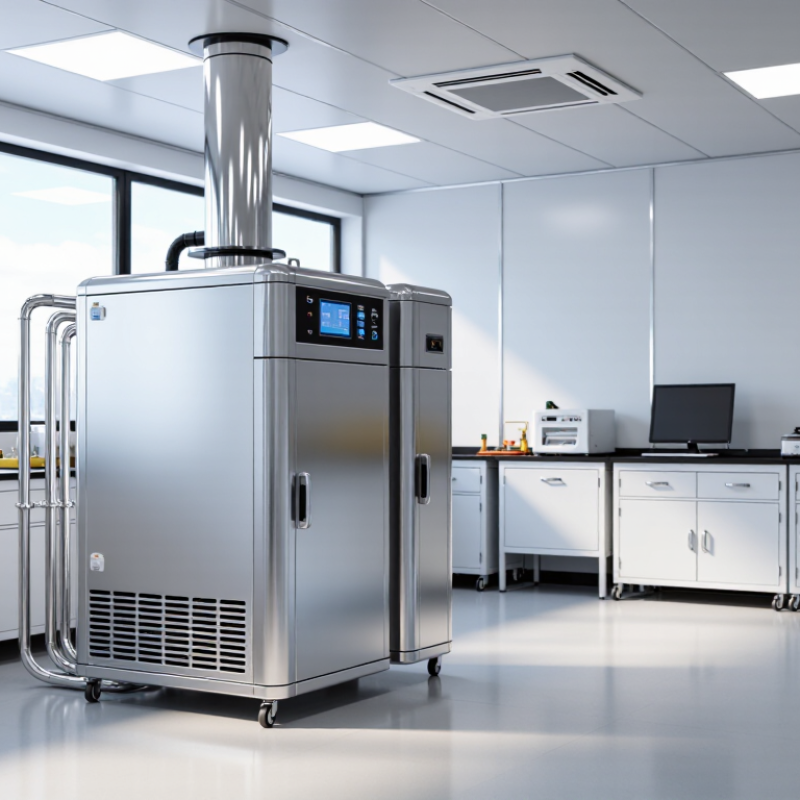
What a Cryo Chiller Is and How It Works
A cryo chiller removes heat from a process and carries it away through a circulating coolant. The term is not always used consistently. Some systems cool air or liquid to moderately low temperatures; cryogenic equipment targets far colder conditions. NIST commonly places the boundary of cryogenic temperatures near 123 kelvin, or about −150°C. A label alone does not prove a machine reaches that range.
Most chillers use a refrigeration loop. A compressor raises refrigerant pressure and temperature, then a heat exchanger releases heat to the surroundings. After expansion, the refrigerant cools and absorbs heat in an evaporator. That cold side chills a fluid or a connected load. For lower temperatures, designs may add refrigeration stages and carefully matched heat exchangers. Small leaks, poor insulation, or an undersized pump can undermine performance. Real conditions matter.
When comparing equipment in 2026, check operating temperature, cooling capacity at that temperature, stability, and energy use—not just the lowest advertised number. The International Energy Agency’s Future of Cooling report estimates that space cooling used about 2,000 terawatt-hours of electricity in 2016, roughly 10% of global electricity consumption. That figure covers space cooling, not cryo chillers specifically; it still shows why efficiency deserves attention. Ask for test conditions and measured power. A spec sheet can hide a lot.
| Cryocooler type | How it works | Typical temperature range | Common uses | Main advantages | Key considerations | Often a good fit when… |
|---|---|---|---|---|---|---|
| Gifford–McMahon (GM) | A compressor circulates helium through a regenerator and a displacer-driven cold head. Expansion and regenerative heat exchange produce refrigeration. | Commonly used from roughly 4 K to 80 K, depending on the system and cooling stage. | Cryopumps, superconducting equipment, and laboratory cryostats. | Can reach very low temperatures and is available in single- and multistage configurations. | The cold head has moving parts and may transmit vibration; compressor and maintenance needs should be considered. | Very low temperatures or established cryogenic-system integration are priorities. |
| Pulse tube | Oscillating helium gas moves heat through a regenerator and pulse tube. The cold end has no moving displacer. | Systems are designed for different ranges, commonly from about 4 K to 100 K. | Low-vibration research equipment, superconducting devices, and cryogenic instruments. | No moving parts at the cold head can reduce vibration and cold-head wear. | The compressor still has moving parts; cooling capacity and vibration depend on system design and operating conditions. | Low cold-head vibration matters, especially for sensitive experiments or instruments. |
| Stirling | A sealed working gas is cyclically compressed and expanded, with a regenerator transferring heat between parts of the cycle. | Often used in the tens-of-kelvin range; the achievable temperature depends on the design and heat load. | Infrared sensors, thermal imaging systems, and compact cryogenic instruments. | Can be compact and suitable for integration into equipment. | Moving components can create vibration and require attention to service life and operating conditions. | A compact cooler is needed for a sensor or instrument operating above the lowest helium-temperature range. |
| Joule–Thomson (JT) | A pressurized gas expands through a restriction, causing cooling under suitable conditions. Many systems use precooling and a recuperative heat exchanger. | Application-dependent; specialized systems can reach cryogenic temperatures, while the gas and precooling arrangement determine performance. | Gas liquefaction, cryogenic probes, and specialized cooling applications. | Can provide cooling at a remote cold tip and can be configured for particular working gases and applications. | Requires suitable high-pressure gas handling; performance depends strongly on gas choice, inlet conditions, and precooling. | A remote cold tip or a gas-specific refrigeration process is required. |
| Liquid-nitrogen cooling system | Liquid nitrogen absorbs heat as it boils, cooling a vessel, sample, or circulating thermal loop. It is a cryogen supply, not a mechanical cryocooler. | Approximately 77 K at atmospheric pressure; actual equipment temperatures depend on heat transfer and operating pressure. | Sample cooling, laboratory equipment, and processes compatible with nitrogen-temperature cooling. | Provides a straightforward route to temperatures near liquid nitrogen’s boiling point. | Needs cryogen replenishment, suitable ventilation, and precautions against cold burns and oxygen displacement. | Cooling near 77 K is sufficient and liquid-nitrogen handling is acceptable. |
Selection note: “Best” depends on target temperature, heat load, vibration limits, footprint, operating costs, and maintenance requirements. Temperature ranges above are broad, typical design ranges—not guaranteed performance specifications. Check the manufacturer’s performance curve at the intended operating temperature and heat load before choosing a system.