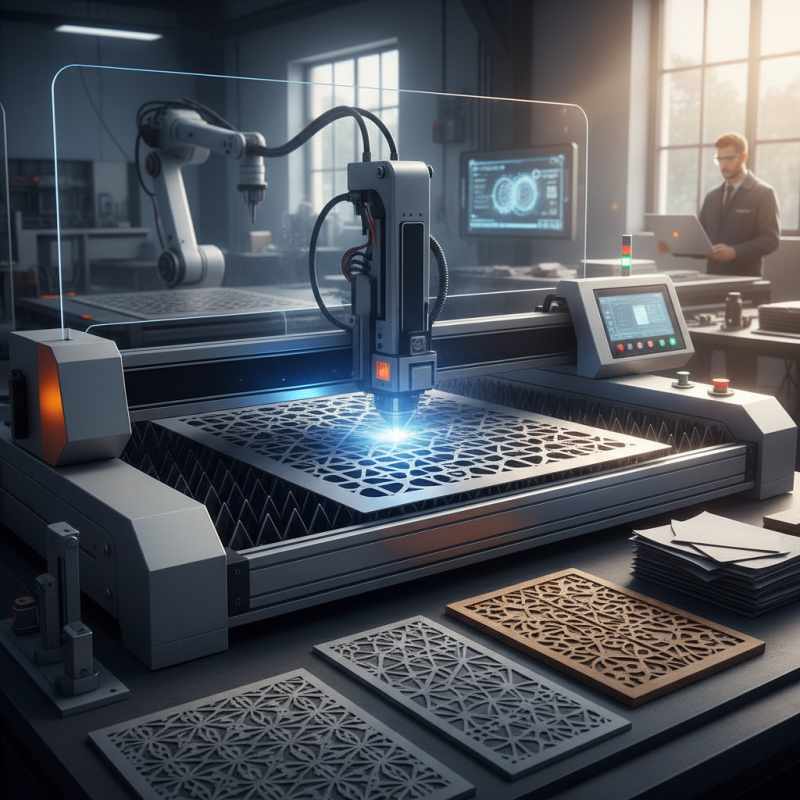
Top 10 Benefits of Using a Laser Cutting Machine?
The laser cutting machine has revolutionized the manufacturing industry. Its precision and efficiency make it a top choice for many businesses. From intricate designs in metal to precision cuts in fabric, the applications are endless.
This technology provides several advantages worth exploring. First, it enhances accuracy and reduces material wastage. Detailed designs can be created swiftly, improving overall productivity. However, integrating a laser cutting machine can present challenges, such as the initial investment and the need for skilled operators.
Despite these hurdles, the benefits often outweigh the drawbacks. Businesses can vastly improve their workflows and product quality. Each way in which a laser cutting machine can be utilized presents an opportunity for growth and innovation. It’s essential to understand these capabilities and choose wisely for future success.
Advantages of Precision and Accuracy in Laser Cutting
Laser cutting machines offer outstanding benefits, particularly in precision and accuracy. These tools excel in creating intricate designs with remarkable detail. The focused laser beam can slice through different materials effortlessly. This feature is essential for industries that require high standards in their products, such as automotive and aerospace.
With laser cutting, the margin for error is minimal. The machines operate with a precision of 0.1 mm or less in some cases. This capability ensures that parts fit perfectly without additional adjustments. However, it is crucial to calibrate and maintain the machines regularly. Neglect can lead to slight inaccuracies, affecting the final product quality.
Moreover, laser cutting facilitates complex patterns that traditional methods struggle to achieve. This technological advancement opens new possibilities in design. Yet, designers must learn the limits of the technology. Understanding these constraints is vital in maximizing the benefits of laser cutting. Too often, there is an assumption that more complexity always equals better results.
Enhancing Efficiency and Speed in Production Processes
Laser cutting machines are revolutionizing production processes. They enhance efficiency and speed, making them a vital tool for many industries. Precision is key in manufacturing, and laser cutters provide that without sacrificing quality. Their ability to cut through various materials like metal, wood, and plastic at high speeds reduces production time significantly.
The automation of laser cutting leads to fewer human errors. Still, it requires skilled operators to optimize the machines. Maintenance is crucial; neglect could lead to downtime. Additionally, while the initial investment can be high, the long-term savings on material and labor costs often justify it. Setting up the right workflow can also be challenging but necessary to reap the full benefits.
Moreover, the versatility of laser cutting offers broad applications. From intricate designs to large components, it allows for creative flexibility. However, not every material reacts well to laser cutting. Understanding these limitations is essential for effective use. The journey to integrate laser cutting into production must be evaluated regularly for improvements.
Versatility in Material Compatibility for Diverse Applications
Laser cutting machines are known for their versatility in material compatibility. They can effectively cut a range of materials, including metals, plastics, wood, and glass. According to a recent industry report, over 70% of manufacturing facilities utilize laser cutting technology for various applications. This technology allows for precision and efficiency, making it a popular choice across industries.
The ability to work with diverse materials opens up endless possibilities. For instance, in the automotive sector, laser cutting is used to create intricate parts from metal sheets. In the textile industry, it can effortlessly slice through fabrics with accuracy. However, while most materials can be processed, some, like reflective metals, present challenges. Operators need to adjust their techniques for optimal results.
Moreover, the adaptation to different materials often requires a learning curve. Cutting speed and power settings vary significantly. A lack of understanding can lead to material wastage or equipment damage. Regular training is essential for operators to keep up with the latest practices and innovations. This includes knowing when a specific type of laser is more effective. Thus, while the versatility of laser cutting machines is a major advantage, it also demands constant reflection and adaptation.
Top 10 Benefits of Using a Laser Cutting Machine
| Benefit | Description | Material Compatibility | Applications |
| High Precision Cutting | Provides precise cuts with tight tolerances. | Wood, Metal, Acrylic | Manufacturing, Prototyping |
| Versatility | Capable of cutting a wide range of materials. | Plastics, Fabric, Glass | Textiles, Signage |
| Reduced Waste | Minimizes material waste compared to traditional methods. | Metal, Wood | Custom Parts, Artistic Projects |
| Speed | Allows for faster production rates. | Metal, Acrylic | Mass Production, Quick Prototyping |
| Complex Design Capability | Can cut intricate designs easily. | Wood, Paper | Art and Crafts, Custom Designs |
| Automation | Can be easily automated for high-volume production. | Metals, Plastics | Industrial Manufacturing |
| Minimal Touch | Requires less manual handling of materials. | Metals, Wood | Manufacturing Processes |
| Consistency | Produces consistent and uniform cuts. | Various Materials | Repeat Production, Standardized Parts |
| Eco-Friendly | Produces less air pollution and waste. | Wood, Non-toxic Plastics | Sustainable Manufacturing |
| Safety | Laser cutting systems are generally safer than mechanical cutters. | Various Materials | General Production |
Minimizing Waste and Reducing Material Costs with Laser Cutting
Laser cutting machines offer significant benefits, particularly in minimizing waste and reducing material costs. By utilizing precise laser technology, these machines cut through materials with incredible accuracy. This precision greatly reduces the amount of scrap material generated during the cutting process. Fewer discarded pieces mean a more sustainable approach to manufacturing.
When considering materials, it's essential to select the right type. Different materials react differently to laser cutting. For instance, some metals may warp if not handled correctly. Understanding how each material performs will aid in minimizing waste. It's a continuous learning process.
Tips: Measure twice, cut once. This age-old adage is particularly true with laser cutting. Proper measurements ensure pieces fit perfectly. Also, regularly maintain your laser cutting machine. A well-maintained machine functions more efficiently.
While laser cutting is efficient, it’s not infallible. Sometimes, kerf—the width of the cut—can lead to slight discrepancies in dimensions. Be prepared to adjust your designs accordingly. A little forward-thinking can go a long way in reducing extra costs and waste.
Top 10 Benefits of Using a Laser Cutting Machine
Improved Safety Measures Compared to Traditional Cutting Methods
Laser cutting machines are known for their precision and efficiency. One major advantage is their improved safety compared to traditional methods. With conventional cutting tools, there are risks of accidental injuries. Blades can slip, and sparks can fly, leading to potential harm. In contrast, laser cutting is non-contact. The laser beam does the work, reducing physical contact with the material.
The enclosed systems used in laser cutting further enhance safety. Operators are shielded from harmful factors, such as heat and debris. Automated processes minimize human error. However, operators still need training. Understanding the equipment is crucial for safe operation. Misuse can lead to accidents. Safety measures should not be overlooked, even with advanced technology in place.
Another aspect is the consistent quality of cuts with lasers. The clean cuts result in less waste and additional cleanup. But, this does not mean laser cutting is always the best method. Different materials may react unpredictably. It’s important to consider these variables. Balancing safety and efficiency can sometimes be a challenging task.