
Custom sheet metal parts in as little as 3 days - Get a quote now!

7 Tips for Buying 60mm Stainless Tube

Buying a 60mm Stainless Tube may look straightforward, but the outside diameter tells only part of the story. Wall thickness, stainless grade, surface finish, and manufacturing method can change performance, price, and service life. A tube used for a handrail faces different demands from one carrying fluid or supporting machinery.

This guide shares practical checks drawn from common purchasing and fabrication experience. Start by confirming what “60mm” means: outside diameter, inside diameter, or a nominal size. Then review the required wall thickness and dimensional tolerance. Small differences can affect fitting, welding, and load behavior. Details matter. A shiny surface does not prove suitable material quality.

Reliable buyers also examine grade documentation, weld consistency, corrosion resistance, and supplier traceability. Request a material certificate when the project requires controlled specifications. Inspect sample ends for clean cuts, dents, ovality, and uneven polishing. Compare the supplier’s stated tolerances with your drawings, not just the product photograph. Photographs can mislead.

The seven tips ahead will help you compare options with more confidence and fewer expensive surprises. They cover material selection, sizing, finish, testing, packaging, and supplier evaluation. Measure twice. I have learned that rushed orders often create avoidable problems, even when the tube appears perfect at first glance. No checklist is perfect, so record your assumptions and revisit them before placing the order.
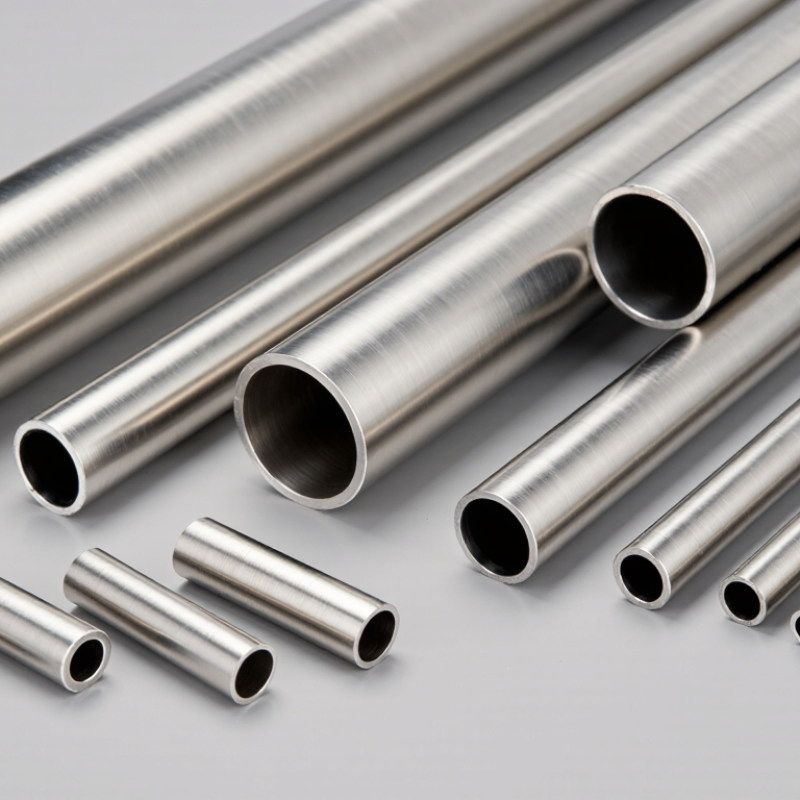
7 Tips for Buying 60mm Stainless Tube

Define 60 mm OD, Wall Thickness, Length, and Seamless or Welded Form

Buying a 60 mm stainless tube starts with one precise question: does 60 mm mean outside diameter? In most purchasing documents, OD means the measured external diameter. Confirm it with calipers, not a supplier’s shorthand. A 2.0 mm wall gives an approximate 56 mm internal diameter before tolerance. That difference affects flow, fittings, and load capacity. ASTM A269/A269M is commonly referenced for stainless tubing used in general service, but the grade and finish still require written confirmation.

Wall thickness should match pressure, temperature, corrosion, and forming requirements. Do not select the thickest option automatically. It adds weight and may reduce usable bore. For structural work, request the design load and allowable tolerance. ISO 1127 provides dimensional guidance for stainless steel tubes, including outside diameter and wall tolerances. Real deliveries can vary slightly. Measure several points along the tube.

Length also needs definition: cut length, total length, and permitted deviation. A six-metre tube may require extra allowance for cutting and end preparation. Seamless and welded forms are not interchangeable in every application. Seamless tube avoids a weld seam, while welded tube can offer consistent dimensions and efficient production. The World Stainless Association reported about 58.4 million tonnes of stainless crude steel production in 2023, showing the scale of this material sector. Still, large output does not guarantee the right tube. Ask for mill certificates, heat numbers, inspection records, and a sample measurement. I would reconsider any quote that lists only “60 mm stainless tube.”

Compare 304, 316, and 316L Stainless Steel by Corrosion Data

7 Tips for Buying 60mm Stainless Tube

For a 60mm stainless tube, corrosion data matters more than a polished surface. Compare the environment, not only the alloy label. Type 304 usually performs well in fresh water, indoor structures, and low-chloride service. Its typical PREN value is about 18–20. Type 316 contains molybdenum, raising PREN values to roughly 23–28. This improves resistance to chloride pitting and crevice attack. Type 316L has similar corrosion resistance to 316, but its lower carbon content reduces sensitization after welding. That difference matters around welded joints.

Check chloride concentration, temperature, acidity, and stagnant areas. Small gaps can corrode faster than open surfaces. Do not trust one corrosion-rate number blindly. Immersion tests may show low general corrosion while hiding severe pitting. ASTM-based testing helps, but field conditions still differ. Ask for heat analysis, mechanical results, and surface-finish details. Verify the 60mm dimension, because outside diameter and nominal size are not always identical. Choose seamless or welded construction according to pressure and fabrication needs. Inspect weld discoloration and pickling quality. Poor cleaning can undermine good alloy chemistry.

Here is the uncomfortable part: 316 is not corrosion-proof. Warm seawater, deposits, and concentrated chlorides can defeat it. I would request a sample test for harsh service. It costs less than replacing installed tube. Also review wall thickness, because corrosion allowance cannot fix an unsuitable design. A careful buyer compares data, welding practice, and actual exposure together.

7 Tips for Buying 60mm Stainless Tube: Compare 304, 316, and 316L by Corrosion Data

Corrosion indicator: Approximate Pitting Resistance Equivalent Number (PREN), calculated as PREN = %Cr + 3.3 × %Mo + 16 × %N using representative alloy compositions. A higher PREN generally indicates better resistance to chloride-induced pitting.

304 stainless steel typically has a PREN of about 19, while 316 and 316L are typically about 24 because they contain molybdenum. 316L has a lower carbon limit than 316, which improves resistance to sensitization after welding, but its PREN is usually similar. Actual performance also depends on surface finish, welding quality, temperature, chloride concentration, and exposure conditions.

Verify ASTM A269 or A312 Compliance and Dimensional Tolerances

Buying a 60mm stainless tube starts with defining what “60mm” means. Confirm whether it refers to outside diameter, inside diameter, or nominal size. Ask for the exact tolerance, wall thickness, and measurement method. A 60mm outside diameter with a 2mm wall is not interchangeable with a 60mm nominal pipe.

Request a material certificate showing ASTM A269 or ASTM A312 compliance. A269 generally covers austenitic stainless tubing for corrosion-resistant service. A312 applies to austenitic stainless pipe, including seamless and welded products. Check the heat number, chemical analysis, tensile results, hydrostatic or nondestructive testing, and heat-treatment records. The 2023 World Stainless production report recorded about 58.4 million tonnes of crude stainless steel, but high output does not guarantee consistent tube dimensions.

Compare the certificate with the purchase order. Verify outside diameter, wall thickness, ovality, straightness, and surface condition against the applicable ASTM requirements and agreed dimensional standard. Calipers alone may hide ovality. Use calibrated micrometers at several positions along the tube. Small deviations can affect seals, fittings, and automated assembly. Do not rely on “60mm” alone. I have seen drawings and certificates use different reference points. That mistake is easy to miss. Ask for sample inspection data before approving the full lot.

Match Surface Finish, Pressure Rating, and Application Requirements

7 Tips for Buying 60mm Stainless Tube

Match surface finish, pressure rating, and application requirements before comparing prices.

Tip 1: Confirm whether 60mm means outside diameter or another measurement.

Tip 2: Specify wall thickness, stainless grade, length, and dimensional tolerance. A 60mm tube is not automatically suitable for pressure service.

Tip 3: Select the finish according to the environment. A smooth, polished surface helps hygienic systems drain and clean more easily. A brushed finish may suit visible equipment, while a mill finish can work for less demanding structures.

Tip 4: Check pressure calculations carefully. Rating depends on wall thickness, material strength, temperature, joint design, and corrosion allowance. Diameter alone proves very little.

Tip 5: Request test records and traceable material certificates. They support reliable purchasing and help verify chemical composition and mechanical properties.

Tip 6: Match the tube to the application fluid and surroundings. Chlorides, heat, vibration, and outdoor exposure can change the correct specification. I once saw a visually perfect tube develop staining because the surrounding washdown chemicals were overlooked.

Tip 7: Review welding, bending, and installation needs before ordering. Surface finish can be damaged during fabrication, and a pressure-rated tube may still fail after poor welding. I would also recheck the drawing; small measurement assumptions can become expensive mistakes.

Evaluate MOQ, Mill Certificates, Testing, and Total Purchase Cost

7 Tips for Buying 60mm Stainless Tube

Evaluate MOQ, Mill Certificates, Testing, and Total Purchase Cost

Buying 60mm stainless tube requires more than comparing the unit price. Confirm whether 60mm means outside diameter, inside diameter, or nominal size. A small definition error can disrupt fittings and fabrication. Ask for the minimum order quantity before requesting a formal quote. MOQ may apply per size, grade, finish, or heat number. A low price can hide an impractical volume. Be realistic.

Request a mill test certificate for every relevant heat or batch. Check the grade, chemical composition, mechanical results, dimensions, and production standard. Do not accept certificates that cannot be traced to the shipped material. Independent testing may verify composition, hardness, wall thickness, and surface condition. For pressure or structural service, specify testing requirements before production. Visual checks alone are insufficient. Test it properly. In practice, buyers sometimes trust paperwork too quickly.

Compare total purchase cost, not tube price alone. Include cutting, packaging, freight, inspection, taxes, storage, and potential scrap. A shorter lead time may justify a higher quote when downtime is expensive. Ask how tolerance, straightness, and surface finish are measured. Confirm that packaging protects polished surfaces from dents and moisture. Keep approved drawings, certificates, test reports, and receiving records together. One overlooked detail remains: actual service conditions can change the correct grade. Review them with a qualified engineer before ordering.

7 Tips for Buying 60mm Stainless Tube - Evaluate MOQ, Mill Certificates, Testing, and Total Purchase Cost
Tip Evaluation Dimension Practical Data or Benchmark Recommended Buyer Check Purchase Impact
Technical and Supplier Evaluation
1 Confirm the 60mm Size Nominal outside diameter: 60.0 mm
Common wall thicknesses: 1.5, 2.0, 3.0, 4.0 and 6.0 mm
Typical outside-diameter tolerance for precision welded tube: approximately ±0.5% when specified by the applicable standard
State outside diameter, wall thickness, length, tolerance, surface finish and straightness separately on the purchase order. Prevents a low-priced quotation from being based on a different wall thickness or tolerance class.
2 Select the Appropriate Grade 304/304L: general indoor, architectural and food-processing applications
316/316L: better resistance to chlorides and marine environments because of molybdenum content
Low-carbon “L” grades are commonly selected for welded assemblies requiring improved resistance to intergranular corrosion after welding.
Match the grade to chloride exposure, cleaning chemicals, temperature and welding requirements. Do not treat 316L as corrosion-proof in all environments. Grade selection can change material cost substantially, but under-specifying corrosion resistance may create premature replacement costs.
3 Set a Realistic MOQ Typical planning ranges for welded stainless tube are often 100–500 kg for standard sizes and 500–2,000 kg for custom finishes, special tolerances or non-stock grades. Actual MOQ depends on the mill, coil availability and production schedule. Ask for MOQ by grade, thickness, surface finish and length. Confirm whether mixed lengths or mixed thicknesses can be combined. A lower unit price may be uneconomical if the MOQ creates excess inventory, storage cost or cash-flow pressure.
4 Request a Mill Certificate Request an EN 10204 Type 3.1 inspection certificate when traceability and verified chemical and mechanical results are required. The certificate should identify heat number, grade, product size, chemical composition and mechanical properties. Check that the heat number on the certificate matches the tube marking, bundle tag or packing list. Confirm the certificate is issued by the manufacturer’s authorized inspection function. Proper documentation supports incoming inspection, audits, traceability and claims handling.
5 Define the Testing Package Common checks include dimensional inspection, visual and surface inspection, chemical analysis, tensile testing, hardness testing and weld-area examination. Hydrostatic or eddy-current testing may be required when specified by the product standard or application. Specify the test method, sampling frequency, acceptance criteria and whether reports are required for every heat, batch or shipment. Additional testing increases cost and lead time, but reduces the risk of receiving material unsuitable for fabrication or service.
6 Verify Surface and Weld Quality Common finishes include mill finish, brushed finish and polished finish. Welded tube should be checked for seam consistency, excessive undercut, cracks, pits, dents and unacceptable discoloration after welding. Approve a reference sample or surface standard before production. Clarify whether internal weld bead removal, pickling or passivation is included. Surface rework, rejection and additional passivation can cost more than the initial finish-price difference.
7 Calculate Total Purchase Cost Include tube price, cutting, testing, certificates, packaging, inland transport, freight, insurance, duties, taxes, inspection and expected scrap. Compare suppliers using the same delivery term and quantity basis. Request a line-item quotation and calculate cost per usable metre or per finished piece rather than comparing only the quoted price per kilogram. The lowest ex-works price is not necessarily the lowest delivered or usable cost.
Reference Weight Data for 60.0mm Outside-Diameter Tube
Nominal Wall Thickness Approximate Internal Diameter Approximate Theoretical Weight Approximate Weight for a 6m Length
1.5 mm 57.0 mm 2.20 kg/m 13.2 kg
2.0 mm 56.0 mm 2.92 kg/m 17.5 kg
3.0 mm 54.0 mm 4.30 kg/m 25.8 kg
4.0 mm 52.0 mm 5.63 kg/m 33.8 kg
6.0 mm 48.0 mm 8.14 kg/m 48.8 kg
Theoretical weights are calculated using a nominal stainless-steel density of approximately 8,000 kg/m³. Actual shipment weight varies with dimensional tolerances, grade density, weld profile and cutting allowance.
Illustrative Total Purchase Cost Model — 60mm × 2mm, 304/304L, 6m Lengths
Cost Item Calculation Basis Illustrative Amount Buyer Action
Material cost 1,000 kg × USD 3.20/kg USD 3,200 Confirm whether the price is based on net weight or theoretical weight.
Mill certificate and standard inspection One shipment documentation package USD 120 Confirm whether EN 10204 Type 3.1 documentation is included.
Additional testing Dimensional, visual and selected mechanical or chemical checks USD 180 Define test scope before the order is accepted.
Packaging and export preparation Bundle protection, labels and moisture-resistant wrapping USD 150 Check whether wooden packaging complies with the destination requirements.
Freight, insurance and handling Shipment-specific estimate USD 650 Compare quotations using the same Incoterm and delivery destination.
Expected process allowance 2% of material cost for cutting, handling and normal fabrication loss USD 64 Replace the allowance with historical scrap data when available.
Illustrative delivered purchase cost before import duties and local taxes USD 4,364 Equivalent to USD 4.36/kg before duties and taxes.
Cost figures are planning examples rather than quotations. Obtain current, itemized offers because stainless-steel surcharges, freight, testing fees, exchange rates and import charges vary by market and delivery terms.