
Selecting the 2026 top mining machinery spare parts suppliers requires more than comparing catalog prices. Mines operate under dust, vibration, heat, and long transport distances. A failed Mining Machinery Spare Part can stop a haul truck, crusher, or drilling system within minutes. The cost is rarely limited to the component itself.
Recent industry evidence supports a careful, performance-based review. The International Energy Agency’s Global Critical Minerals Outlook 2025 reports continuing demand pressure across lithium, copper, nickel, and other essential minerals. More extraction means sustained demand for reliable equipment maintenance. Deloitte’s Tracking the Trends 2025 highlights productivity, operational resilience, and technology adoption as major mining priorities. These priorities directly affect supplier selection. A dependable vendor should provide verified material grades, accurate machine compatibility, inspection records, and responsive technical support. Small details matter. Think of a sealed bearing arriving before a wet-season shutdown.
Supplier claims still need testing. No ranking is perfect. A polished website cannot replace field evidence, warranty results, or documented delivery performance. Reports from Grand View Research also indicate continued expansion in the global mining equipment market, increasing competition among manufacturers and aftermarket distributors. Buyers should therefore compare lifecycle cost, not only purchase price. The strongest suppliers combine engineering knowledge with traceable sourcing, practical inventory planning, and clear communication. This article examines those standards and identifies companies that appear capable of supporting demanding mining operations in 2026. Some conclusions may change as commodity prices, regulations, and equipment technologies develop.
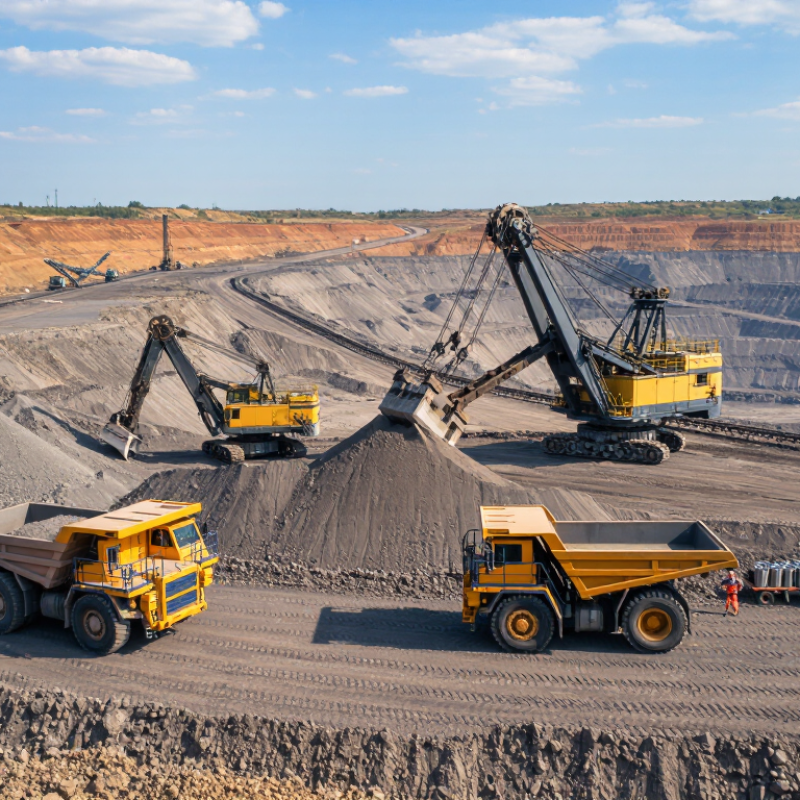
Mining machinery spare parts suppliers provide replacement components, technical checks, and maintenance support for mining equipment. Their products may include crusher liners, conveyor rollers, hydraulic seals, filters, bearings, and engine components. Reliable suppliers verify dimensions, material grades, operating temperatures, and machine compatibility before shipping. That process matters because a small mismatch can damage a shaft or stop a crushing line.
The 2024 Mining Equipment Market report by Grand View Research estimated the global market at about USD 135.9 billion in 2023, with continued growth expected through 2030. This expansion increases demand for dependable aftermarket parts. Deloitte’s Tracking the Trends 2025 also identifies productivity, resilience, and digital tools as major mining priorities.
In practice, good suppliers support these goals through batch traceability, inspection records, emergency stock, and clear lead-time information. I have learned that the cheapest part is not always economical. A low-cost seal that fails beside a dusty haul road creates a much larger bill. Still, supplier claims require checking. A certificate alone does not prove field performance.
Tips: Ask for material certificates, dimensional drawings, warranty terms, and previous application data. Compare total downtime cost, not only unit price. Keep critical parts in controlled storage, but avoid buying every item “just in case.” Forecasting can be wrong. In 2026, strong suppliers should combine practical repair knowledge with inventory data, inspection discipline, and honest limitations. Availability matters, but fit and traceability matter more.
Mining machinery spare parts must survive dust, vibration, impact, and long operating hours. Quality evaluation starts with material evidence, not attractive photographs. Ask for heat numbers, hardness results, dimensional reports, and controlled production records. A reliable supplier should explain the alloy, heat treatment, and wear limits in practical terms.
Compatibility requires more than matching a part number. Check drawings, mounting holes, shaft diameter, seal locations, and operating clearances. Compare the replacement with the removed part beside the machine. A difference of two millimeters can create damaging vibration. Confirm whether the part suits your machine model, working load, temperature, and lubrication system. Small details matter.
Reliability appears in the field. Request inspection samples, traceability documents, and clear warranty conditions. Review delivery history and how the supplier handles incorrect dimensions or early failures. Ask for a failure-analysis report when a part breaks unexpectedly. Good suppliers do not hide difficult questions. They discuss limits honestly. A perfect checklist does not exist. I have seen approved-looking parts fail because installation torque was ignored. Supplier quality and maintenance discipline must work together.
| Evaluation Dimension | Weight | Recommended Acceptance Benchmark | Objective Evidence to Request | Risk if Not Verified | Suggested Score |
|---|---|---|---|---|---|
| Part Identification and Traceability | 15% | Every part should have a unique internal lot or batch reference linked to the drawing revision, production date, material record, and inspection result. | Serialized or batch labels, manufacturing records, revision-controlled drawings, and a documented traceability procedure. | Mixed revisions, counterfeit components, difficult root-cause analysis, and unreliable warranty decisions. | 0–5 |
| Material Certification | 12% | Critical steel, alloy, elastomer, and wear-component materials should match the approved specification and be supported by heat or batch certificates. | Material test certificates, chemical composition, mechanical properties, heat number, and certificate-to-part linkage. | Premature wear, cracking, deformation, corrosion, or failure under rated load. | 0–5 |
| Dimensional Accuracy and Fit | 14% | All critical dimensions, interfaces, bores, mounting holes, and sealing surfaces should conform to the latest approved drawing and tolerance requirements. | Inspection reports, calibrated measuring-equipment records, first-article inspection results, and sample-fit confirmation. | Installation delays, vibration, leakage, accelerated wear, and damage to mating assemblies. | 0–5 |
| Hardness and Heat Treatment | 10% | Wear and load-bearing parts should meet the specified hardness range and heat-treatment condition; hardness should be tested using a recognized method such as Rockwell testing. | Hardness maps, heat-treatment records, test method, test locations, and acceptance limits. | Excessive wear, brittleness, plastic deformation, or reduced fatigue life. | 0–5 |
| Non-Destructive and Functional Testing | 10% | Safety-critical or high-load parts should receive an appropriate inspection method, such as magnetic-particle, dye-penetrant, ultrasonic, pressure, or functional testing. | Test procedures, operator qualifications, calibrated equipment records, results, and nonconformance reports. | Hidden cracks, porosity, leakage, structural failure, and unplanned equipment downtime. | 0–5 |
| Compatibility and Interchangeability | 15% | The part must match the equipment model, configuration, service conditions, interface dimensions, material requirements, and applicable drawing revision. | Cross-reference matrix, dimensional comparison, interface drawings, installation instructions, and application limitations. | Incorrect fit, unsafe operation, premature failure, modification work, or invalidation of equipment requirements. | 0–5 |
| Reliability and Field Performance | 12% | Use verified failure history, mean time between failures where available, warranty returns, corrective-action records, and service-life data under comparable mining conditions. | Anonymized service records, failure-analysis reports, warranty statistics, corrective-action reports, and reference installations. | Unpredictable maintenance intervals, repeat failures, production losses, and higher total cost of ownership. | 0–5 |
| Quality Management and Process Control | 8% | A documented quality-management system should control purchasing, production, inspection, nonconforming output, corrective action, and document revisions. | Current quality certificate, process-control plans, internal audit records, calibration records, and corrective-action procedure. | Inconsistent batches, weak corrective action, undocumented process changes, and recurring defects. | 0–5 |
| Delivery Capability and Supply Continuity | 7% | Evaluate quoted lead time, historical on-time delivery, critical-part stock policy, production capacity, logistics controls, and contingency planning. | Recent delivery-performance records, capacity plan, inventory policy, forecast process, and business-continuity plan. | Extended equipment downtime, emergency freight, production interruptions, and unstable maintenance planning. | 0–5 |
| Warranty, Nonconformance, and Technical Support | 7% | Warranty terms, claim procedures, response times, replacement responsibilities, technical documentation, and failure-analysis support should be defined in writing. | Warranty document, service-level agreement, escalation contacts, claim records, and sample corrective-action reports. | Slow resolution, disputed responsibility, repeat failures, and higher maintenance risk. | 0–5 |
| Total Evaluation Weight | 100% | Recommended decision rule: qualify only when the weighted score is at least 80/100 and no safety-critical criterion scores below 3/5. | |||
In 2026, global mining companies will use several supplier types for machinery spare parts. Original equipment manufacturers provide components designed for specific machines. Their parts usually include serial tracking, test records, and installation guidance. These details help maintenance teams verify compatibility before shutdown work begins. Authorized distributors add regional warehouses and faster delivery. This matters.
Aftermarket manufacturers offer alternatives for common wear parts, including crusher liners, conveyor rollers, filters, and bucket teeth. Experienced suppliers may match steel grades, hardness ranges, and operating conditions. However, quality can vary between batches. Buyers should request material certificates, dimensional inspection reports, and field performance data. Rebuild specialists serve mines that need lower-cost solutions for hydraulic cylinders, pumps, transmissions, or final drives. A rebuilt component can perform well, but its warranty terms need careful review.
Local machine shops support urgent repairs when imported parts face long lead times. They can reproduce simple bushings, pins, or guards after measuring an original component. Complex parts still require controlled heat treatment and accurate machining. International sourcing agents coordinate multiple suppliers, freight routes, customs documents, and emergency orders. Strong procurement teams compare more than price. They examine technical support, stock accuracy, return procedures, and delivery history. No supplier is perfect. Even reliable partners can miss a shipment or provide an incorrect revision. Clear drawings, inspection checkpoints, and written acceptance criteria reduce that risk. Teams should also keep a small stock of critical parts near high-use equipment.
The top suppliers in 2026 will compete on reliability, not catalog size. Maintenance teams need parts that match exact equipment tolerances, materials, and operating conditions. A supplier should provide inspection records, batch traceability, and clear compatibility data. ISO 9001-based quality systems offer useful evidence, but certificates alone cannot prove field performance.
The IEA’s Global Critical Minerals Outlook 2024 projects lithium demand for clean-energy technologies to rise nearly ninefold by 2040. This pressure may increase mining activity and spare-parts demand. Suppliers must therefore maintain stable inventories, regional warehouses, and realistic delivery forecasts. Deloitte’s Tracking the Trends 2024 also highlights operational resilience and digital capability as major mining priorities. Strong suppliers now use inventory portals, failure-history analysis, and condition-monitoring data. A simple bearing failure can stop a crushing circuit for hours.
Tips: Request a sample inspection report before signing a contract. Compare total lifecycle cost, not only unit price. Check emergency delivery performance using previous records. Ask whether technical staff can interpret vibration, temperature, and wear data. A low price still attracts buyers, but it may hide weak metallurgy or poor quality control. That judgment can fail under dust, heat, and heavy shock. The best evaluation should include a controlled field trial, although many procurement teams skip this step. Sources: International Energy Agency, Global Critical Minerals Outlook 2024; Deloitte, Tracking the Trends 2024.
Selecting the right spare parts supplier will matter more than chasing the lowest quotation in 2026. Mine operators should examine fit, material quality, delivery control, and technical support. A crusher jaw, conveyor idler, or pump seal must match the equipment’s exact model and operating conditions. Ask for drawings, material certificates, inspection records, and a clear warranty. Fit matters.
During supplier evaluations, visit the production site when possible. Observe machining accuracy, storage conditions, and how parts are labeled. Reliable suppliers maintain batch traceability from raw material to final inspection. They should also understand dust, vibration, temperature changes, and abrasive ore. Technical advice must reflect your mine, not a generic catalogue. Ask for proof.
Delivery performance deserves careful attention. Request realistic lead times for standard and emergency parts, including customs and transport details. A supplier with regional stock can reduce downtime, but stored parts need proper packaging and corrosion protection. Check whether engineers can support installation remotely or on site. One overlooked detail is communication during failure; slow replies can cost more than the component itself.
I once treated a small dimensional difference as harmless. It later caused uneven wear and repeated shutdowns. That mistake changed my inspection checklist. Still, no checklist is perfect. Review supplier performance after every major order, including rejection rates, response times, and actual service life. A dependable partnership grows through measurable evidence, honest correction, and practical understanding of the mine’s daily pressures.