
What Are the 2026 Top Low Volume CNC Machining Services?
In 2026, low volume cnc machining is becoming more precise, flexible, and accessible for product teams. Manufacturers can produce ten, fifty, or several hundred parts without committing to expensive mass-production tooling. This makes CNC milling, CNC turning, Swiss machining, and five-axis machining valuable for prototypes and specialized components.
The strongest services combine modern equipment with experienced engineering support. A five-axis machine can reach angled surfaces on an aerospace bracket, while a Swiss lathe can hold tight dimensions on a small medical connector. Automated quoting, digital inspection reports, and in-process probing also improve speed and consistency. However, equipment alone does not guarantee quality. Material selection, fixture design, tool wear, and drawing interpretation still depend on human judgment.
This guide examines the leading low-volume CNC options expected to shape 2026 purchasing decisions. It considers accuracy, lead time, material capability, surface finishing, minimum order flexibility, and total cost. Reliable suppliers should explain tolerances clearly, verify critical dimensions, and provide traceable inspection records. Customer reviews and technical certifications can support that assessment, but neither should be accepted without scrutiny.
No single process wins every job. That assumption can fail.
A low-cost quote may exclude finishing, inspection, or design adjustments. Conversely, a premium supplier may reduce waste through better setup planning. The best choice depends on geometry, quantity, performance requirements, and production risk. Readers should compare capabilities carefully rather than choosing from a simple ranking.
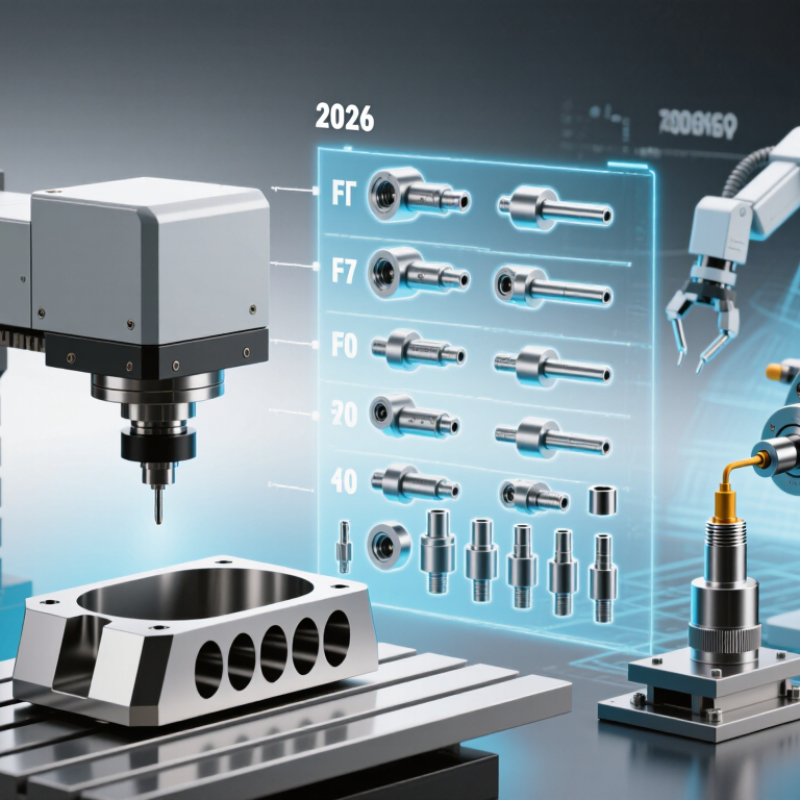
What Is Low-Volume CNC Machining?
Low-volume CNC machining is the production of a small, defined quantity of precise parts using computer-controlled cutting equipment. It supports prototypes, pilot runs, replacement components, and limited product releases. Unlike mass production, it does not depend on thousands of identical units to justify expensive tooling. A project may involve five brackets, thirty housings, or several revised components. The exact quantity varies by industry and design maturity. That ambiguity matters.
The process starts with a 3D CAD model, technical drawings, and material requirements. An experienced machinist checks wall thickness, hole depths, sharp internal corners, and achievable tolerances. Toolpaths are then created for milling, turning, drilling, or combined operations. For ten aluminum housings, the team may use soft jaws, probing, and a carefully planned setup. Operators inspect the first part before continuing. Measurements can include bore diameter, flatness, surface finish, and positional accuracy. A first-article report records these results.
Low-volume work offers flexibility without requiring a long production commitment. Design changes remain manageable between batches. However, it is not always the cheapest option per part. Programming, fixturing, and inspection costs are spread across fewer units. A single complex fixture can change the entire quotation. Material availability can also affect delivery more than expected. In practice, a slightly relaxed tolerance may reduce machining time significantly. That decision should come from function, not guesswork. A run of twenty parts may still demand serious process control, especially when each part fits into a larger assembly.
What Are the 2026 Top Low Volume CNC Machining Services? - What Is Low-Volume CNC Machining?
A practical comparison of common low-volume CNC machining service categories for prototypes, pilot production, and customized parts
| Rank | Low-Volume CNC Service | Typical Quantity | Common Materials | Typical Lead Time | Best For | Main Advantages | Important Considerations |
|---|---|---|---|---|---|---|---|
| 1 | 3-Axis CNC Milling | 1–500 parts | Aluminum, brass, copper, engineering plastics, mild steel, stainless steel | Approximately 3–15 business days | Flat parts, plates, brackets, housings, and general prototypes | Cost-effective setup, broad material compatibility, and reliable dimensional control | Less efficient for deep cavities, complex undercuts, and features requiring multiple orientations |
| 2 | 4-Axis CNC Milling | 1–300 parts | Aluminum, steel, stainless steel, brass, titanium, and plastics | Approximately 5–18 business days | Parts with features on multiple sides or cylindrical indexing requirements | Reduces repositioning, improves feature alignment, and can lower fixture requirements | Programming and workholding are more involved than with standard 3-axis milling |
| 3 | 5-Axis CNC Machining | 1–100 parts | Aluminum, titanium, stainless steel, tool steel, nickel alloys, and composites | Approximately 7–25 business days | Aerospace components, medical parts, impellers, molds, and complex contoured parts | Accesses multiple surfaces in fewer setups and supports complex geometries | Higher programming, machine, inspection, and fixture costs; design review is especially important |
| 4 | CNC Turning | 1–1,000 parts | Aluminum, brass, stainless steel, carbon steel, titanium, and engineering plastics | Approximately 3–12 business days | Shafts, bushings, pins, threaded components, spacers, and rotational parts | Efficient for cylindrical components, repeatable diameters, and turned threads | Limited suitability for non-rotational shapes unless live tooling or additional milling is used |
| 5 | Turn-Mill CNC Machining | 1–300 parts | Aluminum, stainless steel, brass, titanium, steel, and plastics | Approximately 5–18 business days | Rotational parts requiring milling, drilling, slots, cross-holes, or off-center features | Combines turning and milling operations, reducing transfers and potential alignment errors | Usually has higher programming complexity and may cost more than basic turning |
| 6 | CNC Swiss-Type Machining | 10–5,000 parts | Stainless steel, brass, titanium, aluminum, nickel alloys, and medical-grade plastics | Approximately 7–30 business days | Small, slender, high-precision parts with tight diameter and length requirements | Excellent support near the cutting zone, efficient cycle times, and strong repeatability | May not be economical for large parts or very small quantities with significant programming needs |
| 7 | CNC Routing for Plastics and Composites | 1–500 parts | ABS, acrylic, polycarbonate, nylon, PVC, phenolic sheet, and composite panels | Approximately 2–10 business days | Large panels, lightweight enclosures, signage components, and non-metal prototypes | Fast cutting of sheet materials and economical production of large, lightweight components | Surface finish, heat generation, chip evacuation, and material support must be controlled |
| 8 | CNC EDM and Wire EDM | 1–100 parts | Hardened tool steel, carbide, stainless steel, titanium, and conductive alloys | Approximately 7–30 business days | Fine slots, intricate profiles, hard materials, sharp internal corners, and precision tooling | Processes hardened conductive materials and creates geometries that conventional cutting may not reach | Only electrically conductive materials are suitable; production speed is generally slower |
| 9 | Prototype-to-Pilot CNC Production | 10–1,000 parts | Production metals, engineering plastics, and application-specific materials | Approximately 2–8 weeks | Design validation, functional testing, field trials, and pre-production market evaluation | Provides a controlled path from prototype quantities to repeatable small-batch production | Requires documented drawings, revision control, inspection planning, and realistic demand estimates |
| 10 | CNC Machining with Secondary Finishing | 1–1,000 parts | Aluminum, steel, stainless steel, brass, titanium, and engineering plastics | Approximately 7–25 business days | Finished-use parts requiring anodizing, passivation, plating, powder coating, or bead blasting | Combines machining and surface treatment into a more complete supply process | Finishing can affect dimensions, color consistency, masking requirements, and final inspection timing |
Definition: Low-volume CNC machining generally refers to producing a limited quantity of precision parts—often from one prototype to several hundred or a few thousand units—without investing in high-volume tooling. Actual quantities, tolerances, prices, and lead times depend on part geometry, material, surface finish, inspection requirements, and production capacity.
Related Posts
-

Exploring the Benefits of One Off CNC Machining for Custom Projects and Prototypes
-
2026 Top Large CNC Machine Trends and Innovations?
-
Top 10 Benefits of Low Volume CNC Machining for Businesses?
-
Navigating the Future: How Best Rapid CNC Machining Will Shape Industry 2025 Trends
-
5 Secrets to Finding the Best Quick Turn CNC Machining Services
-
Exploring Unique Features and Applications of the Best Rapid CNC Machining Solutions